Sump Pump vs Well Pump: A Practical Side-by-Side Guide
Compare sump pump vs well pump to decide the right basement drainage or water supply solution. This analytical guide from Sump Pump Check covers operation, installation considerations, and maintenance for homeowners.


TL;DR: A sump pump is designed to keep basements dry by removing groundwater, while a well pump is used to extract groundwater from a well for water supply. When choosing between a sump pump and a well pump, focus on your primary need—drainage versus access to a reliable water source—and consider existing infrastructure and local codes. This side-by-side comparison helps homeowners decide which device best fits their home.
What Are Sump Pumps and Well Pumps?
According to Sump Pump Check, a sump pump is installed in a basement sump pit to actively remove groundwater that collects near the foundation. It serves primarily as a flood prevention device, protecting living spaces and foundation from rising moisture. A well pump, by contrast, is part of a water-supply system that extracts groundwater from a drilled well to deliver to fixtures and irrigation. The Sump Pump Check team notes that most homeowners encounter these two pump types in very different contexts: drainage protection versus reliable on-site water supply. Understanding these fundamental roles is the first step in assessing which option aligns with your home’s needs and local conditions. In addition, recognizing the typical failure modes helps owners plan for backups and maintenance before a problem occurs.
What Are Sump Pumps and Well Pumps?
A sump pump operates with a sump pit, a float switch, and an automatic switch that starts the pump when water rises. A well pump uses an intake line connected to a well, with pressure tanks and distribution lines feeding taps throughout the house. Both systems rely on electricity, but their triggers and consequences differ: a sump pump protects a space from water intrusion, while a well pump enables continuous water supply. In practical terms, the choice between these pump systems hinges on whether your primary goal is dry space or reliable water access. For many homes, the decision is guided by the presence of a well and by the drainage needs at the foundation.
Proceeding with a clear understanding of these roles helps homeowners map out the next steps—assessing property specifics, local regulations, and the feasibility of backups. Though both systems use similar electrical essentials, their installation, sizing, and maintenance differ substantially. This section sets the stage for a deeper comparison of performance, reliability, and long-term value.
Note: Real-world considerations such as climate, soil conditions, and the structure of the home will influence which system is most appropriate. The goal of this guide is to provide a structured framework to evaluate options, with emphasis on safety, efficiency, and long-term cost of ownership.
Comparison
| Feature | Sump Pump | Well Pump |
|---|---|---|
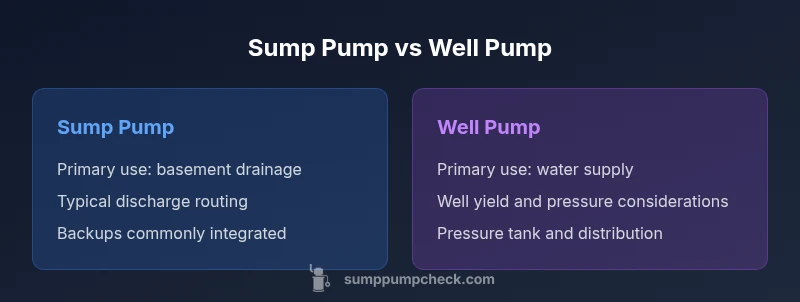
| Primary purpose | Drainage and flood prevention at the foundation | Water extraction from a well for domestic use |
| Typical installation | Sump pit in basement or crawl space with discharge piping | Well housing or well pit with pressure tank and plumbing to fixtures |
| Power and operation | Automatic activation on rising water; often paired with backups | Constant operation for water supply; relies on well yield and pressure system |
| Maintenance needs | Float switch checks, inlet screen cleaning, discharge line inspection | Well pump maintenance includes check valves, pressure tank air charge, and service of seals |
| Common failure modes | Clogged inlet, stuck float, failed check valve | Well pump burnout, failure to prime, or loss of well yield |
| Best for | Basement drainage and flood prevention | Reliable on-site water supply for household use |
What's Good
- Sump pumps target basement drainage and flood prevention, reducing water damage risk
- Well pumps enable independence from municipal water supply by providing a local water source
- Backups and battery systems can be added to both pump types for power outages
- Maintenance for sump pumps often remains straightforward and affordable
- Well systems offer consistent water pressure when properly sized
Drawbacks
- Sump pumps require proper discharge routing and may demand drainage infrastructure
- Well pumps depend on well yield and can entail higher upfront and ongoing costs
- Both systems are vulnerable during prolonged outages without backups
- Well systems may require water quality handling and filtration not needed for drainage pumps
Sump pump wins for basement drainage; well pump wins for off-grid water supply.
If your primary need is keeping a basement dry, a sump pump is the logical choice. If your home relies on groundwater for daily use, a well pump is essential. For properties with both needs, plan a layout that accommodates a drainage system and a separate well system with proper backups.
FAQ
What is the main difference between a sump pump and a well pump?
A sump pump removes groundwater from a basement sump pit to prevent flooding, while a well pump extracts groundwater from a well to supply the home. They serve fundamentally different purposes and are used in different parts of a home's plumbing system.
Sump pumps protect basements from flooding by removing water, while well pumps supply water from a well to the house.
Do I need a permit to install a sump pump?
Permit requirements vary by location and project scope. In many areas, you may need a building or plumbing permit, especially if discharge lines routing or drainage changes are involved. A licensed professional can help determine local requirements.
Permits depend on your city and project scope; check local codes before starting.
Can a sump pump and a well pump be used together?
Yes, some homes have both systems functioning independently: a well pump for water supply and a sump pump for drainage. Proper planning ensures backups and correct integration with the home’s plumbing.
They can work separately, each serving a different need.
What maintenance does a sump pump require?
Regularly test the float switch, clean the intake screen, inspect the discharge piping, and service any backup system. Keeping these parts clear helps prevent unexpected failures.
Test the switch, clean the inlet, and inspect the discharge line.
How do I decide between a sump pump or a well pump?
Assess your water source, drainage needs, and local codes. If you primarily need drainage for a basement, a sump pump is typically best. If you need reliable water from a well, a well pump is required.
Consider your main need—drainage or water supply—and choose accordingly.
Top Takeaways
- Identify your primary goal: drainage protection vs water supply.
- Assess existing infrastructure and local codes before choosing.
- Plan for backups to cover power outages and equipment failure.
- Maintenance habits directly influence system longevity and reliability.
- Consult local professionals to confirm appropriate sizing and permits.