Sump Pump vs Bilge Pump: Practical Comparison Guide
An analytical, in-depth comparison of sump pumps and bilge pumps, covering use cases, installation, maintenance, and decision factors to help homeowners and boat owners choose the right pump.


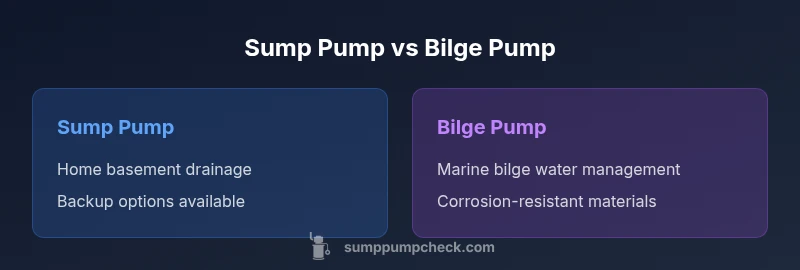
Sump pump vs bilge pump: both devices remove unwanted water, but they serve different environments and rules. For homeowners, a sump pump guards basements from groundwater; for boat owners, a bilge pump removes bilge water. The best choice depends on usage, installation, and safety considerations. This comparison helps you understand when each pump is appropriate and how to plan installation.
What Are Sump Pumps and Bilge Pumps?
Sump pumps and bilge pumps are both water-movement devices, yet they are engineered for very different settings. A sump pump lives in a basement or crawlspace pit and is tasked with removing groundwater or infiltrating rainwater before it inundates living space. A bilge pump sits in the boat's bilge, where it pumps out water that collects from hull leaks, rain, or seawater intrusion. The distinction matters not just in where the pump sits, but in design, materials, float-switch mechanics, and electrical safety features. According to Sump Pump Check, understanding the intended environment is the first step in selecting the right tool. This guide examines the core differences, common pitfalls, and practical considerations so homeowners and DIY enthusiasts can make an informed choice without overpaying for the wrong device.
How They Work: Mechanisms and Components
Both pump types rely on a motor-driven impeller to move water, but the specifics vary. Submersible sump pumps are designed to operate while fully submerged, with seals that guard against moisture and corrosion. Pedestal units sit above the pit and rely on a column shaft to drive the impeller. Bilge pumps are built to tolerate a marine environment, including exposure to saltwater, humidity, and vibration. Float switches come in several styles—vertical, tethered, or electronic sensors—and determine when the pump starts and stops. Check valves prevent backflow, while discharge piping directs water away from structure or toward approved outlets. Power options typically include a standard AC connection with battery backup or a dedicated marine power source. Regular inspection of the switch, seals, and impeller is essential to prevent failures during critical moments.
Typical Use Cases: Basement Drainage vs Marine Bilge Management
The most obvious distinction lies in where the pumps are used. Sump pumps are designed to prevent basement flooding caused by groundwater seepage, heavy rainfall, or drainage system surges. They often pair with a sump liner and a dedicated discharge line that leads away from the foundation. Bilge pumps serve boats and other marine vessels, removing water that collects in the hull. Marine pumping solutions must consider salt exposure, vibration, and through-hull fittings that resist corrosion. In some homes, a backup sump pump or a water-powered pump can provide redundancy, while boats may employ dual bilge pumps for redundancy in critical systems. Understanding these use cases helps determine the appropriate capacity, control, and installation approach.
Performance, Capacity, and Limits
Performance is defined by flow rate (how much water the pump can move in a given time) and head (the height the pump can push water to reach an outlet). Sump pumps emphasize short-head, high-flow scenarios to evacuate groundwater from a pit quickly, while bilge pumps prioritize reliability in a compact space with potential salt exposure and hull movement. Neither pump should be relied upon for flood protection alone; both benefit from appropriate backup solutions and regular checks. Factors such as debris in the pit, algae build-up, and float-switch fouling can reduce efficiency. Proper sizing based on anticipated water volume, square footage of the area or hull, and the height of the discharge point is essential for maintaining effective operation over time.
Installation Considerations: Placement, Discharge, and Piping
Placement decisions drive performance and safety. A sump pump needs a dry, stable pit with a reliable cover, clear access to the discharge line, and a properly located drain or gravity-fed outlet. For bilge pumps, through-hull fittings and sealed hoses are crucial to prevent leaks and corrosion. Both systems require GFCI protection and adherence to local codes, including secure mounting, strain relief for cords, and accessible service points. Check valves or backflow preventers reduce the risk of re-entry of pumped water. In both cases, consider a backup power source or a secondary pump to handle power outages or equipment failure, especially in flood-prone or storm-prone areas.
Maintenance and Longevity: Keeping Them Running
Regular maintenance extends pump life and prevents unexpected outages. Inspect the float mechanism to ensure the switch activates at the correct water level, clean the inlet screen or grate to prevent clogs, and test the unit periodically to confirm proper operation. For sump pumps, clean the pit and check the liner for cracks; for bilge pumps, inspect hoses and seals for signs of wear and replace corroded components. Battery backups should be tested and replaced as needed. Sump Pump Check notes that proactive checks reduce emergency calls and costly repairs by catching wear early and scheduling maintenance before bad weather.
Cost, Value, and Long-Term Considerations
Cost considerations extend beyond initial purchase price. A sump pump may offer a lower upfront cost and broad availability in residential settings, along with options like battery backups and water-powered backups for reliability. Bilge pumps, while sometimes more expensive per unit due to marine-grade materials and corrosion resistance, are essential for boat safety and cargo protection. Long-term value comes from appropriate sizing, regular maintenance, and the right backup strategy. When planned correctly, both pump types deliver cost-effective water management and reduce the risk of expensive water damage.
Safety, Codes, and Electrical Considerations
Electrical safety is paramount. Sump pumps often operate in damp basements; bilge pumps live in humid, salt-prone marine environments. Installations should use GFCI outlets or circuits, proper grounding, and weather-resistant connectors. For boats, through-hull fittings must be certified and maintained, with corrosion protection applied to metal components. Adhering to local codes for discharge, drainage permits, and safety standards is essential. If in doubt, consult a licensed electrician or marine technician to verify compliance and ensure the system is wired for safe operation under load conditions.
Choosing Between: Scenarios and Decision Factors
Choosing between a sump pump and a bilge pump hinges on the primary environment and water source. If you require flood protection for a basement, groundwater interception, or crawlspace drainage, a sump pump is the sensible choice. For boats or vessels where bilge water is an ongoing concern, a bilge pump designed for marine conditions is necessary. In some homes or boats, redundancy is wise, so consider a backup pump or a combined system with alarm features. Evaluate your local climate, building or vessel design, and electrical safety requirements to tailor the solution to your situation.
Debunking Myths and Misconceptions
A common misconception is that any water pump can serve both basement and marine needs. In reality, sump pumps and bilge pumps are optimized for different types of water, environments, and attachment points. Another myth is that bigger is always better; oversized pumps can cause nuisance cycling or higher energy use. A third misconception is that maintenance is optional; neglecting regular checks increases the risk of failure during critical events. Understanding the intended use and following a maintenance schedule helps avoid these errors.
What to Do Next: Quick Setup Checklist
- Identify the primary water source (basement groundwater vs bilge water).
- Determine the discharge route and ensure it meets local codes.
- Select the appropriate pump type and backup options.
- Plan for a reliable power supply and safety protections.
- Schedule regular maintenance and testing intervals.
- Install alarms or indicators to catch pump failures early.
- If in doubt, consult a professional installer for a tailored setup.
Comparison
| Feature | Sump Pump | Bilge Pump |
|---|---|---|
| Typical use | Basement groundwater and sump drainage | Boat hull bilge water management |
| Power options | AC mains with optional battery backup | AC mains with marine power or battery backup |
| Discharge routing | Outdoor drainage away from foundation | Overboard discharge or ballast line (per regulations) |
| Best for | Preventing basement flooding and moisture buildup | Marine safety and hull dryness |
| Installation complexity | Moderate to high (pit, cover, piping) | Moderate (through-hull fittings, hoses) |
| Maintenance needs | Regular pit cleaning, check valve, float switch | Regular bilge inspection, hose and seal checks |
| Environment resilience | Residential indoor environment with humidity controls | Harsh marine environment with corrosion risk |
| Typical lifecycle considerations | Depends on groundwater quality and usage | Depends on boat size, exposure, and maintenance |
What's Good
- Clear use-case separation reduces risk of misapplication
- Broad availability of residential models and service networks
- Flexible backup options improve reliability
- Discharge and float-switch variants provide installation flexibility
Drawbacks
- Proper sizing and installation can be challenging
- Maintenance is ongoing to prevent failures
- Bilge pumps are not suited for basement drainage and vice versa
Sump pump is generally better for homes; bilge pumps excel in marine contexts.
For basement protection, choose a sump pump with appropriate backup. For marine use, select a bilge pump designed for vessel conditions. In mixed environments, consider dual systems and professional guidance.
FAQ
What is the main difference between a sump pump and a bilge pump?
The sump pump is designed for basement groundwater and indoor drainage, while a bilge pump is built for boat hulls and marine bilge water. They differ in materials, seals, and mounting to withstand their environments.
The sump pump handles groundwater in homes, and the bilge pump handles water in a boat's bilge. They’re built for different settings with different protection and mounting.
Can I use a bilge pump for basement drainage?
Using a bilge pump for basement drainage is generally not recommended because of design differences, corrosion resistance needs, and mounting requirements. A sump pump is better suited for groundwater and indoor moisture.
No—the bilge pump isn’t designed for basement drainage. A sump pump is the right tool for that job.
What maintenance tasks should I perform on a sump pump?
Regular maintenance includes inspecting the float switch, cleaning the inlet, testing the pump, and ensuring the discharge line is clear. Check backup power options and replace worn seals as needed.
Check the float, clean the inlet, test the unit, and inspect the discharge line regularly.
Do both pumps require a battery backup?
Backup power is highly recommended for both pump types to guard against outages during storms or power failures. Battery backups or standby systems improve reliability during high-water events.
Yes. A backup power source helps prevent pump failure when the power goes out.
How should I size a pump for my space?
Sizing involves estimating peak water inflow and the height to which water must be pumped (the head). For homes, consider basement moisture levels and drainage capacity; for boats, account for hull design and bilge volume. When in doubt, consult a professional.
Size based on how much water you expect and how high you need to pump it.
Are there energy-efficient options for both pumps?
Yes. Look for energy-efficient models with low current draw, efficient motors, and smart controls. Battery-backed units can optimize usage during outages, reducing standby power while ensuring readiness.
There are energy-efficient pumps and smart controls for both sump and bilge pumps.
Top Takeaways
- Assess environment first: basement vs hull bilge area
- Prioritize backup power and alarm features
- Match float-switch style to water dynamics
- Plan discharge routing with local codes in mind
- Schedule regular maintenance to extend pump life