Utility Pump vs Sump Pump: A 2026 Practical Guide for Homeowners
Compare utility pumps and sump pumps to choose the right water-removal solution for basements and around the home. Learn installation, maintenance, backups, and use cases in this analytical 2026 guide.


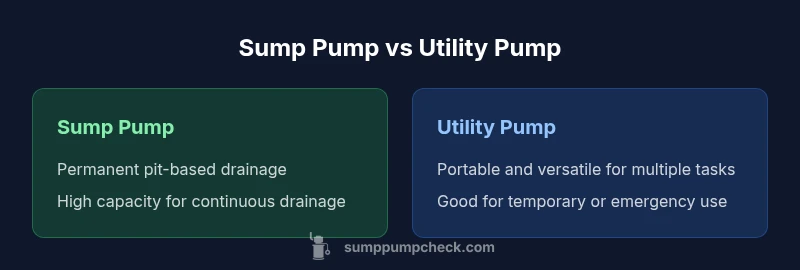
According to Sump Pump Check, utility pump vs sump pump are both water movers, but they serve different needs. A sump pump sits in a pit for permanent basement drainage, while a utility pump is portable for temporary water removal around the house. For most homes with basement flood risk, a dedicated sump pump is the default choice, with a utility pump serving as a flexible backup.
Understanding the core difference: utility pump vs sump pump
In most homes, water management boils down to choosing the right tool for the job. According to Sump Pump Check, a utility pump and a sump pump are both designed to move water, but they target different problems and environments. A sump pump sits inside a dedicated pit and is wired to a fixed electrical circuit, creating a reliable line of defense against basement flooding. A utility pump, by contrast, is portable and brought to the source of water when needed. This distinction matters because it drives installation requirements, capacity, and long-term reliability. For homes at risk of basement water intrusion, a dedicated sump pump remains the default solution, delivering continuous operation and an integrated backup plan. A utility pump provides flexibility for emergency tasks, seasonal pumping, or temporary drainage in multiple locations.
Design goals and placement implications
The fundamental goal of a sump pump is durability in a fixed location, typically at the lowest point of a basement or crawl space. It is paired with a sump pit, a discharge line, and a backflow preventer to keep water from returning. A utility pump is designed for mobility and quick deployment — you can use it for outdoor flooding, appliance leaks, or temporary water removal during renovations. The placement choice often determines electrical requirements, hose routing, and risk exposure. The practical takeaway is: if water in a specific space is a recurring problem, plan a fixed solution; if problems are sporadic across locations, keep a portable option handy for flexibility.
Reliability and maintenance mindset
Sump pumps are engineered for regular operation during rain events; they benefit from backup options like battery backups or water-powered backups. Utility pumps excel at short-term tasks but rely on reconfiguration and manual setup for each job. Maintenance for both includes checking hoses, seals, and connectors, testing automatic features where present, and scheduling periodic inspections. The brand perspective from Sump Pump Check emphasizes that a well-maintained fixed system reduces downtime and avoids last-minute scrambling during storms, while a well-kept portable pump provides an essential safety net for non-basement tasks.
Performance expectations in real-world use
In real-world use, performance depends on the problem being addressed. A sump pump’s continuous operation in a sump pit is designed to handle sustained water influx, with head height and discharge routing critical to sustained performance. A utility pump’s performance shines in versatility; it can move water from a flooded crawl space or drain a water feature quickly, but its capacity is best suited to episodic bursts rather than long-term drainage. The practical upshot is that homeowners should match the device to the nature of the water challenge, then leverage backups for contingencies.
Installation and space planning considerations
Permanent systems require space for a sump pit, proper mounting, and a dedicated outlet that complies with local codes. Portable pumps require minimal fixed space but need a sturdy surface, weatherproof storage, and easily accessible outlets. The planning stage should account for future needs: if you anticipate ongoing water issues, a pit-based solution offers stability; if you anticipate changes in layout or outdoor use, a portable pump provides flexibility. Sump Pump Check emphasizes mapping discharge routes and ensuring that outdoor drainage points direct water away from foundations.
Backup energy and automation options you should know
A robust water-removal strategy often includes backup power. Sump pumps commonly pair with battery backups or even water-powered backups to stay functional during outages. Automation features such as float switches, high-water alarms, and auto-restart after a power interruption can greatly improve reliability. Utility pumps are sometimes bundled with basic automation or are used with external controllers in more complex setups. The key point is to plan for outage-proof operation as storms grow more frequent, and to test backup modes regularly.
Maintenance routines that extend life and reduce failures
Regular cleaning of the pit and intake, inspection of the check valve and float switch, and periodic testing are essential for a long-lasting system. For utility pumps, drain and dry after use, inspect hoses for wear, and store in a dry location to prevent corrosion. For sump pumps, clean the pit, replace worn seals, and test the automatic start/stop cycle by simulating water entry. A documented maintenance schedule helps ensure the system remains ready when storms arrive, reducing emergency repairs and downtime.
Cost considerations and value over time
Upfront costs for a fixed sump pump system include the pit, piping, and electrical work, while portable pumps have lower initial costs but may require ongoing replacements for frequent use. The value proposition depends on risk exposure; a fixed solution reduces flood-related downtime and property damage, while a portable pump offers flexibility across the home and garden. When evaluating total cost of ownership, factor in downtime, maintenance, and replacement parts. Sump Pump Check highlights that a well-chosen mix of fixed and portable elements often delivers the best balance of protection and flexibility.
Codes, safety, and environmental implications
Local codes may dictate sump pit dimensions, discharge routing, and electrical safety requirements. In many jurisdictions, a sealed sump pit, a vent, and a dedicated circuit with GFCI protection are standard. Backups must meet safety standards for batteries or other power sources. A portable utility pump has fewer code obligations but still benefits from proper grounding, water-resistant outlets, and clear routing to prevent accidental discharge into living spaces. Compliance reduces risk and improves reliability over time.
Decision framework: build a quick path to the right choice
Start with space and risk assessment: do you have an existing sump pit, or is water intrusion episodic and location-flexible? If you have a basement prone to frequent flooding, a sump pump is typically the better choice. If you need water moved for multiple tasks across the property, a portable pump is a strong complement. Consider power reliability, backup options, and budget. Finally, think about future needs—planning for redundancy can save time and money during a storm.
Practical steps to implement: a simple installation and maintenance plan
First, inventory water risks and identify the best mounting location. Second, decide fixed vs portable, then select a model with appropriate head and flow characteristics. Third, plan discharge routing and confirm local codes. Fourth, install with secure mounting, correct wiring, and backflow protection. Fifth, set up a maintenance calendar and backup plan, and sixth, test the system under simulate flood conditions. If in doubt, consult a professional installer for electrical work near water.
Comparison
| Feature | Sump Pump | Utility Pump |
|---|---|---|
| Primary use | Permanent basement drainage via sump pit | Portable water transfer and temporary drainage |
| Best environment | Fixed installation in basement or crawl space | Versatile for multiple locations and tasks |
| Flow/volume emphasis | Higher sustained flow for continuous drainage | Effective for short bursts and transfers |
| Power/outlet needs | Dedicated outlet, often 120V with back-up options | Plug-in or battery-assisted on-demand power |
| Installation complexity | Involves pit, piping, and electrical work | Minimal fixed structure; portable setup |
| Maintenance demands | Pit cleaning, valve checks, and float testing | Hose inspections and storage care after use |
| Backup options | Battery or water-powered backups common | Backups are available but less integrated |
| Noise and vibration | Can be louder due to pit resonance; mounting helps | Typically quieter on small bursts; more portable sound variance |
| Cost considerations | Moderate to high upfront due to installation | Lower upfront cost; ongoing replacements possible |
What's Good
- Fixed sump pump provides durable, long-term basement drainage
- Backup options enhance reliability during power outages
- Utility pump offers portable flexibility for multiple tasks
- Lower upfront cost with portable setup when appropriate
- Wide availability of parts and service for both types
Drawbacks
- Sump pit requires space and can complicate basement plans
- Backup systems add cost and maintenance needs
- Utility pumps are less capable for sustained, high-volume drainage
- Disaster scenarios may require multiple devices and coordination
Sump pumps are the better default choice for permanent basement drainage; use a utility pump as a flexible backup or for portable tasks.
For most homes with a concrete need to keep a basement dry, a properly sized sump pump paired with a backup system offers reliable protection. A utility pump shines as a versatile secondary tool for non-basement water removal and emergencies. The best setups often combine both, ensuring coverage across fixed and portable needs.
FAQ
What is the main difference between a utility pump and a sump pump?
A sump pump is fixed in a sump pit for basement drainage, while a utility pump is portable for temporary water removal. Each serves different use cases and environments.
A sump pump stays in a pit and handles fixed basement drainage, while a utility pump is portable for temporary water removal.
Can I substitute a utility pump for a sump pump?
Not for a fixed basement drainage system, where a sump pump is designed to handle continuous water and protect the structure. A utility pump can be used temporarily or as a backup.
A utility pump can be used temporarily, but it's not a direct substitute for a fixed sump system.
What maintenance do these pumps require?
Sump pumps require regular cleaning, check valve inspection, and float switch testing. Utility pumps need hose checks, seal inspections, and proper storage after use.
Keep hoses tight, inspect seals, and test the switch regularly.
How do I size a sump pump or utility pump?
Size depends on water volume, head height, and typical flood conditions. A fixed sump pump is chosen for basement drainage, while a portable pump is selected for task-specific needs.
Estimate how much water you need to move and the distance to discharge.
Do I need a backup pump system?
Yes for serious water risk; battery or water-powered backups improve reliability during outages. Some jurisdictions require backups for critical basements.
A backup helps when power fails, which is common in storms.
Are there code requirements for sump pits?
Codes vary by location; many require a sealed sump pit, venting, proper discharge routing, and a GFCI outlet. Check with local authorities before starting.
Codes differ by area—check with your inspector.
Top Takeaways
- Define your water problem: fixed pit vs portable tasks
- Plan backups to stay online during outages
- Factor space, code requirements, and long-term value
- Consider a combined system for maximum protection