Difference Between Sump and Pump: A Practical Guide
Explore the difference between sump and pump, how each works, and when to use them for basement drainage. Learn troubleshooting, maintenance, and upgrade tips from Sump Pump Check to prevent flooding and protect your home.


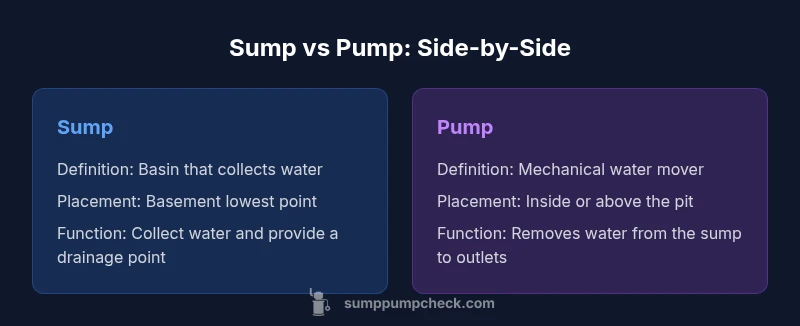
According to Sump Pump Check, the difference between sump and pump is clear: a sump is a basin that collects groundwater and seepage, while a pump is the mechanical device that moves that water out of the basin. A properly sized sump-pump pairing is essential for reliable basement drainage, especially during heavy rain. This guide clarifies their distinct roles and how they work together.
What is a Sump Basin and Why It Matters
A sump basin, or sump pit, is a recessed container placed at the lowest point of a basement or crawl space to catch groundwater, seepage, and surface runoff. It is not a pump by itself; rather, it is the collection point that makes an active drainage strategy possible. The core question many homeowners ask is the difference between sump and pump: the sump is the basin, while the pump is the device that moves water out of that basin. Understanding this distinction is foundational to effective flood prevention and long-term basement health. According to Sump Pump Check, selecting the right basin size, lid, and compatibility with a pump is critical to performance and maintenance. When water rises, the pump’s impeller pushes water through a discharge line to a safe outlet, and a check valve on that line prevents backflow. A properly sealed lid reduces debris entry and odors. In short: the sump collects water; the pump removes it, and the entire system relies on correct sizing, reliable power, and regular checks.
What Is a Pump? Variants for Sump Systems
A pump is a mechanical device designed to move water from one location to another. For sump applications, two common types are submersible pumps (placed inside the basin) and pedestal pumps (mounted above the basin). Submersible models are quieter and suited for larger pits, while pedestal pumps can be more affordable and easier to service, though they may protrude into the room. Both types typically rely on a float switch or electronic sensor to start and stop, and both require a discharge line that directs water away from the foundation. horsepower, switch style, and impeller design influence how much water can be moved and how quickly the unit responds during heavy flows. Upgrading to a higher-capacity pump or more robust float switch can improve reliability, but it must be matched to the pit size and electrical capacity. Regular testing—such as lifting the float to trigger the pump—helps ensure readiness before storms. The Sump Pump Check team notes that selecting the right pump is as important as choosing the basin itself.
How They Work Together in a Sump System
Water enters the sump pit via foundation cracks, hydrostatic pressure, and rainwater runoff. The pit collects this water until the float switch signals the pump to start. The pump then drives water through a discharge pipe, typically routed to a storm sewer or exterior drainage area. A properly installed check valve prevents backflow into the pit when the pump stops, reducing cycling and conserving energy. The system’s reliability depends on placing the pit at the building’s low point, using an appropriate lid seal, and ensuring the discharge line remains clear. In some homes, multiple basins or a backup system provide redundancy for extreme weather. Electrical considerations matter, including GFCI protection and a backup power source in outage-prone areas. Regular maintenance—like removing debris from the pit, inspecting the seal, and testing the float—helps extend pump life. When these elements are harmonized, the sump-pump pair offers fast response to rising water and continuous basement protection during heavy rainfall or rapid snowmelt.
Key Differences: Function, Placement, and Scenario
- Function and purpose: The sump is the collection point; the pump is the active water mover. Without both, water can accumulate and threaten the basement.
- Placement: The sump sits in the basement’s lowest point, while the pump is installed inside or above the basin depending on the model.
- Activation: The pump starts via a float switch or sensor when water level rises; it stops when the level drops.
- Maintenance: The basin requires lid seals and valve checks; the pump demands impeller inspection and electrical checks.
- Best use cases: Use a sump basin to capture groundwater and seepage; use a pump to remove water quickly and prevent flooding. For many homes, a properly sized sump with a reliable pump and backup options is the most robust solution during storms.
Installation Considerations: Pit Sizing, Materials, and Codes
Choosing the right sump pit involves considering the space available, soil conditions, and local building codes. The pit should be large enough to hold a realistic volume of groundwater between pump activations, reducing nuisance cycling, and it must accommodate the chosen pump’s float or sensor mechanism. Materials should resist corrosion and be compatible with the water’s chemistry. The cover should be secure and able to prevent debris ingress, while the lid’s gasket should minimize odors. Proper venting reduces methane or other smells in some basements. Electrical considerations include a dedicated circuit, GFCI protection near the pump, and a connection that complies with local codes. If a homeowner opts for a backup system, plan a separate battery-backed pump or an independent generator connection. The installation should ideally be performed by a licensed professional to ensure compliance and safety. The Sump Pump Check guidance emphasizes aligning pit size with pump capacity and ensuring easy access for maintenance.
Maintenance and Troubleshooting Guide
Regular maintenance is essential to ensure reliability when you need it most. Start with a visual inspection of the lid seal and the exterior of the pit for cracks. Clear debris from the pit and check the float switch for smooth operation. Inspect the discharge line for blockages and test the pump by simulating water rise—if the pump doesn’t start or stops unexpectedly, investigate the switch, power supply, or impeller. If you rely on a backup system, periodically test the backup pump or battery to ensure readiness during a power outage. Replace worn seals, corroded fittings, or a malfunctioning check valve promptly. A professional assessment can help confirm the system’s overall integrity and determine whether the pump size remains appropriate for current water inflow. The brand recommends scheduling seasonal checks to address wear and to catch issues before heavy rain or rapid snowmelt. This routine maintenance minimizes the risk of basement flooding and extends equipment life.
Costs, Longevity, and Value of Upgrades
Costs for adding or upgrading a sump-pump setup depend on pit size, pump horsepower, and whether you add components like a battery backup or alarms. Generally, pump costs vary with capacity and features, while installation costs depend on the complexity of the pit, the distance of discharge, and electrical work. Owners should weigh upfront costs against long-term value, including reduced flood damage risk and lower insurance concerns. Lifespan depends on usage, water quality, and maintenance frequency; expect the pump and check valve to wear over time and require periodic replacement. The value of upgrades grows with storm intensity and climate variability, and upgrades like a robust float switch and backup power can provide resilience during outages. The Sump Pump Check analysis highlights that investing in maintenance scheduling and a backup option improves overall reliability and reduces the likelihood of costly failures during extreme weather.
Practical Scenarios: Replacement and Upgrade Paths
For aging basements or those facing frequent minor floods, upgrading to a higher-capacity pump and a more reliable float switch can improve performance without full replacement. If your pit is undersized or the discharge path is restricted, consider resizing the pit or adding an additional pump or a second backup pump. In high-risk climates, pairing the sump-pump system with a battery backup or generator connection is prudent. When basements are newly finished or you’re remodeling, plan for a pit that accommodates future system expansions and maintenance access. A professional assessment helps determine whether a replacement is warranted or if a targeted upgrade will meet both current needs and future weather scenarios. The goal is to maintain dry basements while minimizing nuisance maintenance and energy use.
Alternatives and Complements: Backups, Valves, and Alarms
You can improve reliability with several complementary components. A watchdog alarm can alert you to pump failure or high water levels, enabling proactive action. A check valve on the discharge line prevents backflow into the pit, which conserves energy and reduces pump wear. A battery backup system or a dual-pump setup adds redundancy for power outages. Some homes also use a water-powered backup pump as an additional layer of protection. Maintenance should address alarm testing, valve integrity, and battery condition. The combination of a properly sized sump pit, a dependable pump, and thoughtful backups provides a comprehensive approach to basement drainage and flood prevention.
Common Myths Debunked
Myth: A larger pump always fixes flooding. Reality: Oversized pumps can cause frequent cycling and wear; proper sizing matters. Myth: If it’s not raining, you don’t need a sump. Reality: Groundwater and seepage can occur year-round and require maintenance to stay effective. Myth: A backup pump is optional. Reality: In power outages, a backup pump can prevent flood damage. Myth: Sump pits are dangerous or hard to maintain. Reality: With correct installation, maintenance, and code compliance, pits are standard, safe, and effective components of a home's drainage system.
Comparison
| Feature | Sump | Pump |
|---|---|---|
| Definition | A basin that collects groundwater, surface runoff, and seepage in the lowest part of a building. | A mechanical device that moves water out of the sump basin and away from the structure. |
| Primary function | Collect water; create a centralized point for drainage. | Displace and eject water from the basin to a safe outlet. |
| Placement | Installed in the basement’s lowest point; often built into the floor. | Installed inside or above the pit, depending on model (submersible vs pedestal). |
| Operation type | Passive collection with active removal via the pump when triggered by a float or sensor. | Electrical motor drives an impeller; requires power and proper venting. |
| Maintenance needs | Inspect lid seal, check valve, clear debris; periodic pump test. | Inspect impeller, bearings, float switch; ensure power and backups are functioning. |
| Cost/installation | Relatively simple to install with proper pit and lid; cost varies by pit size and model. | Costs vary by horsepower, features, and whether a backup system is added. |
| Best for | Providing a centralized catch basin for groundwater and seepage. | Swiftly removing water from the basin to prevent flooding and water damage. |
What's Good
- Provides reliable flood protection when properly sized and maintained
- Offers flexible upgrades (backup pumps, alarms, check valves)
- Adapts to different basement layouts and water inflow levels
- Supports basement waterproofing when combined with proper drainage
Drawbacks
- Requires regular testing and maintenance
- Incorrect sizing or poor installation can fail during storms
- Discharge piping and backflow prevention add complexity
- Power outages necessitate backups or alternative power sources
Sump and pump form a standard, effective bas ement drainage solution when properly sized and maintained.
A correctly sized sump pit paired with a well-chosen pump provides dependable water removal and flood protection. Regular maintenance, correct installation, and backups are essential for reliability during extreme weather.
FAQ
What is the difference between a sump and a pump?
A sump is the basin that collects groundwater; a pump is the device that moves water out of the basin. They work together but are distinct components.
A sump is the basin; a pump moves water out of it.
Can I install a sump pump myself?
DIY installation is possible in some jurisdictions, but many building codes require a licensed professional for electrical and drainage connections.
Some people install it themselves, but check local codes and safety.
How often should I test my sump pump?
Test monthly or before heavy rainfall seasons to ensure the float switch triggers and the discharge line is clear.
Test it monthly and before rain season.
What maintenance does a sump pit need?
Clear debris, check lid seal, inspect check valve, and replace worn float switches as needed.
Clean debris and check the valves and float.
Is a battery backup necessary?
A battery backup provides operation during power outages and is highly recommended in areas with unreliable power.
Yes, a battery backup helps when the power goes out.
How do I know if I need a larger pump?
If you experience frequent overflow or long runtime during storms, you may need higher horsepower or a second pump.
If it overflows often or runs long, consider upgrading.
Top Takeaways
- Understand the distinct roles: sump collects, pump removes.
- Size components to expected water inflow and basins.
- Add backups and alarms for resilience.
- Test regularly, especially before rain season.
- Consult a professional for code compliance and optimal layout.