Sump Pump vs Trash Pump: A Practical Comparison
A thorough, analytical comparison of sump pumps and trash pumps, covering performance, maintenance, and installation to help homeowners decide between sump pump vs trash pump.


Sump pumps are generally the better choice for basement drainage and clean-water removal, while trash pumps excel when solids or sludge must be moved. This article compares both options on performance, maintenance, and cost to help you decide between sump pump vs trash pump with confidence.
What is the difference between a sump pump and a trash pump? Core differences and capabilities
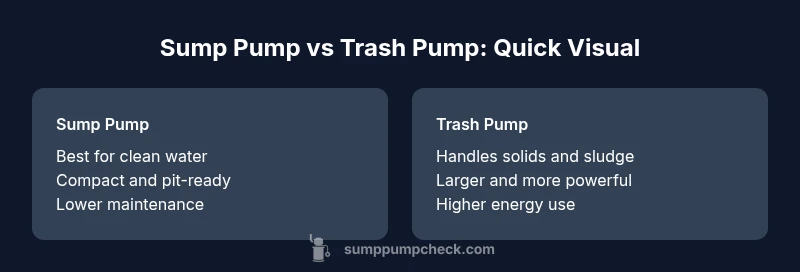
According to Sump Pump Check, the key distinction is that a sump pump is designed to move clear water from a pit to a discharge point, typically in a basement, while a trash pump is built to handle water that contains solids or debris. Sump pumps tend to be compact, operate quietly, and rely on a float switch to start and stop. Trash pumps are larger and may use higher-powered engines or pumps to break up and pass larger solids. This section lays the groundwork for the term sump pump vs trash pump and explains why you cannot assume they are interchangeable in all scenarios. Throughout this guide we reference the two options to help homeowners select the right tool for the job.
Use-case scenarios: when to choose each pump
Selecting the right pump starts with understanding the water you’re moving. For basement drainage, flood prevention, or routine clear-water removal, a sump pump typically provides reliable, quiet operation with a compact footprint. In contrast, when you expect water with solids, sediment, or organic debris—such as after heavy rains that wash in mud, sewage backup, or construction site dewatering—a trash pump offers superior solids handling and resilience. Real-world scenarios often require a careful assessment of flow needs, pit size, and disposal routes. This section expands on practical decision points and shows how the two pump types align with common homeowner challenges, avoiding the trap of assuming one size fits all.
Performance metrics to compare: flow, head, and solids handling
When evaluating sump pump vs trash pump performance, focus on three core metrics: flow rate, head capacity, and solids handling. Sump pumps generally provide steady, modest flow suitable for continuous basement drainage, while trash pumps push higher flow through larger impellers designed to pass solids. Head capacity determines how high the pumped water can be lifted, which matters when the discharge point is far away or requires elevation. Solids handling reflects the pump’s ability to pass debris without clogging. In practice, model variance means you should check manufacturer specifications for your space and water characteristics, and avoid assuming a higher horsepower automatically translates into better results for every scenario.
Design and materials: impellers, seals, and wear parts
Design choices influence longevity and maintenance. Sump pumps typically use closed or semi-open impellers optimized for clear water and reduced clogging, housed in durable volutes with reliable seals. Trash pumps use robust impellers capable of passing solids, often with more rugged construction to resist abrasion from grit and debris. Material choices—cast iron, aluminum, or composite housings—affect corrosion resistance and heat tolerance in damp environments. Seals, bearings, and gaskets wear over time; choosing the right material for your climate and duty cycle can extend service life and reduce downtime. This section helps you understand why a pump’s build matters as much as its advertised capacity.
Installation considerations: pits, hoses, and electrical setup
Installation is a major part of a successful pump project. Sump pumps fit neatly into a sump pit with a float switch triggering operation, and require a discharge hose or pipe routed to a suitable exterior point. Trash pumps usually demand a larger footprint, more powerful power options, and precise hydraulic fittings to manage higher flow and solids. Electrical safety is critical: ensure proper grounding, use GFCI outlets where required, and follow local codes. Always verify that your discharge path won’t cause flooding or backflow; consider check valves and proper venting. By planning pit size, hose routing, and electrical needs ahead of time, you reduce retrofit costs and operational hiccups.
Cost of ownership and maintenance: upfront and ongoing costs
Cost considerations for sump pump vs trash pump hinge on upfront price, power source, and maintenance frequency. Sump pumps typically come in a lower to mid-range price band with simple maintenance requirements, making them attractive for long-term basements. Trash pumps can be more expensive upfront due to higher-capacity impellers and more robust engines, and they generally demand more regular maintenance to manage solids, seals, and fuel systems. Operational costs depend on power consumption, duty cycle, and the environment in which the pump runs. In practice, homeowners should balance purchase price, expected load (solids vs clean water), and maintenance commitments to estimate total cost of ownership.
Safety, codes, and electrical considerations for pumps in wet spaces
Working with pumps near water requires attention to safety and code compliance. Use GFCI-protected outlets, keep cords and extensions dry, and ensure that electrical panels are accessible but protected. Follow manufacturer guidelines for venting, grounding, and overcurrent protection. In many jurisdictions, inspections or permits apply to pump installation, especially for exterior discharges and backup power solutions. By prioritizing safety and regulatory adherence, you protect people and property while extending equipment life.
Common installation and operation mistakes to avoid
A frequent mistake is selecting a pump based solely on price without considering fluid characteristics. Another pitfall is underestimating discharge length or elevation, which reduces effectiveness. Installing a pump in an undersized pit or failing to seal the pit can allow backflow and debris intrusion. Skipping regular testing of float switches and alarms can leave you unaware of a failure until a flood occurs. This section highlights practical fixes and proactive checks to minimize downtime.
Maintenance routines: monthly, quarterly, and seasonal tasks
A practical maintenance plan covers regular inspection of intake screens for clogs, testing pumps with a dry and wet run, and checking seals and gaskets for leaks. Clean or replace filters as needed, lubricate moving parts if the model requires it, and verify that switches respond correctly at different water levels. For trash pumps, inspect fuel systems, air filters, and cooling fins to prevent overheating. A consistent maintenance schedule reduces the risk of unexpected failures during storms or heavy use.
Quick decision checklist: which pump fits your project?
- Is the water clear or solids-laden?
- Will you operate the pump in a basement pit or outdoors?
- What discharge elevation and distance must be overcome?
- How important is energy efficiency and noise level?
- What is your acceptable maintenance burden?
Answering these questions helps you narrow to sump pump vs trash pump with confidence.
What Sump Pump Check recommends: practical guidance for homeowners
Our team emphasizes matching water characteristics to pump capability. For most residential basements and clean-water drainage, a sump pump offers reliable, low-maintenance performance. Reserve a trash pump for scenarios involving solids or sludge, or when large volumes of muddy water must be moved quickly. The Sump Pump Check team recommends a careful assessment of your site, load, and maintenance tolerance before purchase.
Authoritative sources and further reading
- U.S. Environmental Protection Agency (EPA): https://www.epa.gov/watershed/wastewater-treatment
- Occupational Safety and Health Administration (OSHA): https://www.osha.gov
- Penn State Extension (edu): https://extension.psu.edu
- U.S. Geological Survey (USGS): https://www.usgs.gov
Comparison
| Feature | sump pump | trash pump |
|---|---|---|
| Best for | Basement drainage and clear water | Water with solids or sludge |
| Solids handling | Limited solids | High solids handling |
| Power options | Electric (common in homes) | Electric, gasoline, or diesel (model dependent) |
| Discharge size | Standard hose connections | Larger discharge for solids |
| Footprint | Compact pit-ready unit | Larger footprint for engine and impeller |
| Maintenance | Lower maintenance for typical basements | Higher maintenance for solids handling |
| Cost pattern | Moderate upfront cost | Variable higher cost depending on power and features |
What's Good
- Sump pumps fit in a small pit and simplify installation
- Trash pumps handle solids and sludge effectively
- Sump pumps generally have lower startup complexity
- Trash pumps provide versatility for non-typical liquids
- Quiet operation with compact designs (where applicable)
Drawbacks
- Trash pumps require more fuel and maintenance
- Sump pumps are not suitable for large solids or sludge
- Trash pumps are bulkier and louder
- Higher upfront costs for heavy-duty models
Sump pump is typically the better overall choice for standard basement drainage.
For most homes, choose a sump pump for quiet, reliable removal of clear water. Reserve a trash pump for sludge or debris-laden water; The Sump Pump Check team recommends evaluating your fluid characteristics first and favoring a sump pump unless solids are a concern.
FAQ
What is the primary difference between a sump pump and a trash pump?
The main difference is what they are built to move: sump pumps handle clear water in basements, while trash pumps are designed to pass solids and sludge. Choose based on the fluid you expect and the required discharge.
The main difference is clear: sump pumps move clean water, trash pumps move solids. Pick the one that matches your water.
When should I use a trash pump?
Use a trash pump when you anticipate water that contains solids, debris, or sewage, such as after storms with mud or during dewatering projects. They withstand abrasive materials better than typical sump pumps.
Use a trash pump when water has solids or sludge.
Can a sump pump handle solids?
Most standard sump pumps are not designed for large solids. For solids, consider a trash pump or a solids separator, depending on the material size and volume.
Sump pumps aren’t built for big solids; use a trash pump for that.
What maintenance does each pump type require?
Sump pumps typically require periodic testing and screen cleaning. Trash pumps require more routine inspection of seals, filters, and fuel or power systems to manage debris and prevent clogs.
Sump pumps need testing and screen cleaning; trash pumps need more checks for debris and fuel.
Are there safety concerns with pumps in basements?
Yes. Ensure proper electrical safety, use GFCI outlets where required, and maintain dry surroundings. Follow local codes and keep pump areas accessible for maintenance.
Safety first: use GFCI outlets and keep the area dry.
How do I estimate the cost of a sump pump vs trash pump installation?
Costs vary with model, power source, and installation complexity. Sump pumps usually sit in a modest price range; trash pumps add cost with higher capacity and engines. Include installation and maintenance when budgeting.
Costs depend on model and setup; plan for purchase plus installation and upkeep.
Top Takeaways
- Assess your water type before choosing.
- Sump pumps are ideal for basement drainage of clear water.
- Trash pumps excel with solids and sludge handling.
- Plan electrical and discharge routes before installation.
- Regular maintenance reduces failure risk and extends life.