Sump Pump vs Sewage Pump: A Practical Comparison for Homeowners
Compare sump pumps and sewage pumps to choose the right solution for basement drainage, wastewater handling, and reliable backup power. Learn differences, costs, maintenance, and best-use scenarios with insights from Sump Pump Check.


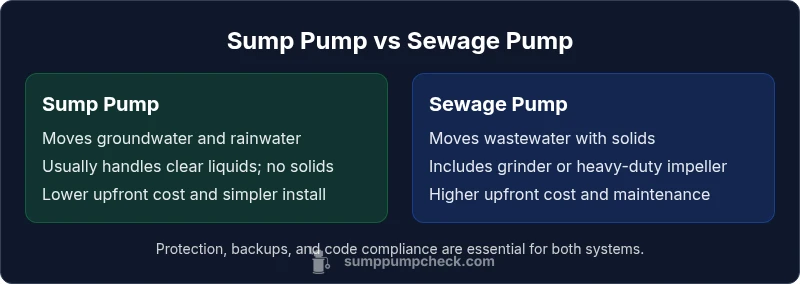
When deciding between a sump pump and a sewage pump, start with the water you are moving. For clean groundwater or rainwater, a sump pump is typically sufficient, while wastewater with solids requires a sewage pump with grinder or solids-handling features. In most homes, a modern sump pump with a backup power option provides the best balance of cost, reliability, and safety; reserve a sewage pump for true sewage or sludge scenarios.
What Are Sump Pumps and Sewage Pumps? Defining the Two Essentials in Basement Drainage
In the modern home, the phrase sump pump vs sewage pump is often used to describe two distinct machines that protect living spaces from water and waste-related damage. A sump pump sits in a basement sump basin and moves groundwater or rainwater away from the dwelling, typically to a storm drain or exterior landscape. A sewage pump, by contrast, is designed to handle wastewater that contains solids from toilets, sinks, and drains, and it pushes that effluent into a sewer line or septic system. The Sump Pump Check team emphasizes that choosing the right device hinges on understanding the type of liquid to be moved, the presence of solids, and local plumbing requirements. Getting this choice right reduces the risk of clogs, backups, and improper discharge that can trigger costly repairs.
Core Differences That Matter: Solids Handling, Performance, and Codes
The biggest differentiator is solids handling capability. Sump pumps are optimized for clear water from groundwater or rainwater and can struggle with solids or fibrous debris. Sewage pumps incorporate grinder mechanisms or impeller designs intended to move solids and toilet waste; they’re built to handle effluent that would clog a standard sump pump. Performance-wise, both pumps have ratings for flow and head, but sewage pumps often require heavier construction and additional protections due to corrosive or viscous wastewater. Codes and permits also diverge: sewage pump systems may require backflow prevention devices, leakage monitoring, and dedicated electrical circuits, while sump systems focus on flood prevention and exterior discharge compliance. Always consult local codes and the Sump Pump Check guidance before purchase or installation.
How They Work: Components and Operation
Both pump types rely on an electric motor and an impeller, yet the supporting components differ in purpose. A sump pump sits in a basin and uses a float switch or electronic sensor to start pumping when water rises. It empties water out through a discharge line toward an exterior outlet or storm sewer. A sewage pump integrates a grinder or enhanced impeller to macerate solids and maintain a continuous flow into the building’s sewer or septic system, often with more robust seals and housing. In damp basements, you’ll also want to consider GFCI protection and a dedicated circuit. Regular testing ensures the float and switch respond promptly, preventing overflow during storms.
When to Use Each Device: Typical Home Scenarios
Use a sump pump when your primary risk is groundwater intrusion or rainwater entering the basement through cracks or poor grading. It’s the go-to solution for preventing basement flooding with a reliable backup strategy (battery or water-powered). A sewage pump is necessary when the system must move wastewater with solids—such as toilets or heavily tainted graywater—into a sewer or septic line. Some homes may require a combination: a sump pump for groundwater and a separate sewage pump for wastewater, particularly in homes with separate drain pits or complex plumbing layouts. In rare cases, a dual-pump setup provides best-in-class protection against both water and sewage issues.
Installation Considerations: Pits, Check Valves, and Discharge Piping
Proper installation involves sizing the basin and selecting an appropriate discharge path that complies with local codes. Sump pumps usually discharge to exterior lines or a dedicated drainage area, with a check valve to prevent backflow. Sewage pumps require piping that connects to the sewer line or septic system and often use more robust fittings and grinder-equipped design. Both setups benefit from a back-up power option and an anti-siphon arrangement. It’s critical to use corrosion-resistant materials and consider access for maintenance. Professional installation by a licensed contractor is recommended to ensure compliance and long-term reliability.
Maintenance and Longevity: Inspection, Cleaning, and Replacements
Routine maintenance extends the life of either pump. Inspect the basin, power cord, and switch for wear; clean out debris monthly and test run the pump during dry weather to verify operation. For sewage pumps, periodic checks of the grinder mechanism, seals, and impeller are essential to prevent clogging and leaks. Backup systems—whether battery or water-powered—should be tested quarterly and replaced as needed. Keeping spares on hand, labeling discharge lines, and recording maintenance events helps reduce downtime and protects your investment over time.
Cost Considerations: Upfront, Installation, and Running Costs
Upfront costs vary by pump type and installed features. Sump pumps generally have lower initial costs and simpler installation, but adding a backup, proper discharge piping, and a check valve increases total expense. Sewage pumps tend to cost more upfront due to heavier construction, grinders, and the need for robust piping and sometimes a larger basin. Installation charges cover electrical work, backflow protection, and code compliance. Ongoing costs include electricity usage and periodic part replacements such as seals, impellers, and battery backups for power resilience. A well-planned setup often prioritizes a reliable sump pump with a robust backup, reserving a sewage pump for wastewater-specific needs.
Backup Options and Power Resilience
Power outages are a leading cause of basement flooding and sewage setbacks. A sump pump is well-suited to pairing with a battery backup or a reliability-focused water-powered backup system to keep the pump running during outages. Sewage pumps benefit from similar backups, but the considerations also include maintaining continuous wastewater removal during storms or outages. A properly sized backup approach provides a critical safety net; Sump Pump Check highlights that testing backups quarterly is essential to ensure readiness when the power grid is compromised.
Common Mistakes and Myths Debunked
A frequent error is using a sump pump where a sewage pump is required, or attempting to pump sewage through a non-grinder sump. Some assume that horsepower alone guarantees flood protection, but wrong-sizing can lead to overflow. Another myth is that more frequent maintenance is always better; excessive maintenance without a plan wastes resources. Finally, some homeowners overlook local codes, risking noncompliance and penalties. Correctly aligning the pump type with the specific water, solids content, and discharge path minimizes failures and improves performance across all seasons.
A Practical Decision Checklist
- Determine water source: groundwater vs wastewater. 2) Check solids content in the liquid. 3) Verify discharge location and local code requirements. 4) Confirm electrical circuit availability and backup power options. 5) Consider future needs (risk of power loss, home expansion). 6) Consult a licensed professional for a final assessment. Use this quick checklist to guide your choice and ensure you select the right pump for your basement and wastewater needs.
Comparison
| Feature | Sump Pump | Sewage Pump |
|---|---|---|
| Solid handling | Typically handles clear water and small debris; not designed for solids | Engineered for solids and wastewater; often includes grinder or macerator |
| Ideal use case | Groundwater and rainwater intrusion in basements | Wastewater disposal and sewage lifting to sewer/septic lines |
| Discharge and piping | Discharge to exterior lines or storm sewer; backflow prevention common | Discharge to sewer/septic with appropriate piping and check valves |
| Power and maintenance | Lower maintenance; simpler installation | Higher maintenance needs; heavier construction and components |
| Backup options | Battery or water-powered backups common | Backups recommended; may require higher-capacity systems |
| Cost and installation | Lower upfront cost; simpler installation | Higher upfront cost; more complex plumbing and basins |
| Reliability and noise | Reliable for non-solids; generally quieter | Can be noisier; grinder mechanisms may increase wear |
What's Good
- Reduces flood risk by removing groundwater and rainwater efficiently
- Sewage pumps enable proper disposal of wastewater with solids
- Backups increase resilience during power outages
- Both systems can be integrated with backflow prevention for safety
Drawbacks
- Sewage pumps require more maintenance and robust components
- Sump pumps cannot reliably handle sewage or solids
- Higher upfront and installation costs for sewage systems
- Local codes may impose stricter requirements for sewage installations
For most homes, a modern sump pump with a backup is the best balance of cost and reliability; reserve a sewage pump for true wastewater or solid-laden discharge.
Sump pumps are generally sufficient for groundwater and rainwater. Use sewage pumps only when solids are present or when the wastewater system requires pumping to a sewer or septic line.
FAQ
What is the main difference between sump pumps and sewage pumps?
The main difference is what each pump is designed to move. Sump pumps handle clean groundwater and rainwater, whereas sewage pumps are built to move wastewater that may contain solids. Choosing the right one depends on your water source, solids content, and local codes.
Sump pumps move clean water from basements, while sewage pumps handle wastewater with solids. Pick based on water type and local codes.
Can a sump pump handle sewage or gray water?
A standard sump pump is not designed to handle sewage or solids. Using it for sewage can lead to clogs and damage. If wastewater with solids is present, a sewage pump with grinder or macerator is typically required.
No, a sump pump isn’t suitable for sewage. Use a sewage pump with grinder for solids.
Do I need a permit or codes to install either pump?
Permit requirements vary by location. Sewage pump installations often have stricter requirements for backflow prevention and venting. Always check with your local building department and follow the guidance from Sump Pump Check when planning the install.
Check local codes; sewage pumps often need permits and backflow protections.
What maintenance tasks are common to both pumps?
Regular inspection of basins, switches, and seals is important for both. Clean debris, test run the pump, and verify backup power sources. Replace worn parts like seals, impellers, or switches as needed.
Inspect, clean, test run, and check backups regularly for both pumps.
How do I decide if I need a backup pump?
If power outages are common in your area or if flood risk is high, a backup pump (battery or water-powered) is wise. Backups reduce downtime and protect your basement during storms.
Backups are smart where outages are likely or flood risk is high.
What is the typical lifespan of these pumps?
Lifespan depends on usage, environment, and maintenance. With proper care, pumps can last several years, but components like seals and grinders wear and may need periodic replacement.
With good maintenance, expect several years of service; parts wear over time.
Top Takeaways
- Assess water source first: groundwater vs wastewater
- Prioritize solid-handling needs to avoid clogging
- Pair pumps with reliable backups for resilience
- Follow local codes for discharge and backflow protection
- Plan for maintenance and eventual component replacements