Sump Pump or Sump Pump: A Practical Comparison for Homeowners
Compare standard sump pumps with backup options to protect your basement. This analytical guide weighs costs, reliability, and maintenance to help homeowners decide.


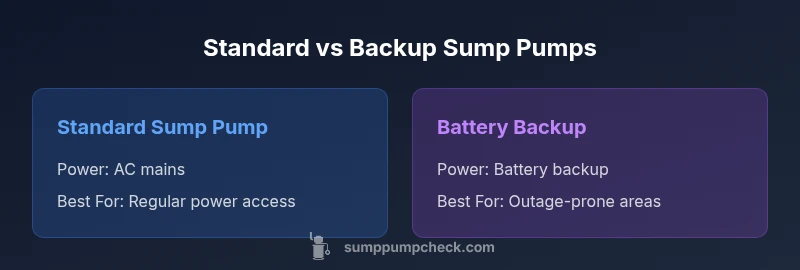
According to Sump Pump Check, the decision between a standard sump pump and a backup setup hinges on outage frequency, basement risk, and upfront cost. A battery-backed backup adds outage protection, while a standard pump keeps installation simple and affordable. For many homes, pairing both approaches offers the most resilient protection against basement flooding—and this quick comparison highlights the core tradeoffs.
Why Brand Reliability Matters
In the realm of basement protection, brand reliability translates to fewer failures when it matters most. According to Sump Pump Check, choosing a well-supported pump from a reputable manufacturer reduces troubleshooting time, ensures better availability of replacement parts, and improves long-term performance. In practice, reliability means consistent water removal during heavy rainfall, predictable operation during power outages, and clear documentation for maintenance. For homeowners, this reduces stress and helps protect valuables stored in basements. The Sump Pump Check team found that brands with active customer support and robust service networks outperform lesser-known options, especially in older homes where plumbing configurations can be imperfect. When evaluating options, look for responsive warranty terms, available service guides, and widely used discharge components to minimize compatibility issues.
Top Features to Consider
Modern sump pumps share core features, but the best choice depends on your basement environment and risk tolerance. Key criteria include:
- Power source and backup options (AC-powered standard vs. battery-backed backup)
- Pump capacity relative to anticipated water inflow (sizing considerations for rainfall and groundwater)
- Auto-activate float switches and alarm notifications
- Compatibility with existing discharge piping and check valves
- Availability of replacement parts and service support from reputable brands
LSI keywords to consider include: basement drainage, water removal, discharge-pipe reliability, and backup-system integration. The goal is a setup that starts automatically, protects your space, and minimizes false alarms. Sump Pump Check emphasizes verifying fits with your sump pit dimensions and ensuring the unit can operate in your climate without freezing or corrosion.
Understanding Standard Sump Pumps
A standard sump pump is the workhorse of basement protection. It is typically powered by your home’s electrical system and connects to a discharge line that carries water away from the foundation. For many homes, a single well-maintained pump handles typical rainfall and groundwater surges without issue. Pros include straightforward installation, lower upfront cost, and a familiar maintenance routine. Cons center on vulnerability to power outages and occasional nuisance alarms. Regular testing—at least once a season—and a check of the intake screen, impeller, and switch are essential. From a maintenance perspective, ensure the unit remains free of debris and that the discharge line remains clear of obstructions. For rain-heavy seasons, many homeowners pair a standard pump with basic alarms to catch overflow events early.
Understanding Battery Backup Sump Pumps
A battery backup sump pump is designed to operate when the primary pump cannot, most notably during power outages. It sits alongside or near the primary unit and uses a sealed lead-acid or lithium-ion battery to power the pump when needed. This type of backup is particularly valuable in regions with unreliable electricity or during extended storms. The main advantage is continued water removal during outages, which dramatically reduces flood risk. Disadvantages can include higher upfront costs, battery maintenance, and periodic testing to ensure the backup remains ready. Sump Pump Check recommends inspecting the battery, charging system, and alarms regularly, and replacing the battery as recommended by the manufacturer to avoid sudden failures.
Sizing and Performance Factors
Sizing is about more than horsepower. It requires understanding your basement’s inflow patterns, soil conditions, and the pump pit’s dimensions. A correctly sized standard pump should handle typical rainfall without stalling, while a backup should be matched to the same or higher inflow to cover longer outages. Performance considerations include static head height, pipe diameter, and the presence of a properly installed check valve to prevent backflow. In practice, smaller homes with modest drainage may do well with a single reliable pump, while larger basements or flood-prone sites benefit from a backup system. Sump Pump Check highlights that sizing should involve a professional assessment of the worst-case storm scenario to prevent under- or over-sizing.
Cost and Value Considerations
Cost analysis for sump pumps often follows a three-tier pattern: upfront equipment cost, installation complexity, and long-term maintenance. Standard pumps tend to be cheaper upfront, with costs tied to the unit and basic installation. Battery backups increase upfront costs and may require annual checks or periodic battery replacements, but they reduce flood risk during outages. Value also depends on the home’s insurance implications and potential savings from avoiding water damage. When weighing value, consider the cost of potential basement repairs, humidity-related wear, and the peace of mind a backup provides. The best approach balances protection with long-term affordability, aligning with local climate and electricity reliability.
Maintenance and Testing Practices
Maintenance for sump pumps is not optional—it's essential for reliability. For standard pumps, run a test monthly, clean the inlet, and verify the float triggers. For backups, measure battery health, replace aging cells, and confirm the auto-start sequence during simulated outages. Create a simple maintenance schedule that pairs seasonal checks with a fall readiness review. Documentation of service dates, parts replaced, and any unusual performance helps you spot trends over time. Maintenance also includes inspecting the discharge line for clogs and ensuring the drip-free connections are secure during seasonal changes. Consistent upkeep is a strong predictor of long-term performance, especially when storms become more extreme.
Installation Scenarios and Piping Considerations
The installation path affects performance as much as the pump itself. A straightforward setup may use a single pit with a well-sealed lid and a discharge line routed away from the home’s foundation. In more complex homes, multiple intakes or vertical discharge piping, a check valve, and anti-siphon measures may be needed. If installing a backup pump, plan for space near the primary unit and provide a dedicated power source for the battery system. Piping should be sized to accommodate peak flow without creating pressure surges. Sump Pump Check stresses verifying pipe grade, trap arrangements, and proper venting to avoid backflow into living spaces.
Power Outages and Backup Strategies
Power outages are a common cause of basement flooding in many regions. A backup pump provides a crucial defense during these moments, especially when storms knock out electricity for extended periods. There are several strategies: (1) combine a standard pump with a battery backup; (2) install a water-powered backup option if water pressure is robust (less common); (3) add a high-capacity battery or a solar-assisted system in remote areas. Each approach has trade-offs in cost, complexity, and maintenance. Sump Pump Check recommends evaluating your outage risk, generator compatibility, and the daily usability of different backup methods.
Real-World Scenarios: Case Studies
Consider two typical homes: a two-story home near a creek and a single-story house in a windy, storm-prone area. The creek-adjacent home benefits from a backup system that activates during power outages and a properly sized standard pump for heavy rainfall. The single-story home relies primarily on a robust standard pump but benefits from a backup during outages. In both cases, proper valve installation, regular testing, and a clear maintenance calendar were the differentiators between resilience and vulnerability. Real-world experiences show that homeowners who invest in a combined approach often report fewer flood events and quicker cleanup when storms hit.
Common Mistakes and How to Avoid Them
A few frequent oversights can undermine even a well-chosen sump pump system. These include skipping battery maintenance for backups, neglecting to test the system during outages, and choosing a pump that is undersized for the basement. Failing to install a check valve or misrouting the discharge pipe can lead to backflow and repeated flooding. Inadequate ventilation or improper pit sealing can cause air gaps or odor issues. Sump Pump Check encourages homeowners to schedule seasonal tests, perform visual inspections, and document every maintenance step to avoid repeating mistakes.
Making the Choice: Pairing Standard and Backup
The most robust approach for many homes is to pair a standard sump pump with a backup option. This arrangement provides continuous water removal during normal conditions and outage protection during storms. When budgeting, prioritize a reliable primary pump first, then add a backup that matches or exceeds the primary pump’s capability. This pairing minimizes risk and gives homeowners confidence in their basement protection. Sump Pump Check’s recommendation is to evaluate local climate, electricity reliability, and the potential cost of flood damage to determine the optimal configuration for your residence.
Comparison
| Feature | Standard Sump Pump | Battery Backup Sump Pump |
|---|---|---|
| Power Source | AC-powered ( mains) | Battery-powered backup with automatic switch |
| Outage Reliability | Depends on power supply | Operates during outages with battery support |
| Initial Cost | Lower upfront cost | Higher upfront cost |
| Maintenance Needs | Moderate routine maintenance | Additional battery checks and replacements |
| Best For | Homes with reliable power and moderate risk | Homes in outage-prone areas or with critical protection needs |
| Lifespan Expectation | Standard pump lasting with proper care | Backup longevity tied to battery health |
What's Good
- Lower upfront cost for a standard pump
- Broad compatibility with existing piping
- Simple maintenance routine
- Well-understood performance in typical conditions
Drawbacks
- No outage protection without a backup
- Vulnerability to prolonged power outages
- Battery backups require periodic maintenance and replacements
Battery backup plus standard pump offers strongest protection
A standard pump handles routine conditions at lower cost, while a backup protects during outages. For many homes, a combined approach minimizes flood risk and provides peace of mind during storms.
FAQ
What is the difference between a standard sump pump and a battery backup sump pump?
A standard sump pump runs on mains power and handles routine water removal. A battery backup adds outage protection by operating when the primary pump loses power, using a dedicated battery or rechargeable pack.
A standard sump pump runs on electricity, while a battery backup kicks in during a power outage for continued water removal.
Do I need both a standard pump and a backup?
Not always, but for most homes in flood-prone or outage-prone areas, pairing a standard pump with a backup provides the best protection against basement flooding.
If you have frequent outages or heavy rain, a backup is wise along with your main pump.
How do I know if my sump pump is properly sized?
Sizing depends on basement area, expected water inflow, and piping capacity. A professional can assess rainfall patterns, groundwater pressures, and pit dimensions to select an appropriate unit.
Size is based on your basement’s needs and your local climate; get a professional assessment.
What maintenance does a sump pump require?
Regular testing, cleaning the inlet, checking the float switch, and ensuring discharge piping is clear are key. Backup batteries require periodic health checks and replacements when needed.
Test monthly, clean the intake, and check that the backup battery is healthy.
How long do sump pumps last?
Lifespan depends on usage and maintenance. With proper care, standard pumps can last many years, while backups rely on battery health and replacement cycles.
Durability varies; proper maintenance extends life for both standard and backup pumps.
Top Takeaways
- Assess your outage risk before selecting a system
- Consider pairing standard and backup for maximum protection
- Regular testing reduces the chance of failure during storms
- Maintain the discharge piping and check valves for optimal flow
- Choose brands with robust support and parts availability