What to Do If Sump Pump Pipe Freezes: Quick Fixes
Urgent, practical guide to thawing a frozen sump pump discharge pipe, preventing backup, and restoring safe basement drainage. Quick steps, safety tips, and when to call a professional.


Most likely, a frozen sump pump discharge pipe blocks water flow and triggers backup. The quickest fix is to safely thaw and clear the ice, restore an unobstructed path, and restart the pump. If ice persists or you smell sewage, stop immediately and contact a professional.
What to do if sump pump pipe freezes
According to Sump Pump Check, a frozen discharge line is a common winter hazard that can lead to backups and basement flooding. What to do if sump pump pipe freezes requires urgent action to restore flow and minimize damage. Start by ensuring you and your family are safe, then power down the unit if you cannot immediately thaw the line. The primary goal is to thaw the pipe, clear the blockage, and reestablish a direct route for water to exit outside. This scenario is exactly why proactive winter maintenance matters, and why homeowners should know the quickest first steps to prevent costly floods. The Sump Pump Check team emphasizes acting fast to avoid overflow and water damage.
Quick checks you can perform before calling a pro
Before you pick up the phone, run through a few safe checks that don’t require special tools. Verify the sump pump is plugged in and the outlet is live, but do not touch live electrical components if water is present. Inspect the discharge path outdoors for obvious ice buildup, snow, or debris that could block flow. Look for kinks or bends in the discharge hose inside the basement and along the foundation. Confirm the check valve is properly installed to prevent backflow. If you find obvious ice in the line outdoors, you can begin careful thawing from the exterior side while leaving the interior unit powered off until you re-test.
Diagnosing the frozen pipe problem: common causes
There are a few recurring culprits when the discharge pipe freezes. Outdoor exposure is a major factor — pipes routed through unheated areas or exposed walls quickly lose heat in freezing weather. Ice can form at the outlet or along the pipe due to snow or frost. A blocked or misaligned check valve can trap pressure and promote ice formation in the line. Debris or sediment buildup inside the pipe can also slow discharge, making freezing more likely during cold snaps. Finally, a lack of insulation around the pipe, or a long run of pipe in an unheated crawl space, increases freezing risk.
Diagnostic flow: symptom to solution in 5 steps
- Symptom: You hear the pump running but see little or no water exiting the discharge. 2) Likely cause: Ice or blockage in the discharge path. 3) Immediate solution: Safely thaw the pipe and clear the path. 4) Verify: Re-test the system and watch for steady flow. 5) If the problem persists: Stop and call a professional, as there may be a deeper issue with the pump or line.
Step-by-step fixes for the most common cause
- Power down the sump pump to prevent shock hazards. 2) Locate the discharge pipe and inspect for visible ice or kinks near the exterior outlet. 3) Clear the ice block using gloves and a plastic tool; do not hit the pipe. 4) Apply gentle heat to the exterior portion of the pipe (e.g., warm towels or a hair dryer on low, keeping the dryer at a safe distance). 5) Re-check the pipe and any joints for leaks or cracks and ensure the check valve is seated correctly. 6) Reconnect power and run the pump briefly to confirm water is moving freely; monitor for a return to normal operation. If the ice returns or you see leaks, stop and call a professional.
Safety tips and warnings
Handling a frozen sump pump discharge pipe requires care. Do not use open flames or boiling water to thaw the pipe — this can damage the pipe and create a fire risk. Never touch a live outlet or plug with wet hands. Keep children and pets away from the work area. If you smell gas or see signs of leakage, evacuate and contact a professional immediately.
Prevention and maintenance to avoid future freezing
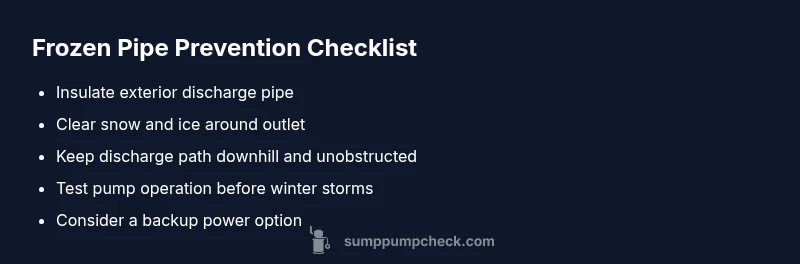
Preventing freezes starts with insulation. Insulate exposed discharge pipes with foam sleeves or heat tape rated for wet environments. Ensure drainage runs downhill and is clear of snow and ice at both ends. Consider routing a portion of the discharge inside a heated area or using a longer, better-insulated run. Schedule a winter maintenance check for your sump pump setup, including float switch alignment and backup power. A small yearly tune-up can dramatically reduce the chance of a freeze.
What to do during a thaw and post-freeze checks
During a thaw, monitor the discharge line for any residual ice melt and ensure the area around the exterior outlet remains clear. After thawing, run the sump pump for a longer test cycle to confirm it restores full flow. Check the inside of the sump pit for debris that may have caused prior obstruction and remove it. Finally, document what happened and note any parts that may require replacement before the next winter season.
Steps
Estimated time: 45-60 minutes
- 1
Power down safely
Unplug the sump pump or switch off the circuit breaker. This prevents electrical shock while you inspect the discharge path.
Tip: Use a non-contact voltage tester to confirm the outlet is de-energized. - 2
Inspect the discharge path
Look for obvious ice blockages at the exterior outlet and along the discharge hose. Do not force the ice; assess how you will thaw safely.
Tip: Keep kids and pets away; use gloves when handling icy sections. - 3
Clear ice and debris
Gently remove ice with a plastic tool; avoid sharp objects that can puncture pipes. Clear any snow or debris from the outlet opening.
Tip: If you can’t reach the ice safely, skip this step and move to exterior thawing. - 4
Apply safe heat to exterior pipe
Use warm towels or a hair dryer on low setting to slightly heat the exterior portion of the pipe. Do not use an open flame.
Tip: Maintain a safe distance and frequently recheck for any softening of ice. - 5
Re-check fit and test
Reconnect power and run the pump for a short cycle to verify water is moving freely. Look for steady outlet flow.
Tip: Stand back from the outlet while testing. - 6
Assess and decide on next steps
If you still see ice or slow flow after thawing, or you notice cracks or leaks, stop and contact a professional.
Tip: Document the issue for the technician.
Diagnosis: No or reduced water flow from the discharge outlet during cold weather
Possible Causes
- highDischarge pipe blocked by ice or snow
- mediumIce buildup along the pipe due to cold temperatures
- lowFloat switch misalignment or pump not cycling
Fixes
- easyCarefully thaw exterior pipe and clear ice; ensure outlet is free of obstruction
- easyWarm the pipe area with non-flame methods and re-test; avoid open flames
- mediumInspect check valve and float switch; reposition or replace if faulty
- easyIf the problem persists after thawing and checks, call a licensed plumber or sump-pump technician
FAQ
What causes sump pump discharge pipes to freeze?
Freezing typically happens when outdoor discharge pipes are exposed to cold temperatures without adequate insulation, or when ice builds up due to snow and debris blocking the path. Misaligned or blocked check valves and poor drainage can also contribute.
Freezing happens when discharge pipes are exposed to cold weather without enough insulation or when ice blocks the path; valves and drainage issues can make it worse.
Is it safe to thaw a frozen pipe myself?
Yes, using warm towels or a hair dryer on a low setting is generally safe. Avoid open flames and rapid heating, which can damage the pipe. If you feel unsure, stop and contact a professional.
Yes, you can thaw with warm towels or a low-heat hair dryer, but avoid flames and rapid heating. If unsure, call a pro.
Should I install heat tape on the discharge line?
Heat tape can help prevent freezing on exposed lines, but it must be rated for wet environments and installed according to manufacturer instructions. Consider a professional install for best results.
Heat tape can help, but install it per instructions and consider professional help.
What if the pipe bursts after thawing?
Shut off the water supply and power, then contact a plumber immediately. Do not attempt to use the sump pump until the pipe is repaired and inspected.
If you see a burst, shut everything off and call a pro right away.
When should I call a professional for a frozen discharge pipe?
If thawing doesn’t restore flow, if you notice leaks, or if you’re unsure about safe handling, contact a licensed sump-pump technician or plumber for a thorough assessment.
Call a pro if thawing fails or you see leaks or feel unsure.
How can I prevent future freezes?
Improve insulation, keep the outdoor area clear of snow, and ensure the discharge path is uphill and unobstructed. Regular maintenance reduces the chance of recurrence.
Insulate pipes, keep the area clear, and maintain your sump pump regularly to prevent repeats.
Watch Video
Top Takeaways
- Act quickly to thaw and clear the discharge path
- Inspect the float switch and check valve for proper operation
- Insulate and maintain to prevent future freezes
- Call a professional if issues persist or leaks appear