Sump Pump Line Frozen: Quick Troubleshooting Guide
Learn how to identify, thaw, and prevent a frozen sump pump line. This step-by-step guide covers safety, diagnosis, and prevention to protect your basement drainage during cold weather.


A frozen sump pump discharge line is the most common winter culprit behind poor drainage. The quick fix is to thaw the line safely, clear ice, and verify that water flows freely away from the foundation. Then inspect outdoor exposure, insulation, and slope to prevent future freezing.
What It Means When the Sump Pump Line Frozen
When the discharge line is exposed to freezing temperatures, moisture inside can ice up and block the path water normally takes to exit the home. If you notice water backing up in the basin or a drop in discharge efficiency, a frozen line is a leading suspect. According to Sump Pump Check, winter freezes are a common challenge for homeowners living in colder zones. The key symptom is reduced flow or a visible block at the discharge point. If the line is clearly frozen, you’ll typically hear the pump running but see little or no water leaving the foundation area. Addressing this quickly helps prevent basement flooding and soil saturation around your foundation.
Immediate Safety Steps You Should Take Now
Safety comes first. Begin by powering off the sump pump at the circuit or unplugging the unit to avoid electrical shock. If water is near outlets, dry the area and avoid standing water. Do not attempt to thaw the line while the pump is plugged in. After you’ve ensured power is off, locate the discharge line and assess whether the outdoor portion is exposed to wind, snow, or ice. Use insulated gloves and a bucket of warm (not hot) water or a hair dryer on a low setting to begin thawing from the exterior end. Once thawed, run the pump briefly to verify water exits away from the home and does not re-freeze immediately. Safety reminders: never use open flames or torches near electrical components.
Why the Line Freezes: Common Causes in Winter
Several factors increase the likelihood of a frozen line: long outdoor runs, exposed discharge pipes, and inadequate insulation. Outdoor sections are especially vulnerable when they are buried under snow or shielded by wind. A sudden cold snap can turn a normally warm discharge line into an ice conduit. Basement temperatures, poor venting, and loose fittings can also contribute to heat loss and ice formation. Addressing these root causes helps prevent future freezes and reduces the chance of repeat emergencies.
Diagnostic Approach: Distinguishing Frozen Line from Other Issues
Begin with a straightforward test: disconnect power, then inspect the discharge pipe for ice buildup. If you can safely feel ice at the outlet or see a solid ice plug in the line, a freeze is the likely culprit. Other possibilities include a clogged check valve, a kinked pipe, or a sump pump that isn’t cycling properly. Sump Pump Check Analysis, 2026 notes that recognizing frozen discharge as the primary issue in winter weather improves repair times. If water flow resumes after thawing but returns to slow after a few hours, inspect for re-freeze points and insulation gaps.
Step-by-Step Fix: Thawing, Clearing Ice, and Re-Testing
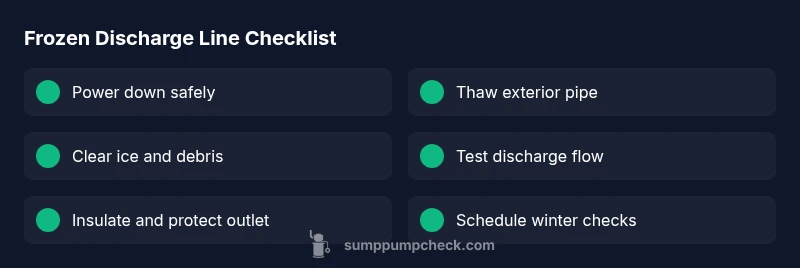
Follow a structured approach to restore flow without damaging components. Start by safely powering down and isolating the unit. Thaw the exterior line with warm water or a hair dryer on a low setting, avoiding direct contact with electrical parts. Once ice loosens, gently remove it and inspect the pipe for cracks or crushed sections. Reconnect the line, ensure proper slope away from the house, and re-run the sump to confirm steady drainage. If the line refreezes, consider insulating exposed sections and upgrading outdoor termination with a protective cover.
Prevention Tips: Insulation, Routing, and Maintenance
To reduce future freezes, insulate exposed discharge pipes and protect them from wind exposure. Ensure the discharge line slopes away from the foundation and ends above grade to prevent water from collecting near the footing. Regularly inspect the line for cracks, loose fittings, and ice buildup during cold months. Create a simple maintenance schedule: inspect annually, clear snow from the discharge area after storms, and test the pump monthly during winter.
When to Call a Professional: Safety and Code Considerations
If you cannot safely access the discharge line, suspect a damaged pipe, or repeatedly experience freezes despite basic mitigation, contact a licensed plumber or sump pump technician. Professional assessment is especially important if the line runs under a concrete slab or through restricted spaces. In some jurisdictions, there are codes about discharge height, check valve installation, and drainage routing; a pro can ensure compliance and reduce risk of basement flooding.
Steps
Estimated time: 60-90 minutes
- 1
Power down and safety check
Unplug the sump pump or switch off the breaker. Verify the area is dry and avoid standing water. Confirm there are no exposed electrical connections before handling the discharge line.
Tip: Always assume water and electricity don’t mix; keep your hands dry and use insulated gloves. - 2
Locate discharge line
Follow the discharge pipe from the pump to its exit point. Identify outdoor segments that may be exposed to cold air, wind, or snow.
Tip: Take photos of fittings before loosening anything to aid reassembly. - 3
Thaw exterior portion
Apply warm water or a low-heat hair dryer to the frozen section, working from the exit toward the indoor connection. Do not apply direct flame or very high heat.
Tip: Run water through the line periodically to test progress without creating a sudden surge. - 4
Clear ice and debris
Gently remove slush and ice from the pipe using a plastic scraper or gloves. Check the inside for any debris that could block flow.
Tip: Be careful not to crack or crush the pipe while removing ice. - 5
Re-test discharge
Reconnect power and run the sump pump for several minutes. Confirm water exits clearly away from the foundation and the line remains unfrozen.
Tip: Watch for leaks around joints and verify the slope directs water away. - 6
Prevent future freezes
Install insulation on exposed sections and consider a protective cover at the outlet. Schedule regular winter checks and ensure proper line routing.
Tip: A simple layer of insulation can dramatically reduce re-freeze risk.
Diagnosis: Discharge line appears blocked or water is not draining away from the foundation when the sump pump runs
Possible Causes
- highLine is physically frozen outdoors or in crawl space
- mediumIce clog near outlet or check valve
- lowLine kink or crushed pipe
Fixes
- easyThaw line safely and inspect for leaks; clear ice
- easyCheck insulation and slope; reroute if needed
- mediumReplace damaged pipe or install protective cover
FAQ
What is the most common cause of a frozen sump pump line?
The most common cause is a discharge line exposed to freezing temperatures, especially outdoors. Inadequate insulation, extended runs, and wind exposure increase the risk of ice formation. A frozen line blocks drainage and can lead to basement backups if not addressed promptly.
The most common cause is the discharge line freezing outdoors, especially with poor insulation and long runs.
How do I safely thaw a frozen discharge line?
Power down the sump pump, locate the frozen section, and thaw using warm water or a hair dryer on a low setting. Do not use an open flame. After thawing, test flow and inspect joints for cracks or leaks.
Power off first, thaw with warm water or a gentle heat source, then test drainage.
When should I call a professional?
If the line remains frozen after thawing, you notice repeated freezes, or there is visible damage to the pipe, contact a licensed plumber. Complex routing or code concerns also warrant professional help.
If it keeps freezing or you see damage, call a licensed plumber.
Can improper insulation cause re-freezing?
Yes. Inadequate insulation allows cold air to reach the discharge line, causing rapid refreezing. Improve insulation on exposed sections and shield the discharge exit from wind and snow.
Yes, poor insulation leads to refreezing; improve insulation and shielding.
Will a frozen line affect my warranty?
Warranty terms vary by manufacturer and contractor. Generally, freezing issues are considered maintenance and installation concerns; review your specific warranty for exclusions and required maintenance.
Warranty terms vary; check your policy for exclusions related to freezing.
What maintenance helps prevent future freezes?
Regularly inspect the discharge line, ensure proper slope away from the foundation, and keep exterior outlets clear of ice and snow. Schedule winter inspections and consider insulation upgrades.
Inspect and insulate, keep the exit clear, and check in winter.
Watch Video
Top Takeaways
- Identify the frozen discharge line quickly to restore drainage.
- Follow a safe thawing process and test flow before reactivating the pump.
- Prevent future freezes with insulation and proper discharge routing.
- Know when to call a pro for safety and code compliance.