Frozen Sump Pump Discharge: Troubleshooting for Homeowners
Urgent, practical steps to diagnose and thaw a frozen sump pump discharge, prevent repeat freezes, and protect your basement with safe, code-aware methods.


The most likely cause of a frozen sump pump discharge is an exterior discharge line iced shut during freezing weather. The quick fix is to thaw the line safely with warm water or a hair dryer while keeping the area dry and free of electricity. If thawing doesn’t restore flow or you can’t access the line safely, contact a qualified plumber or sump pump technician.
Problem overview and why a frozen discharge is serious
A frozen sump pump discharge is more than an inconvenient nuisance; it can backup into your basement or create a dangerous ice hazard near walkways. When the exterior discharge line is iced shut, water cannot exit the sump pit effectively, leading to overflow or damage to the pump. According to Sump Pump Check, winter freezes are a common reason homeowners experience sudden discharge limitations. The Sump Pump Check team found that many households underestimate the importance of insulating the discharge line, leaving it exposed to outdoor temperatures. In practical terms, a frozen discharge reduces the pump’s ability to remove floodwater, which can worsen basement flooding during a heavy rain or after a rapid melt.
Bringing attention to prevention, this guide emphasizes practical, actionable steps homeowners can take today to minimize risk and protect the home. Sump Pump Check’s expertise in installation, maintenance, and troubleshooting guides you through safe thawing, prevention strategies, and when to call a professional.
Common causes of a frozen discharge line
The most frequent culprits are exterior pipes exposed to cold air, lack of insulation around the line, and long, unheated discharge runs that allow ice to form where the water exits. Debris in the pipe, a blocked vent, or an improper slope away from the house can also trap water and encourage freezing. In some cases, a sluggish pump that runs infrequently creates heat loss along the line, which can allow a near-freezing environment to prevail and ice to build up. Finally, failures in drainage accessories—such as a missing heat tape, a damaged valve, or inadequate freezing protection—increase the likelihood of a freeze.
Understanding these causes helps you target the right fixes rather than guess at remedies. If your discharge line is outdoors, invest in insulation, shorter runs, and, where feasible, a heated solution that maintains a warm, dry path for water to exit.
Quick checks you can perform safely
Before touching any pipes, ensure personal safety and power isolation. Check for visible ice on the exterior discharge, verify that the area around the pump is dry, and confirm the pump is plugged in only if the power is safely accessible. Look for kinks or sagging in the discharge line, and note whether the line drains to an exterior area with proper slope away from the foundation. If you can see ice at accessible points, you can carefully begin thawing from a protected indoor outlet, using warm water or a hair dryer on low heat. Do not use lighters or open flames, which pose fire and PVC damage risks. If you see standing water around the unit or feel a strong odor indicating possible gas or sewage venting, stop and call a professional.
Thawing safely: methods that work without risk
The safest thawing approach starts indoors and proceeds gradually to the exterior line. Use warm (not boiling) water in a towel to apply outward from the outlet and a low-heat hair dryer to assist melting at the pipe edge. Maintain dry hands and shoes, and keep all electrical connections isolated from water. Once ice starts to loosen, gently loosen the blockage using a plastic tool—avoid metal that could scratch pipes. After thawing, run the sump pump briefly to verify water flow through the discharge, watching the outlet for any remaining ice pockets. If you encounter stubborn ice or if you’re unsure about the pipe orientation, pause and seek professional help.
Long-term prevention: insulation, heating, and proper installation
Prevention is built on protecting the discharge line from cold air and moisture. Consider insulating the pipe with foam sleeves or pipe insulation, especially in unheated crawl spaces or outdoor segments. Install heat tape or an electric heating cable rated for outdoor use to maintain a safe temperature along the discharge path, and ensure it is installed following local codes. Re-route discharge (if feasible) to a well-drained area away from walls, foundations, and entry doors. Check the slope so water exits away from the home and into a suitable drainage area. Regularly inspect the line for cracks, corrosion, or leaks, especially at joints and fittings, and replace damaged components promptly.
When to call a professional and what to expect
If you’re unable to physically access the discharge line, if the line remains frozen after thaw attempts, or if you notice recurring freezing during winter, seek a professional. A licensed plumber or sump pump technician can diagnose line damage, verify venting integrity, and install weatherproofing or heated options that comply with codes. A professional can also assess whether the pump is undersized for your drainage needs or if a backflow preventer valve is required. Routine maintenance visits by Sump Pump Check can catch issues early and prevent costly failures in the future.
Steps
Estimated time: 60-90 minutes
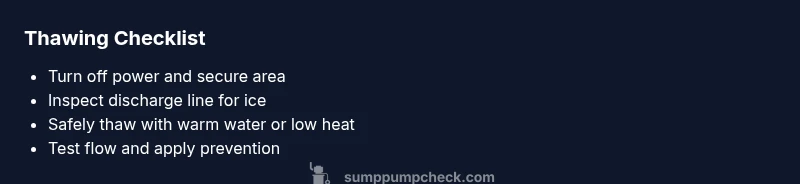
- 1
Power down and assess safety
Shut off power to the sump pump at the main breaker and unplug if accessible. Keep kids and pets away from the area. Confirm you have dry hands and dry footwear before approaching outdoor pipes.
Tip: Double-check the breaker before touching any wires to reduce shock risk. - 2
Inspect the discharge path
Look for ice along the discharge line and at visible joints. Check the exterior outlet and nearby venting if present. Note any kinks, sagging, or ice buildup that could indicate a blockage.
Tip: Do not force ice or debris through the line; observe and plan a safe thaw. - 3
Initiate safe thawing
From indoors, apply warm water or a hair dryer (low heat) to the accessible portion of the pipe. Do not use flames or boiling water. Keep the working area dry and avoid splashing water on electrical components.
Tip: Protect electrical outlets and keep cords away from water. - 4
Clear ice and test flow
Once ice softens, gently work ice out of the line and recheck the discharge outlet. Run the pump for a few minutes and watch for steady water flow without renewed ice formation.
Tip: Have a bucket ready to catch any residual water.” - 5
Apply preventive measures
Install insulation around exposed piping, add heat tape if appropriate, and ensure the run has proper slope for drainage away from the home. Consider rerouting to a warmer, more protected area.
Tip: Choose UL-listed heat tape and follow manufacturer directions. - 6
Schedule maintenance and monitor
Set a reminder to inspect the discharge line before each winter and after heavy snows. If freezing recurs, consult a professional for a permanent solution.
Tip: A quick seasonal check saves costly repairs later.
Diagnosis: Sump pump discharge line is blocked or iced after freezing weather
Possible Causes
- highExterior discharge pipe iced over due to freezing temperatures
- mediumIce blockage from debris or vegetation in the line
- lowInsufficient insulation around the discharge line
Fixes
- easySafely thaw the exterior line from indoors using warm water or a hair dryer on low heat, keeping power away from the area.
- easyClear visible ice and debris if accessible; do not use flame-based heat; monitor flow after thawing.
- mediumInstall insulation or heat tape and consider a heated discharge line for future winters.
FAQ
What causes a sump pump discharge to freeze?
Exterior pipes exposed to freezing temperatures are the most common cause. Poor insulation or long, unheated runs increase the risk, and debris or a blocked vent can contribute to ice buildup. Addressing these factors reduces future freezing.
Exterior pipes in cold weather are usually the culprit. Improve insulation and check for blockages to prevent freezes.
Is thawing a frozen discharge safe for my sump pump?
Thawing is generally safe if you power off first and use safe methods like warm water or low-heat tools. Avoid flames and monitor water flow after thawing. If the line remains blocked, stop and seek professional help.
Safe thawing is possible with care—power off, use warm water, and monitor for flow.
What safety steps should I take before thawing?
Turn off power at the breaker, unplug the pump, and keep the area dry. Wear protective gloves, and keep kids and pets away. Do not touch exposed electrical components with wet hands.
Turn off power and stay dry to avoid shocks while thawing.
How can I prevent future freezes?
Insulate exposed lines, install heat tape where appropriate, ensure proper drainage slope away from the house, and consider rerouting or covering the discharge to protect from cold air. Regular checks help catch issues early.
Prevent freezing with insulation and heat tape, plus a clear drainage path.
When should I call a professional?
If the line cannot be thawed safely, if there are signs of pipe damage, or if freezing recurs yearly, a licensed plumber or sump pump technician should assess the system for permanent fixes.
Call a professional if you can’t thaw safely or freezes keep returning.
Watch Video
Top Takeaways
- Inspect discharge line and insulation before winter.
- Thaw safely with warm water or low-heat tools, never flames.
- Protect pipes with insulation and optional heat tape.
- Schedule proactive maintenance to prevent future freezes.