Clogged Sump Pump Drain Troubleshooting: Step-by-Step
Urgent and practical guide to diagnose and fix a clogged sump pump drain. Learn quick fixes, diagnostic flow, and prevention tips from Sump Pump Check to safeguard your basement.


Most often, a clogged sump pump drain is caused by a blocked discharge line or screen that prevents water from exiting the pit. Start by powering off the pump, then inspect the discharge hose and outside line for debris and ice, clearing with a hose. If that doesn't fix it, check the power and float switch.
What a clogged sump pump drain looks like and why it happens
Water in the sump pit may rise higher than normal or the pump may cycle continuously without lowering the water level. You might hear gurgling or see water backflow toward the pit. According to Sump Pump Check, the most common culprits are a blocked discharge line or a restricted screen that traps debris. Seasonal storms, rooted soil, or ice in the line can all contribute. A clogged sump pump drain doesn’t just waste energy; it raises the risk of basement flooding during heavy rain. Recognizing these signs early helps you act quickly and prevent more serious damage. If the line is blocked, the pump cannot move water away efficiently, and backpressure can force water into unintended paths. In many homes, a simple external blockage is enough to derail a normally reliable system. By understanding the symptom pattern, you can choose a targeted approach rather than guessing.
What a clogged sump pump drain looks like and why it happens
Water in the sump pit may rise higher than normal or the pump may cycle continuously without lowering the water level. You might hear gurgling or see water backflow toward the pit. According to Sump Pump Check, the most common culprits are a blocked discharge line or a restricted screen that traps debris. Seasonal storms, rooted soil, or ice in the line can all contribute. A clogged sump pump drain doesn’t just waste energy; it raises the risk of basement flooding during heavy rain. Recognizing these signs early helps you act quickly and prevent more serious damage. If the line is blocked, the pump cannot move water away efficiently, and backpressure can force water into unintended paths. In many homes, a simple external blockage is enough to derail a normally reliable system. By understanding the symptom pattern, you can choose a targeted approach rather than guessing.
What a clogged sump pump drain looks like and why it happens
Steps
Estimated time: 45-75 minutes
- 1
Power off and secure the area
Shut off power at the main breaker to the sump pump to prevent shocks. Wear rubber-soled shoes and gloves. Make sure the basement floor is dry enough to work safely, and keep children away from the area.
Tip: Never reach into a wet sump pit while plugged in; unplug the unit first. - 2
Inspect the discharge path exterior
Locate the discharge line outlet outside your foundation. Look for ice buildup, leaves, or soil blockages around the cap. Remove obvious debris by hand or with a gloved hand, then use a garden hose to flush the line from the exterior end back toward the pit.
Tip: Clear a visible path first; don’t force a blockage through with aggressive tools. - 3
Check the discharge hose integrity
Trace the hose back to the sump; inspect for kinks, cracks, or detachment. If the hose is damaged, replace it with a properly rated hose. Ensure clamps are secure and that the hose diameter matches the pump outlet.
Tip: Loose connections are a frequent source of backflow; fix them before more invasive steps. - 4
Test the pump and valve after clearing the line
Restore power and run the pump briefly to observe water flow. If water continues to back up, verify the check valve orientation on the discharge line and ensure it is not stuck open or closed.
Tip: A properly installed check valve prevents backflow and protects the pump from short cycling. - 5
Inspect the pump’s internal components
If the line is clear but the problem persists, inspect the float switch for obstruction or misalignment. It should rise with water and trigger the pump. Wobble or sticky movement may indicate wear and require replacement.
Tip: Only handle components that are accessible outside the water; avoid forcing parts beyond their designed range. - 6
Re-test and monitor performance
Run the system through a full cycle, observing for smooth operation and no water backing up. If results are inconsistent, perform a controlled test with water added to the sump to verify continued operation.
Tip: Document observations for future reference and seasonal checks.
Diagnosis: Sump pump runs but water level stays high or rises in the pit
Possible Causes
- highDischarge line blocked by debris, ice, or sediment
- highPower issue (tripped breaker, unplugged outlet)
- mediumFaulty or misadjusted float switch
- lowBackflow due to a bad or missing check valve
Fixes
- easyClear discharge line and exterior hose; flush with water to remove debris
- easyReset breaker or replace faulty outlet; test voltage with a meter
- mediumInspect and adjust or replace float switch; ensure correct mounting
- mediumInspect/check valve and replace if needed; verify proper orientation
FAQ
What are the most common signs of a clogged sump pump drain?
Common signs include water backing up in the pit, continuous running with little water removal, gurgling sounds, and a pump that struggles during rain. Inspect discharge lines and check valve to confirm blockages.
Look for water backing up in the pit, a constantly running pump, and gurgling sounds. Check the discharge line and valve to confirm a clog.
Can a clogged sump pump drain cause basement flooding?
Yes. If the discharge line is blocked, water cannot be removed efficiently, increasing flood risk during heavy rainfall or high groundwater. Addressing the clog promptly minimizes damage.
Yes. A clogged drain can lead to basement flooding during heavy rains; fix it quickly to protect your space.
How do I know if the discharge line is blocked?
Check the exterior outlet for ice, debris, or a kinked hose. Flush the line from outside back toward the pit. If water doesn’t flow freely, the line is blocked and needs clearing or replacement.
Look for ice or debris at the outlet, flush the line, and ensure water moves freely.
Is it safe to use chemical drain cleaners in a sump pump system?
No. Chemical cleaners can damage the sump and pipework and may void warranties. Use physical methods like flushing or mechanical snaking, and consult a professional if unsure.
Avoid chemical drain cleaners in sump systems; they can cause damage. Use flushing or mechanical methods instead.
When should I replace my sump pump?
If the unit is over 7-10 years old, shows frequent failures, or cannot handle typical rain loads, replacement is often more reliable than frequent repairs. Consider a basement backup system for added protection.
If it’s old or unreliable, replacement is wiser than frequent repairs. Consider a backup system for extra protection.
Watch Video
Top Takeaways
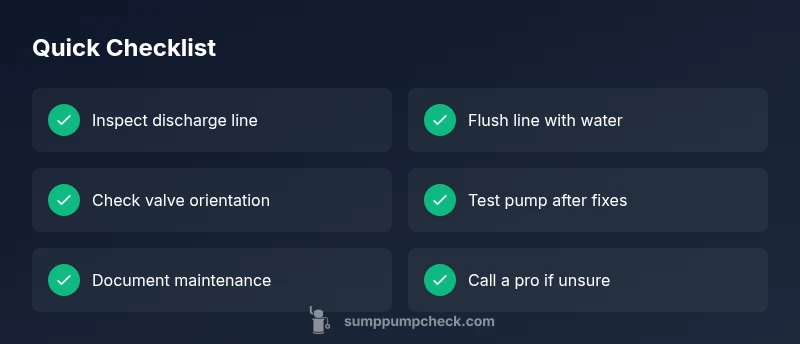
- Identify the blocked discharge path as the first step
- Prioritize safety and power isolation before inspection
- Check valve and float switch are critical components
- Document maintenance to prevent future clogs
- When in doubt, consult a professional