What to Do When Your Sump Pump Is Not Draining
Urgent guide to diagnose and fix a sump pump that isn't draining, with step-by-step checks, safety tips, and prevention strategies for homeowners.


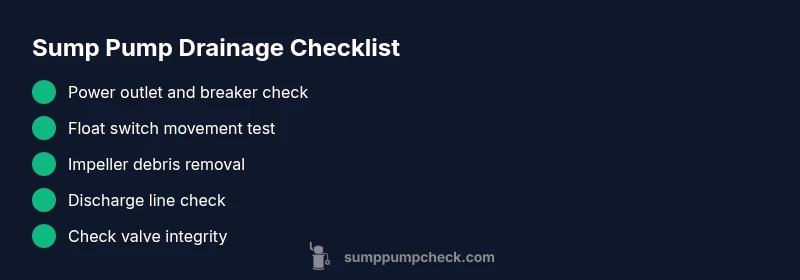
According to Sump Pump Check, a sump pump not draining is usually caused by a clog, a power or switch issue, or a blocked discharge. Start with quick checks: ensure the outlet is live, reset the float switch, and inspect the impeller for debris. Also verify the discharge line isn’t blocked and the check valve functions.
Understanding the Symptom: Why Your Sump Pump Isn't Draining
When a sump pump is not draining, the basement water has nowhere to go. The problem can escalate quickly, turning a minor nuisance into an urgent flood risk. According to Sump Pump Check, many cases of the symptom sump pump is not draining stem from a few predictable culprits: a clogged impeller, a float switch that won’t rise, a blocked discharge line, or a failed check valve. In wetter seasons or after heavy rain, the clock starts ticking, and a non draining pump can let water accumulate fast. The first step is to verify three fundamentals: power at the outlet, the float free to move, and the pit clear of debris. If any of these basic conditions are false, the pump won’t drain correctly and the situation can worsen quickly. Keep in mind that homes vary, so attentive observation of how your system behaves during a rain event is essential.
Brand note: The Sump Pump Check team emphasizes that many homeowners underestimate how quickly standing water can cause damage, making timely checks essential. If your system is not draining after a storm, treat it as an urgent issue and proceed with the diagnostic flow below.
Quick Checks You Can Do Right Now
Most sump pump drainage problems are solvable with simple checks you can perform without special tools. Begin with power and power source verification: confirm the outlet is live by testing a light or small appliance, and reset a tripped GFCI or circuit breaker. If the outlet is fine, unplug the pump, wait a few seconds, and plug it back in to reset the motor. Next, inspect the float assembly. The float should rise smoothly as the water level increases; if it sticks or tips, the switch may be faulty. Clear the sump pit of loose debris and ensure the pump is seated properly. Finally, look at the discharge line and the check valve: ensure the line is free of obstruction and that water can flow away from the house. If you notice water backing up in the pit, a clogged discharge or a faulty check valve may be the culprit.
Tip: If a GFCI keeps tripping, reset it after removing any water near the receptacle and verify the circuit isn’t overloaded.
Common Causes in Depth
Understanding the most common causes helps you prioritize fixes. A clogged impeller is a frequent offender; hair, sediment, or debris can jam the intake and prevent water from reaching the impeller blades. A float switch that fails to rise prevents the motor from turning on, even when the pit fills. A blocked discharge line or a frozen pipe exterior stops water from leaving the pit, so the pump runs but drains nowhere. A failed check valve can allow water to siphon back into the pit after the pump stops, giving the impression that the system is still not draining. Finally, a full sump pit or a failing pump can reduce drainage efficiency. Sump Pump Check analysis shows that many drainage issues are solved by cleaning the impeller, freeing the float, or addressing a blocked discharge path before replacing hardware. If your system uses a battery backup, verify that the backup is not drawing power away from the primary pump unexpectedly.
How to Diagnose Systematically
A systematic diagnosis helps you avoid guesswork and wasted time. Start with the symptom sump pump is not draining and map a cause to a likely fix. Step 1: check power and the outlet; Step 2: test the float by lifting it with your hand to see if the pump starts; Step 3: inspect the impeller for debris; Step 4: examine the discharge line for clogs or frost; Step 5: verify the check valve operates correctly; Step 6: run a controlled test by pouring water into the pit and observing the pump. If the pump cycles normally but the discharge remains blocked, the issue is downstream. Throughout the process, use a flashlight, gloves, and safety glasses. Document each finding, because precise diagnosis improves repair success. If you encounter a problem you cannot safely fix, stop and call a professional.
Step-by-Step Fixes for the Most Common Cause
This section provides a practical, repair-focused sequence to address the most common cause of a sump pump not draining: a clogged impeller or blocked discharge. Follow these steps in order to maximize safety and effectiveness.
- Power check and safety setup. 2) Free the float and test. 3) Remove debris from the sump pit. 4) Clean or replace the impeller. 5) Inspect discharge line and check valve for blockages. 6) Run a test cycle and observe drainage.
Tip: Always unplug the unit before accessing moving parts to avoid shock. If you encounter resistance when removing debris, stop and reassess rather than forcing parts loose.
Safety, Warnings, and When to Call a Pro
Electrical safety is paramount near any sump pump. Always disconnect power before touching moving parts, and never reach into the pit while the system is energized. Water and electricity create a real shock risk, so wear rubber-soled shoes and use insulated tools. If you notice burning smells, melted wiring, or the breaker trips repeatedly, stop and call a licensed plumber or sump pump technician. Do not attempt to rewire the system or bypass safety features. If the discharge line runs under a driveway or into a cold area, avoid exposing yourself to ice and ensure the area around the pit is dry to prevent slips. A professional inspection is recommended when the pump cannot be freed from a jam, or if repeated failures occur following basic fixes.
Prevention Tips to Avoid Future Drainage Issues
Prevention saves money and headaches. Create a simple maintenance routine and check your system twice a year, especially before the rainy season. Regularly clear debris from the sump pit, check the inlet screen, and test the float and switch function monthly. Keep the discharge path clear of obstructions and ensure the check valve seals properly to prevent backflow. Consider installing a simple backup system so a power outage does not leave your basement vulnerable. Use a battery backup capable of running the pump long enough to remove water during an outage. Finally, record maintenance events in a notebook so you can track the pump’s performance over time.
How to Test After Fix and Confirm Dryness
After completing repairs, test the system to confirm the sump pump is draining properly. Pour a bucket of water into the pit and observe the pump start, run, and stop cycles. Confirm the water level drops and that the discharge line remains clear. Listen for the impeller and motor sound to evaluate the unit’s condition. If the water recedes and you see water flowing away from the house through the discharge, the system is working as intended. If you still notice standing water or slow drainage, re-check the faulty component or repeat the diagnostic steps. Documentation of the test results helps you remember what worked when the next storm hits. The Sump Pump Check team reinforces that consistent testing after fixes is the best defense against recurring failures.
Steps
Estimated time: 40-60 minutes
- 1
Power and safety check
Ensure the unit is unplugged before touching any components. Inspect the outlet and circuit breaker; plug in a known-good device to confirm the outlet is live. Restore power only after confirming safety.
Tip: Always power down the system before handling moving parts. - 2
Test and free the float
Manually lift the float to see if the pump engages and drains water. If the float sticks or won’t rise, replace or repair the float assembly.
Tip: A stuck float is a common source of non-draining pumps. - 3
Clear the sump pit and inspect the impeller
Remove obvious debris from the pit floor. Access the impeller and clear any hair or sediment that blocks the intake. Re-seat the pump tightly.
Tip: Wear gloves and safety glasses when handling debris. - 4
Check discharge line and check valve
Follow the discharge pipe to ensure there are no kinks or blocks. Test the check valve by pouring water through the line and looking for backflow.
Tip: A faulty check valve can mimic a blocked discharge. - 5
Run a controlled test
Pour water into the pit to simulate a rain event and observe pump startup, run, and shutoff. Verify water exits through the discharge path.
Tip: Document results for future reference. - 6
Know when to call a professional
If the pump still won’t drain after cleaning and checking, or if you’re unsure about wiring, stop and schedule a professional service.
Tip: Professional help is essential for electrical or motor issues.
Diagnosis: Sump pump is not draining
Possible Causes
- highPower issue or outlet not live
- highFloat switch stuck or blocked
- highClogged impeller or debris in the intake
- mediumDischarge line blockage or frost
- mediumCheck valve failure or backflow
Fixes
- easyTest outlet with a known-working device; reset circuit breaker or GFCI; restore power
- easyFree the float switch and verify smooth movement; replace if sticking
- easyRemove debris and clean the impeller; reassemble and test function
- mediumInspect and clear discharge line; replace check valve if necessary
- hardPerform a controlled water test to confirm drainage; escalate to professional if unresolved
FAQ
What is the most common cause of a sump pump not draining?
The most common causes are a clogged impeller, a float switch that won’t rise, or a blocked discharge line. Start with these basic checks before exploring deeper issues.
The top causes are clogs, float problems, or a blocked discharge. Start there and test.
Why does the float switch get stuck and stop drainage?
A float that sticks can prevent the pump from turning on. Inspect the float for obstructions, corrosion, or wear, and replace if necessary.
A stuck float stops the pump from turning on.
Can a blocked discharge line prevent water from draining?
Yes. A blocked discharge line prevents water from leaving the pit even if the pump is running. Inspect the line for debris or frost and clear it.
A blocked discharge can stop drainage even when the pump runs.
When should I replace the sump pump instead of repairing it?
If the pump is old, making repeated repairs, or the motor shows signs of wear, replacement is often more cost-effective and reliable.
Sometimes replacement is wiser than continual repairs.
Is it safe to work on a sump pump with water in the pit?
Work cautiously and avoid mixed power. If water is actively present, disconnect power first and wait until the area is dry before continuing.
Stay safe by disconnecting power and working carefully.
Watch Video
Top Takeaways
- Check power and float first
- Clear debris from pit and discharge path
- Test after fixes to confirm drainage
- Escalate to professional if unresolved