Problem with Sump Pump: Troubleshooting Guide
Urgent guide to diagnose and fix a problem with sump pump. Learn common causes, safety steps, and a clear, step-by-step plan to restore basement drainage quickly.


Most sump pump failures stem from a stuck float, clogged intake, or a tripped circuit. First verify power at the outlet, reset breakers or GFCI, and inspect the float for obstruction. Clear debris from the intake and run a controlled water test. If it still won’t operate, seek professional help.
Understanding the problem with sump pump
A problem with sump pump can threaten a basement, especially during heavy rains. When the unit fails, you may notice water rising in the pit, unusual noises, or the pump cycling on and off without moving water. According to Sump Pump Check, most failures share a few predictable patterns that homeowners can address safely. This article explains what defines the problem, how a sump pump is supposed to operate, and why quick identification matters for preventing flood damage. A typical sump pump uses a float switch to trigger the motor, a centrifugal impeller to move water, and a discharge line to remove water away from the home. When any part of this chain misbehaves, you’ll see symptoms such as no water movement, intermittent pumping, or frequent cycling. Being able to describe the exact problem helps you choose the right fix and decide when to call a pro.
Key terms to know: float switch, impeller, discharge line, check valve, GFCI. If you notice water backing up, or an electrical odor, stop and assess safety first.
Common causes you can check first
- Power and outlet issues: A tripped breaker, a blown fuse, or a GFCI outlet can prevent the pump from starting. Always start here before diving into the pump itself.
- Stuck or misaligned float switch: If the float is jammed on debris or bent, the switch may not rise to trigger the pump.
- Debris clogging intake or impeller: Gravel, sediment, or algae can block the screen or impeller, reducing water flow or stopping rotation.
- Discharge line blockages: A frozen or pinched discharge pipe or a blocked check valve can trap water back in the pit.
- Worn components or motor fatigue: Seals, bearings, or the motor can wear over time, causing intermittent operation or failure to start.
- Electrical or grounding issues: Damaged wiring or a bad connection can present as intermittent power loss or beeping indicators.
If you’ve checked the basics and still see trouble, it’s time to move to a structured diagnostic flow. Sump Pump Check’s analysis shows that almost all problems begin with power, float, or intake issues, so don’t skip those checks.
Safety prerequisites before you work
- Power down before handling: Always turn off power at the circuit breaker to avoid shock. Do not rely on unplugging the unit if it’s hardwired.
- Wear protective gear: Use gloves, eye protection, and non-slip footwear. Work in a well-lit area and keep a flashlight handy.
- Isolate the area: Place a temporary waterproof barrier or bucket under the pit to minimize water exposure.
- Check for gas or electrical hazards: If you smell fuel or hear sizzling noises, stop and call a professional immediately.
- Have the right tools ready: A flashlight, pliers, screwdriver, and a clean bucket are typically sufficient for basic checks.
Safety first is non-negotiable; if you’re unsure at any step, pause and seek professional help.
Diagnostic checklist you can follow
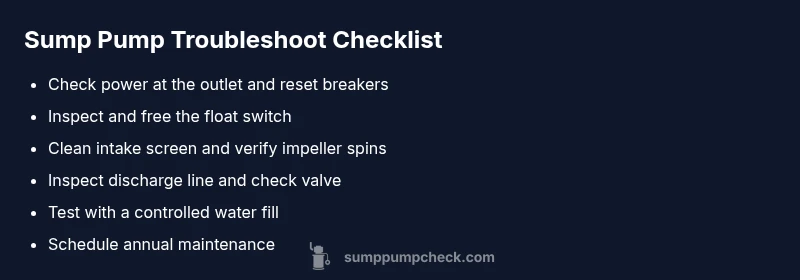
- Visually inspect the unit for obvious signs of wear, corrosion, or damaged wiring.
- Confirm power at the outlet and test the outlet separately with a known device.
- Reset the GFCI or circuit breaker and verify it stays on.
- Gently move the float through its range to ensure it isn’t stuck.
- Inspect the intake screen and remove any debris; verify the impeller can spin freely.
- Check the discharge line for kinks, blockages, or frozen sections, and ensure the check valve is functioning.
- Run a controlled water test to confirm the pump activates and moves water away from the pit.
- Listen for the motor’s hum; a lack of hum after power-up may indicate internal failure requiring service.
If any step reveals a fault, address it before retesting; if not, proceed through the diagnostic flow.
Step-by-step fix for the most common issue
- Reset power sources: Turn off, unplug (or switch off), then restore power to ensure clean electrical contact.
- Clear the float path: Remove any debris or sediment around the float and verify it moves freely.
- Clean the intake and impeller: Rinse screens and remove any obstructions guarding the impeller; use a brush if needed.
- Inspect discharge and check valve: Clear the line, ensure the valve opens and closes properly, and remove any blockages.
- Reassemble and test: Reconnect all components, pour water into the pit, and observe whether the pump activates and drains water away.
- Run extended test: Let the pump run for several minutes with the discharge line open to confirm continuous operation.
Tip: If the unit still won’t operate after these steps, do not keep running it dry or forcing it; instead, call a professional to check motor or electrical safety.
Prevention and maintenance to avoid future failures
- Schedule seasonal checks to ensure floats move freely and the intake is clean.
- Replace worn seals and bearings before they fail to prevent leaks and motor burnout.
- Keep the surrounding area clean and dry to minimize debris buildup in the pit.
- Install a check valve and ensure proper discharge away from your foundation.
- Consider battery backup or an alarm to alert you to failures during power outages.
- Test the system annually with a controlled water fill to verify performance.
When replacement is the smarter option
If the sump pump is more than 8–12 years old, makes loud noises, frequently trips breakers, or fails to keep up during heavy rainfall, replacement is often more economical than continuous repairs. A modern pump with a higher flow rate and improved energy efficiency can prevent basement flooding and reduce long-term maintenance costs. Consider a backup system for added protection in storm conditions.
Troubleshooting flow you can visualize
- If the pump won’t start → check power, reset breakers, inspect wiring.
- If the float is stuck → clean obstruction, verify movement, replace if damaged.
- If the intake is blocked → clear debris, check impeller freedom.
- If discharge is blocked → inspect line and valve, ensure water exits away from home.
- If still stuck → call a professional for electrical and motor inspection.
Common mistakes to avoid and final checks
- Don’t ignore a consistently running pump that still floods the pit. It may indicate a valve or line issue.
- Don’t run the pump dry; it can overheat and fail.
- Don’t assume a replacement is unnecessary; even quiet pumps can fail with age.
- Don’t neglect safety gear or power isolation when opening the pit.
- Do perform a final check with water to confirm the system drains properly.
Steps
Estimated time: 60-90 minutes
- 1
Power check and reset
Turn off the pump at the breaker, inspect the outlet, reset the breaker or GFCI, then restore power and test the unit with a controlled water input.
Tip: Use a non-contact voltage tester to confirm power at the outlet before touching wiring. - 2
Inspect the float mechanism
Gently move the float through its full range to ensure it isn’t stuck. If it binds, remove debris and adjust the linkage if possible.
Tip: A float free of obstructions ensures accurate shutoff and restart. - 3
Clean the intake and impeller
Disconnect power again, remove the grate or screen, and rinse away sediment. Manually spin the impeller to confirm it rotates smoothly.
Tip: Do not use sharp tools that might nick the impeller blades. - 4
Check the discharge and valve
Inspect the discharge line for kinks, ice, or blockages. Verify the check valve opens when the pump runs and closes when it stops.
Tip: Ensure the discharge exits away from the foundation to prevent re-entry. - 5
Reassemble and test
Reinstall all components, refill the pit with water, and run the pump for several minutes to observe performance.
Tip: Run a longer test during a rain event if possible for realistic assessment. - 6
If needed, call a professional
If there’s no reliable operation after the above steps, there may be internal motor or electrical issues requiring licensed service.
Tip: Document observed symptoms and steps taken to assist the technician.
Diagnosis: Sump pump won’t start or runs intermittently
Possible Causes
- highPower issue (tripped breaker, blown fuse, faulty outlet)
- highStuck or misaligned float switch
- mediumDebris clogging intake or impeller
- mediumDischarge line blockage or frozen line
Fixes
- easyReset the circuit breaker or GFCI and verify power at the outlet
- easyFree or replace a stuck float switch and ensure clearance for movement
- easyClean intake screen and impeller; remove debris and test movement
- easyInspect discharge line and valve for blockages; clear or replace as needed
FAQ
Why is my sump pump not starting?
Common reasons include a tripped circuit, a stuck float, or a clogged intake. Start with power checks, then inspect the float and screen before testing the pump again.
A common reason is a tripped circuit or stuck float. Check power, inspect the float and screen, then test again.
What should I do if the float is stuck?
Power off, remove the cover, and gently free the float. Check for obstructions and ensure the float can move freely through its range.
Power off and free the float, removing any obstructions so it can move properly.
Can a sump pump fail due to a blocked discharge line?
Yes. A blocked discharge line prevents water from leaving the pit, causing the pump to stall or short-cycle. Clear the line and verify water exits away from the foundation.
A blocked discharge line can stop the pump; clear it and redirect water away from the house.
How often should I replace a sump pump?
Most pumps are designed for several years of service; consider replacement if the unit is old, repeatedly failing, or making abnormal noises.
Pumps last several years; replace if old or unreliable.
When should I call a professional?
If there are electrical hazards, persistent failures, or you’re unsure about wiring, electrical safety, or the motor, contact a licensed plumber or electrician.
Call a professional for electrical or complex mechanical issues.
Is a back-up sump pump necessary?
A backup pump can provide protection during power outages or heavy rain, but ensure proper installation and battery capacity for reliability.
A backup can help during outages, but needs proper setup.
Watch Video
Top Takeaways
- Check power first to rule out simple issues.
- Regularly clean the intake and inspect the float.
- Test with water to verify drainage and cycle.
- Replace aging pumps to prevent floods.
- Plan annual maintenance for reliability.