Effluent Pump vs Sump Pump: A Practical Comparison Guide
A rigorous, objective comparison of effluent pumps and sump pumps, outlining their roles, installation needs, maintenance, and how to choose the right solution for basement drainage and wastewater management.


An effluent pump moves wastewater from fixtures toward a septic system or municipal sewer line, while a sump pump removes groundwater or rainwater from a basement sump pit. The key differences are their purpose, discharge routing, and installation codes. Understanding what is an effluent pump vs sump pump helps homeowners select the right device and plan for future wastewater or drainage needs.
What is an effluent pump vs sump pump: defining the core roles
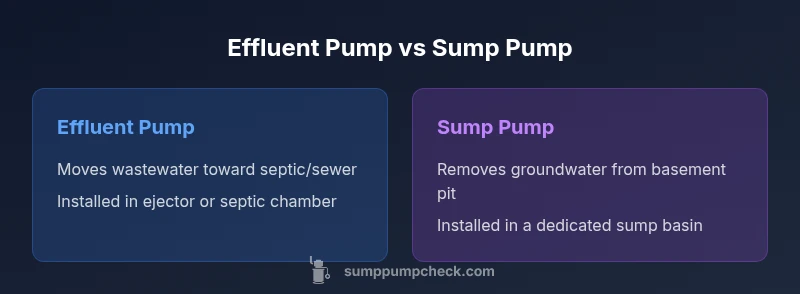
At first glance the question what is an effluent pump vs sump pump seems simple, but the answer depends on how your home drains water and what kind of water you need to move. An effluent pump is designed to move wastewater from fixtures such as sinks, showers, and toilets toward a septic system or municipal sewer line. It is typically installed in an ejector or septic tank chamber and is engineered to handle the liquid that has already begun to settle, sometimes with light solids. By contrast, a sump pump sits in a bottom‑basin of a basement or crawlspace and is tasked with removing groundwater or rainwater that accumulates in the pit. Sump pumps discharge water to exterior drains, stormwater systems, or designated drainage paths, not into the sewer. The two devices serve distinct purposes and require different installation practices, electrical considerations, and maintenance schedules. Understanding these roles is essential for a safe and effective drainage strategy.
How wastewater and groundwater flow differ in residential settings
Wastewater from a household originates from plumbing fixtures and sinks and travels toward a septic system or municipal sewer. Groundwater, on the other hand, seeps into basements from the surrounding soil and can accumulate rapidly during heavy rain. An effluent pump is commonly used when gravity alone cannot move wastewater to the sewer or septic field, especially in homes with lower lying drain lines or properties with challenging topography. A sump pump is employed to prevent basement flooding by removing infiltrating water before it can accumulate to a damaging level. While both pump types aim to keep spaces dry, their source water and discharge destinations shape their design and lifespan. When you assess how water enters your home, you can better decide which pump fits best.
Key design differences: impellers, motors, and build quality
Effluent pumps and sump pumps differ in several design aspects that affect performance and reliability. Effluent pumps are typically designed to handle sewage water, which may include small solids, and may feature impeller designs optimized for solids handling. They often come with robust seals, corrosion-resistant housings, and float switches tailored to higher head heights. Sump pumps are focused on fast removal of clear water or slightly turbid groundwater, with impellers optimized for volume and reliability in continuous operation during storms. Motors for both types vary in horsepower and duty cycle, but effluent pumps may emphasize solvent resistance and solids handling, while sump pumps emphasize continuous run capabilities and quick start behavior. Regardless of model, look for a pump with appropriate materials, sealed bearings, and a proven float or electronic switch.
Installation considerations: where each pump belongs and piping
Serviceable locations and piping conventions guide how you install each pump. An effluent pump is usually placed in an ejector pit or septic tank chamber and connected to a discharge line that leads to the septic drain field or municipal sewer. The discharge piping must be sized to avoid bottlenecks and may require backflow prevention devices, air gaps, or check valves to prevent sewage or wastewater from returning. A sump pump sits in a dedicated sump basin in the basement, with a discharge line routed to exterior ground or a storm drainage system. Both systems benefit from a properly vented design and, where required, GFCI outlets and weatherproof enclosures. Correct slope, proper valve placement, and clean pit conditions prevent blockages and odors.
Performance and capacity: flow rates, head, and run-time expectations
Performance planning centers on anticipated water volume and vertical distance the water must travel. An effluent pump must clear wastewater from the home to the septic drain field or sewer line, which often involves moving through longer and potentially more resistant piping. This requires adequate head and a pump designed to handle solids and wastewater velocity without clogging. A sump pump focuses on rapid water extraction from the pit during rainfall events, with head height determined by how far the water must be lifted to reach the discharge point. In both cases, consider duty cycles (how often the pump runs), ambient temperature, and whether a backup power source is appropriate for reliability during outages. The right choice balances capacity with energy efficiency and durability.
Piping, discharge, and check valves: how they route to the right destination
Discharge routing is central to avoiding backflow and odor issues. Check valves prevent water and wastewater from re-entering the home, while proper air gaps protect against contamination of the supply. Effluent pumps require piping that can tolerate wastewater pressures and occasional solids, often with fittings that accommodate septic or sewer connections. Sump pumps require piping that directs collected groundwater away from the foundation, typically to exterior storm drains or municipal discharge points. Both systems benefit from insulated or weatherproofed sections to prevent freezing, and both can use programmable timers or float switches to optimize operating times. A well-planned layout reduces maintenance and maximizes lifespan.
Electrical and backup options: power needs and redundancy
Electrical setup and backup planning are critical for reliability. Sump pumps commonly run on standard household circuits and benefit from battery backups or water-powered backups to maintain functionality during power outages. Effluent pumps also rely on a steady power supply, with some models offering backup capabilities, but code considerations may differ depending on whether the pump is immersed in wastewater or handling groundwater. When installing either pump, ensure GFCI protection near the point of use, appropriate voltage supply, and accessible switch controls. Regular testing of backups can prevent unexpected failure during storms or outages.
Maintenance and troubleshooting: common issues and care
Routine maintenance extends pump life and minimizes surprises. For both pump types, inspect the pump, float switch, and intake screen regularly; clean debris from the pit and check for solids buildup that could impair operation. Check valves should be verified to prevent backflow, and discharge lines must be clear and free of obstructions. With effluent pumps, monitor for unusual odors, slower flow, or frequent clogs that could indicate solids accumulation. For sump pumps, watch for nuisance beeping, sluggish response to rising water, or tripped breakers. Establish a simple maintenance schedule that includes periodic testing, cleaning, and prompt replacement of worn components.
Cost considerations: upfront, install, and long-term maintenance
Costs vary widely based on pump type, capacity, and installation complexity. An effluent pump generally involves higher upfront costs due to solids handling and more complex discharge routing. Sump pumps tend to have lower initial costs but may require ongoing maintenance and occasional component replacements (float switches, seals, pump housing) over time. When budgeting, factor in installation labor, check valves, piping, and any required permits or inspections. Energy efficiency, backup options, and the reliability of the system influence total cost of ownership. A well-chosen pump, properly installed, often reduces the risk of costly water damage and septic system problems over the long term.
Real-world scenarios: choosing between an effluent pump and a sump pump
Imagine a basement that frequently floods during heavy rain but has no wastewater accumulation issues. In this case a sump pump is typically the right choice, especially with a reliable backup power source. If the basement handles wastewater from showers and toilets and relies on a septic system outside the house, an effluent pump may be necessary to move that wastewater to the septic field or sewer line. In some homes, a grinder pump may be used in conjunction with a septic system to reduce solids, further influencing the decision. A careful assessment of water sources, discharge destinations, and local code requirements helps determine the most effective installation.
Regulations and codes: what homeowners should know
Local regulations govern where it is permissible to discharge water and wastewater, as well as the required components, such as check valves and backflow prevention devices. Septic-system related pumps may require permits or inspections, while sump pumps in certain jurisdictions demand specific electrical protection and venting considerations. Always consult your local building department or a licensed plumber to confirm code compliance before purchasing or installing either pump. Additionally, consider long-term coverage for maintenance and potential upgrades as your home or drainage conditions change over time.
When to upgrade or replace: signs you need a different pump
If you notice persistent clogs, frequent pump cycling, odors, or rising water despite a functioning pump, it may be time to upgrade. Inefficiencies can arise from aging components, inadequate discharge piping, or outdated check valves. In basements prone to heavy groundwater, increased head height and capacity may warrant a more powerful sump pump or a higher-capacity effluent pump. Regular assessments help catch small issues before they escalate. If in doubt, consult a professional to evaluate whether replacement, relocation, or an additional backup system is warranted.
Comparison
| Feature | effluent pump | sump pump |
|---|---|---|
| What they move | wastewater from fixtures to septic or sewer | groundwater and rainwater from the sump pit |
| Typical installation | ejector or septic tank chamber | basement sump pit in utility area |
| Discharge routing | to septic/sewer system or designed wastewater line | to exterior drainage or storm sewer |
| Power and backup options | varies by model; solids handling considerations | varies by model; battery backup common |
| Maintenance needs | screen/solids clearance; valve checks | pit cleaning; float switch and seal checks |
| Best for | wastewater movement toward septic/sewer | basement water intrusion prevention |
What's Good
- Clear role separation reduces misapplication
- Improved basement dryness when paired with backups
- Can be integrated with septic or municipal systems
- Flexible installation options for tight spaces
Drawbacks
- Wrong pump type can cause odor, blockages, or backflow
- Higher upfront cost and sometimes more complex installation
- Maintenance and components add ongoing tasks
Choose the pump tailored to your drainage problem: sump pumps for basement groundwater control, effluent pumps for wastewater movement.
Sump pumps protect living spaces from groundwater. Effluent pumps manage wastewater flow to septic or sewer lines. Correct selection minimizes risks and aligns with local codes.
FAQ
What is the primary difference between an effluent pump and a sump pump?
The primary difference lies in what they move and where it goes. An effluent pump transfers household wastewater toward a septic system or sewer line, while a sump pump removes groundwater from a basement to an exterior drainage path. Both protect your space, but they address distinct water sources and drainage goals.
Effluent pumps move wastewater toward septic or sewer lines, while sump pumps remove groundwater from basements to exterior drains.
Can I use an effluent pump in a sump pit?
Using an effluent pump in a dedicated sump pit is generally not recommended because effluent pumps are designed for wastewater with solids, not for clean groundwater in a sump. In most cases, you should choose a pump designed for the intended water source and follow local code requirements.
Effluent pumps aren’t meant for a typical sump pit; choose based on the water source and codes.
Where should an effluent pump discharge go?
An effluent pump should discharge toward the septic system drain field or the municipal sewer line, as appropriate for your home’s plumbing. Ensure the outlet is sized and configured to prevent backflow and meet local regulations.
Discharge to septic drain field or sewer line, with correct piping and backflow prevention.
Do I need a check valve with these pumps?
Yes. A check valve helps prevent backflow from the discharge line into the pump or pit, protecting your system and reducing the chance of odors or contamination. It’s a common requirement in both effluent and sump pump installations.
Always use a check valve to prevent backflow.
What maintenance is typical for these pumps?
Regular maintenance includes periodic testing, cleaning the intake screens, inspecting seals, and verifying the float switch or sensors. In septic systems, check for solids buildup; for basements, keep the sump pit free of debris. Schedule professional service as needed.
Test the pump, clean filters, and inspect switches regularly.
How do I choose the right size pump?
Size depends on the expected water load and discharge height. For wastewater, consider the average daily flow and the head height to the drain field or sewer. For basements, focus on groundwater inflow volume and the height the water must be lifted to exit the property.
Size by water load and discharge height; match to your drainage needs.
Top Takeaways
- Assess water sources to identify pump type
- Plan discharge routing with backflow prevention
- Prioritize backups for reliability during outages
- Follow local codes for septic and drainage connections