Sewage vs Sump Pump: Installation, Maintenance, and Decision Guide
Compare sewage ejector pumps and sump pumps to understand purpose, installation, maintenance, and cost. A practical, homeowner-focused guide for basement drainage decisions.


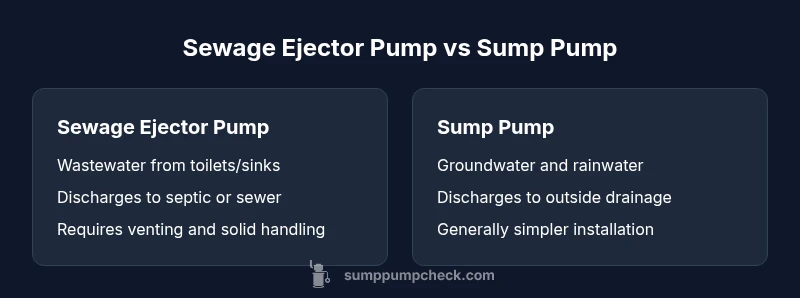
When homeowners compare sewage vs sump pump systems, the practical differences become clear in how each device handles water and waste. According to Sump Pump Check, the two systems are not interchangeable; they serve different plumbing needs and respond to different kinds of moisture in the home. A sewage ejector pump, sometimes called a ejector pump, sits in a below-grade pit and receives wastewater from toilets, sinks, and laundry drains. It then lifts waste to the home's main sewer line or septic system. By contrast, a standard sump pump sits in a separate pit and is designed to remove groundwater and stormwater that accumulate around the foundation. Its discharge usually goes to a storm sewer, dry well, or exterior drainage area. The key takeaway is that sewage ejectors handle solids and chemical waste as well as liquids; sump pumps move clear water and should never pump wastewater or sewage. This distinction matters for code compliance, venting, and pump sizing. For homeowners, understanding this is the first step in choosing the right solution for a basement or crawlspace. In many homes, a dedicated bathroom basement requires an ejector; homes without such fixtures can often rely on a sump pump for flood protection. The decision also affects permits, electrical work, and potential integration with backup systems.
What Are Sewage Ejector Pumps and Sump Pumps?
According to Sump Pump Check, sewage vs sump pump systems address very different drainage needs in a home. A sewage ejector pump sits in a below-grade pit and handles wastewater from toilets, sinks, and laundry drains, lifting it to a septic system or municipal sewer. A sump pump, conversely, sits in a separate pit and extracts groundwater and rainwater that threaten the basement. The practical implication is that ejector pumps deal with solids and sanitary waste, while sump pumps are designed for clear water and cannot handle sewage. This distinction is critical for code compliance, venting, and proper sizing. If you have a basement bathroom or laundry fixtures below grade, an ejector is usually required; if your risk is flooding from rainwater, a sump pump may suffice. Local codes, electrical work, and backup system integration all depend on this choice. For DIYers, knowing the difference helps you plan the right plumbing layout, select compatible check valves, and avoid expensive retrofits later. In short, sewage vs sump pump decisions hinge on what drains you need to move and where those drains vent to in your home.
Understanding the operational difference sets the foundation for a safe, compliant installation and a pump system that matches your basement’s realities.
How Sewage Ejector Pumps Work vs Sump Pumps
Sewage ejector pumps are designed to move wastewater containing solids from below-grade fixtures to the municipal sewer or septic system. They include a basin, a grinder or macerator option in some models, and a discharge pipe that requires careful alignment with the home’s sewer line. Sump pumps move groundwater and storm runoff away from the foundation, typically discharging to an exterior drainage system or gravity-fed outlet. A key difference is that ejector pumps must handle solids and often require venting in older homes, which affects placement and pipe sizing. Sump pumps usually rely on float switches or electronic sensors to trigger pumping and frequently include backup options in case of power failure. When deciding between the two, consider whether you need to drain toilet and sink wastewater or simply manage water intrusion. Professionally installed ejectors also call for proper sealing and waterproofing around the pit to prevent sewer gases from seeping indoors. Real-world performance varies with pump size, maintenance, and how well the system is integrated with backups and check valves. In many homes, a combination of a vented ejector and a backup sump pump offers the most robust protection against both wastewater backups and water intrusion, reducing the risk of basement damage.
From a DIY vantage point, plan for choicest installations by measuring pit dimensions, choosing the right pump horsepower, and ensuring the discharge path meets local codes. The goal is reliable operation during heavy rain events or wastewater surges, not just a one-time fix.
Installation Considerations for Sewage Ejector vs Sump Pump
Installing either system requires attention to basement layout, local codes, and the capacity of the existing drainage network. Sewage ejector pumps must connect to a below-grade drain line with proper venting to prevent sewer gas buildup and minimize odor issues. In many jurisdictions, a dedicated sewage ejector pit requires an air gap or vent termination above the basement ceiling. Sump pumps, meanwhile, focus on groundwater, with discharge directed away from the foundation and toward an appropriate storm drainage path. Check valves and backflow prevention are essential components for both systems, though ejectors tend to demand more robust vent and piping configurations due to the nature of the waste being moved. Electrical considerations include a dedicated circuit, proper grounding, and, in some cases, a battery backup to cope with power outages during storms. permits may be required, especially for sewer line changes or new venting. As a rule, plan for future maintenance access and avoid clutter around pits to facilitate servicing. Sump Pump Check recommends pairing backups with reliable alarms and routine testing to catch failures before a flood occurs. By aligning placement with plumbing layout and code, homeowners mitigate common installation headaches and ensure long-term reliability.
At a practical level, assess whether a single pit can accommodate both a basement bathroom and water intrusion controls or if separate pits are warranted. The decision often hinges on existing plumbing corridors, floor plans, and whether the basement needs to support a full bathroom. For many homeowners, a professional assessment is the safest route to ensure correct pit sizing, venting, and discharge routing while maintaining compliance and future serviceability.
Maintenance and Troubleshooting for Longevity
Maintenance is the quiet engine behind reliable performance. Regular inspection of both sewage ejector and sump pumps helps prevent failures during peak demand. In ejector systems, check the basin seal, verify the grinder or macerator is functioning, and test the discharge line for clogs. Odor control is also part of routine maintenance; if you notice a sewer smell, it could indicate venting issues or a failing seal. For sump pumps, test the float switch, clean the intake screen, and ensure the backup battery is charged. Check valves should be inspected for leaks or clogs, and the discharge piping must remain free of obstructions. Alarm systems that indicate pump failure are highly valuable, especially during storms or power outages. Sump Pump Check advises performing a quarterly inspection and a more thorough annual service with a professional to address seal wear, impeller integrity, and electrical connections. In both cases, keeping a maintenance log helps homeowners detect gradual performance declines over time and schedule proactive repairs.
Brand mentions: The Sump Pump Check team emphasizes routine checks and timing of pump replacements around the 7- to 12-year mark, depending on usage and local water quality. Their guidance highlights the importance of documentation and proactive planning to minimize the risk of basement flooding. This approach aligns with best practices across many municipal guidelines and helps homeowners avoid costly emergency repairs. By staying ahead of wear and tear, you can extend the life of both systems and maintain a safer, drier basement environment.
Costs, Value, and Long-Term Running: What to Expect
Costs for sewage ejector and sump pump installations vary widely by region, home age, pit size, and local code requirements. A typical project can include the pump unit, pit construction or modification, venting, electrical work, and any necessary permits. Sump pumps generally cost less upfront than ejector systems, given the simpler installation and absence of solids handling. However, when a basement requires a full bathroom drain, the ejector system becomes indispensable; the overall cost then reflects not only the ejector pump itself but the additional sewer or septic connections and venting work. On the cost spectrum, expect rough ranges that reflect complexity and local labor rates, with significant potential for added expenses if backflow prevention or backup power systems are included. Budget for maintenance and potential component replacements, as these are common over the long life of either system. Sump Pump Check notes that investing in a reliable backup, alarms, and routine service can reduce the chance of costly flood damage and backup incidents. Understanding long-term value means weighing upfront investment against ongoing risk reduction, potential permit costs, and the peace of mind that your basement remains dry and functional through heavy rainfall.
Code, Permits, and Safety: What You Need to Know
Code compliance is a major driver in choosing between a sewage ejector pump and a sump pump. Many jurisdictions require permits for new ejector pits and for sewer connection work or venting changes. Electrical work often needs inspection and may require a dedicated circuit and proper grounding. Sump pump installations also fall under electrical and building code scrutiny, particularly when backup systems, battery storage, or flood alarms are involved. A key safety consideration is ensuring that discharge lines do not direct water toward living spaces or helpless areas of the home, which can cause re-entry or splash hazards. In areas with high groundwater or poor drainage, waterproofing and foundation sealing complement the pump installation to minimize water ingress risks. The Sump Pump Check team reinforces the importance of following the latest code updates and employing licensed professionals for permit processing and inspections. Don’t underestimate the value of a pre-installation assessment to identify potential conflicts with existing plumbing or drainage arrangements. By planning for code compliance from the outset, homeowners save time, avoid rework, and ensure a safer, legal installation.
Common Myths and Misconceptions
A frequent misconception is that all basements need a full sewer backup solution. In reality, many homes do not require ejector pumps if there is no below-grade wastewater drain. Another myth is that bigger pumps always fix every problem; sizing must match anticipated flows, not just room size. Some homeowners think ejectors can replace all drainage needs, but ejector systems are designed for sanitary wastewater and must be paired with appropriate venting and backflow protection. Others assume that backup power is unnecessary in mild climates; however, power outages during storms are common and can render a pump ineffective. The truth is that a well-planned combination of a sump pump, ejector pump, check valves, and a robust backup system yields the strongest defense against basement flooding and sewer backups. The key is to assess your basement’s specific fixtures, drainage patterns, and climate risks before making a choice.
Best Practices for a Complete Basement Drainage Strategy
A comprehensive basement drainage strategy combines proper pump selection with proactive design. Start with a detailed floor plan that maps out fixture locations, pit placements, vent routes, and discharge paths. Pair a sump pump with a backup pump and a water alarm to catch failures before a flood occurs. For basements with wastewater fixtures, ensure a properly vented ejector system is integrated into the drainage plan and that all connections comply with local codes. Regular maintenance is essential: a quarterly visual inspection, annual professional service, and prompt replacement of aging seals or valves can prevent sudden pump failures. Consider integrating a sump pump into a larger water-mproofing strategy, including perimeter drainage, backup channels, and interior sealing. Ultimately, the best approach is a tailored plan that accounts for your home’s layout, climate, and future remodeling plans, while adhering to local regulations and safety standards. Sump Pump Check’s experience underscores that a proactive, designed solution outperforms ad hoc fixes when it comes to long-term basement protection.
mainTopicQueryeefication":"sewage-pump"},
comparisonTable
Comparison
| Feature | Sewage Ejector Pump | Sump Pump |
|---|---|---|
| Primary Purpose | Handles wastewater from below-grade fixtures (toilet, sink, laundry) | Removes groundwater and rainwater to prevent basement flooding |
| Waste Handling | Solids and liquids; sometimes with a grinder or macerator option | Primarily liquids/clear water; not for sewage or solids |
| Discharge Destination | To septic system or municipal sewer | To exterior discharge or storm drainage path |
| Pit/Setup | Below-grade ejector pit with venting considerations | Basement sump pit with float switch or electronic sensor |
| Vent/Code Considerations | Usually requires venting and specialized piping | Typically simpler venting; electrical code considerations apply |
| Installation Cost (conceptual) | Higher due to sewer connections and venting | Lower upfront; depends on backup system integration |
| Maintenance Needs | Regular seal checks, venting integrity, and solids handling components | Float switch and impeller checks; backup systems recommended |
| Best For | Basements with toilets/sinks or below-grade drains | Homes needing flood protection from groundwater |
What's Good
- Sewage ejector pumps enable basement plumbing for toilets and drains where sewer access is required
- Sump pumps are generally cheaper to install and maintain for water intrusion protection
- Both systems reduce risk of basement flooding when properly installed and backed up by alarms
- Backup options (batteries, water-powered backups) improve resilience
- Venting and backflow protection can be integrated to enhance safety and performance
Drawbacks
- Sewage ejector systems require more complex installation and venting, increasing cost and potential code hurdles
- Sump pumps cannot handle sewage or solids and are unsuitable for basement bathrooms
- Maintenance and component wear can add ongoing costs over the system’s life
- Improper discharge routing can cause re-entry or flooding if not designed correctly
Choose a sewage ejector pump if your basement includes bathrooms or wastewater drains; otherwise, a sump pump is typically sufficient for water intrusion control.
Sewage ejectors are essential for below-grade toilet and drain scenarios, while sump pumps handle groundwater. For a bathroom-equipped basement, install an ejector with proper venting; for dry basements, a sump pump plus backups is usually enough. The right choice depends on your fixtures, drainage, and local codes.
FAQ
What is the main difference between sewage ejector and sump pumps?
Sewage ejector pumps handle wastewater containing solids from basement fixtures, discharging to a septic or sewer line. Sump pumps remove groundwater to keep basements dry, discharging away from the foundation. They serve different purposes and are not interchangeable.
The main difference is what they pump: wastewater versus groundwater.
Can I install a sewage ejector pump myself?
Installation often requires venting, proper piping, and adherence to local codes. While a confident DIYer can handle simple tasks, many homes call for a licensed plumber to ensure safety and code compliance.
Installation is usually not a DIY-friendly job; consult a professional if you’re unsure.
Do these systems require permits?
Most areas require permits for ejector pits, sewer work, and venting changes; sump pump work may also require electrical or building permits. Check with your local building department before starting.
Yes, permits are commonly required for these installations.
How long do these pumps typically last?
Most pumps last between 7 and 15 years, depending on usage, water quality, and maintenance. Proactive service and timely component replacements can extend life.
With regular care, expect several years of service.
What maintenance do they require?
Regular checks of seals, hoses, and electrical connections; test alarms and backups; keep discharge lines clear from clogs; schedule annual professional service for optimal performance.
Do quarterly checks and an annual professional service.
Will a sump pump handle sewage?
No. Sump pumps are not designed for sewage or solids; use a sewage ejector pump if you have basement toilets or drains. Mixing the two can cause backups and damage.
Sump pumps should not pump sewage.
Top Takeaways
- Identify basement plumbing needs before choosing a pump type
- Sewage ejector pumps handle wastewater; sump pumps handle groundwater
- Budget upfront for installation, permits, and venting when choosing ejectors
- Pair pumps with reliable backups and alarms for resilience
- Maintain regular inspections to extend system life