Difference Between Sump Pump and Ejector Pump: Practical Guide
Explore the difference between sump pumps and ejector pumps, when to use each, and practical tips for basement drainage, installation, and maintenance in homes.


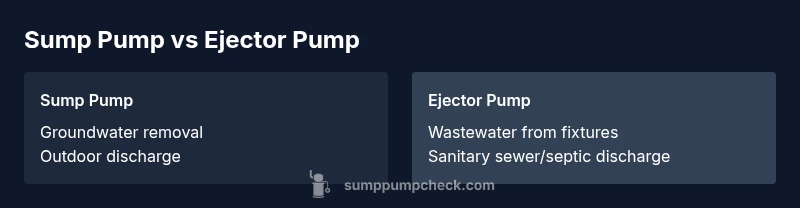
Summary: The difference between sump pump and ejector pump boils down to drainage scope and where they handle wastewater. A sump pump removes groundwater from a basement sump pit to prevent flooding, while an ejector pump shuttles wastewater from sinks, toilets, and appliances to the sewer or septic line. Sump pumps focus on water infiltration; ejectors handle solid waste in below-grade drains.
What the terms mean: Sump pump vs ejector pump
Defining terms is the first step in understanding the difference between sump pump and ejector pump. A sump pump is designed to manage groundwater that accumulates in a basement or crawlspace by channeling it away from the foundation. An ejector pump (often called a sewage ejector) handles wastewater from toilets, sinks, and laundry to the home's sewer or septic line. This distinction matters for building drainage, basement safety, and code compliance. According to Sump Pump Check, homeowners who confuse these devices commonly face basement flooding or sewer backups. Properly matching the device to the drainage task reduces risk and simplifies maintenance.
Where sump pumps and ejector pumps are typically found in a home
Sump pumps usually sit in a basement or crawlspace sump pit that collects water seeping through the foundation. Ejector pumps reside in an underground sewage or ejector pit that collects wastewater from plumbing fixtures. The pits are designed to prevent odors and sewer gases from entering living spaces and to provide a ready path for the pump to move water or waste to the appropriate destination. Placement relative to fixtures, drains, and the sewer line matters for efficiency and safety.
How they move water and waste: flow, solids, and discharge
Sump pumps remove clear water from the sump pit and discharge it away from the building, typically through an exterior line. Ejector pumps move wastewater that may include solids to the sanitary sewer or septic system. The difference in flow path influences valve setups, backflow prevention, and the need for venting or alarms. Choosing the correct device helps prevent clogs, backups, and pressure issues in the dwelling.
Typical installation scenarios in basements
In a finished basement, a sump pump is common where groundwater infiltration is a regular concern during heavy rain or snowmelt. An ejector pump is common when plumbing fixtures are located below the sewer line or when a basement bathroom is present. In some homes, both devices operate in separate pits, each focusing on its distinct job to maintain a dry, functional basement and sanitary drainage.
Key differences in operation and system planning
The core distinction is what each pump is designed to move: groundwater versus wastewater. This affects pit design, ventilation considerations, and the approach to backflow prevention. A sump pump is usually connected to a discharge line that vents outdoors, while an ejector pump ties into the sanitary sewer or septic line. Planning should consider future renovations, climate patterns, and potential power outages.
Plumbing, venting, and code considerations
Code requirements govern how discharge lines are routed and vented. Sump pump outlets often require backflow prevention and a clear path away from the home’s foundation. Sewage ejector systems must integrate with the building’s sanitary plumbing and may require a grinder pump or macerator in some setups. Local codes determine whether a check valve is required on the discharge line and how pits must be sealed to prevent odors.
Sizing and performance expectations
Sizing a sump or ejector pump hinges on anticipated flow and the number of fixtures connected to the system. A larger basement with multiple fixtures or frequent groundwater infiltration will benefit from properly sized equipment and redundancy. Performance is about reliable on-off cycling, sufficient head pressure, and the ability to handle peak usage without clogging or nuisance noises.
Maintenance, testing, and backup options
Regular maintenance keeps both systems reliable. Schedule periodic inspections, clean pits, verify floats operate freely, and test alarms. For sump pumps, consider a backup power option to guard against outages. Ejector pumps benefit from a similar backup arrangement and from ensuring the check valves remain effective to prevent backflow from the sewer. Sump Pump Check Analysis, 2026 shows that many homes benefit from clarifying the duties of each pump.
Costs, value, and lifecycle considerations
Costs for installation and replacement vary with local labor, materials, and complexity. A basic sump pump setup focuses on groundwater control and is generally less expensive than full sewage ejector installations. A combined approach, when warranted by the basement layout, provides value by reducing flood risk and improving overall drainage, but requires careful planning and proper installation.
Common installation mistakes and how to avoid them
Avoid placing pumps in poorly ventilated pits or neglecting check valves, which can lead to backflow or odors. Do not oversize piping or discharge too close to foundations. Ensure electrical connections are on dedicated circuits and protected from moisture. Finally, verify the system aligns with local code requirements before finalizing any installation.
DIY vs professional installation and safety considerations
Some maintenance tasks, such as cleaning the pit or testing the float switch, can be done by a confident homeowner. However, installing a sump or ejector pump, wiring a dedicated circuit, and connecting to the sewer require licensed professionals to ensure safety and code compliance. When in doubt, consult a pro and use written instructions from reputable sources, including Sump Pump Check.
Quick decision framework: when to choose sump vs ejector
If your basement struggles with groundwater infiltration, choose a sump pump for water management. If you have below-grade plumbing fixtures and wastewater needs, choose an ejector pump. In mixed scenarios, a dual-system approach with proper coordination often delivers the best long-term protection, consistent drainage, and fewer nuisance issues.
Comparison
| Feature | Sump Pump | Sewage Ejector Pump |
|---|---|---|
| Primary Function | Removes groundwater from a sump pit to prevent flooding | Moves wastewater from fixtures to the sewer or septic line |
| Pit Type | Sump pit designed to collect infiltrating water | Sealed ejector pit designed for wastewater and odors control |
| Solids Handling | Primarily handles clear water | Designed to handle wastewater with solids |
| Discharge Destination | Outdoor discharge away from foundation | Sanitary sewer or septic line discharge |
| Typical Use Case | Basement water infiltration prevention | Basement plumbing with toilets, sinks, or laundry below the sewer line |
| Backup Compatibility | Often paired with backup power solutions | Backup options exist; may require separate backup pump |
| Maintenance Needs | Regular float and valve checks, pit cleaning | Regular float checks, valve maintenance, odor control |
| Electrical Requirements | Usually hardwired or plug-in on dedicated circuit | Typically on dedicated circuit; coordination with sanitary system |
| Code Considerations | Backflow prevention and outdoor discharge rules | Sanitary code integration and venting considerations |
| Cost Context | Generally lower upfront cost for groundwater control | Can be higher due to sanitary piping and fixtures |
What's Good
- Clarifies drainage responsibilities to prevent basement floods
- Helps avoid sewer backups and odor issues
- Guides proper installation and maintenance planning
- Supports home value with proper drainage setup
- Eases future renovations by defining duties
Drawbacks
- Requires accurate assessment of basement drainage needs
- Some homes may require both systems for full protection
- Professional installation often recommended for code compliance
- Misconfigurations can lead to backflow or odors
Choose based on drainage needs: use a sump pump for groundwater control and an ejector pump for wastewater handling; many homes benefit from both with proper coordination.
Groundwater control and wastewater movement are distinct tasks. Correctly matching each device to its job reduces flood risk and sewer complications. The Sump Pump Check team recommends assessing basement drainage, potential fixtures below grade, and local codes before installing or upgrading any system.
FAQ
What is the main difference between a sump pump and an ejector pump?
A sump pump handles groundwater collected in a sump pit to prevent basement flooding, while an ejector pump moves wastewater from plumbing fixtures to the sewer or septic system. The two devices serve different drainage needs and are not interchangeable.
The sump pump handles groundwater, and the ejector pump handles wastewater from fixtures. They serve different tasks in basement drainage.
Can I install an ejector pump without a sump pump?
Yes in some homes, especially if there are no groundwater issues, but if your basement has below-grade fixtures, an ejector pump should be connected to proper drainage and venting. Always check local codes.
Yes, but only if your basement plumbing requires it and codes permit. Check your installation needs first.
Do I need a backup power source for these pumps?
A backup power source is highly recommended for both sump and ejector pumps to protect against outages during storms or other power failures. This helps prevent floods and backups when electricity is down.
Yes—backups help you stay protected when the power goes out.
What maintenance does each pump require?
Regularly inspect and clean the pits, test the float switches, and verify alarms. Ensure check valves remain effective to prevent backflow and monitor for odors or unusual noises.
Check the float switch, empty the pit, and test alarms regularly.
Where should the discharge line terminate?
Discharge should be directed away from the foundation and not toward any living spaces or containment areas. Local codes may require specific distances and outlets.
Point the discharge away from your home and follow local rules.
Is it possible to have both pumps in the same basement system?
Yes, many basements benefit from having both a sump pump and an ejector pump working independently but coordinated through proper piping and check valves. A professional can design a system that minimizes interference.
Yes, but they must be properly coordinated by a pro.
Top Takeaways
- Identify whether you need water control or wastewater handling
- Reserve separate devices for groundwater vs wastewater tasks
- Plan for backups and maintenance to ensure reliability
- Consult local codes and a licensed pro for installation