Sump Pump vs Ejector Pump: A Practical Comparison
Compare sump pumps and ejector pumps for home drainage. Understand their roles, installation needs, maintenance, and cost to choose the right solution for basements, wastewater, and plumbing layouts.


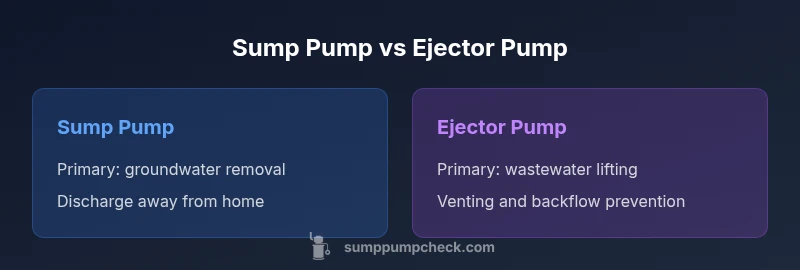
Understanding the sump pump and ejector pump is essential for a reliable home drainage plan. A sump pump primarily handles groundwater drainage from a basement, while an ejector pump manages wastewater from toilets, sinks, and laundry. According to Sump Pump Check, the right choice depends on the source of water and your plumbing layout to prevent backups and costly repairs.
Understanding the Difference Between a Sump Pump and an Ejector Pump
In many homes, two distinct pump systems exist to manage water and waste: the sump pump and the ejector pump. The sump pump is typically installed in a basin or pit at the lowest point of a basement or crawl space and is designed to remove groundwater that collects around the foundation. The ejector pump, by contrast, sits in a dedicated ejector pit and handles wastewater lifted from fixtures such as toilets, sinks, and washers to the home’s sewer or septic line. When considering a combined sump pump and ejector pump setup, homeowners must evaluate water sources, discharge routes, venting, and local codes. The Sump Pump Check team emphasizes that mixing these roles can lead to inefficient operation or code violations if not properly designed. Understanding the distinct purposes helps homeowners plan maintenance, future upgrades, and backup options more effectively.
Design and Purpose: What Each System Is Built To Do
The primary purpose of a sump pump is groundwater management. It sits in a basin that collects water seeping into a basement and pumps it out through a discharge line to an appropriate drainage area. An ejector pump’s job is wastewater handling. It collects sewage from multiple fixtures in a bathroom or laundry area and raises it to the sewer line, septic tank, or municipal system. While both pumps move water, the source, pressure requirements, and discharge destinations vary. For homes with moisture problems or frequent flooding in the basement, a robust sump pump with a reliable battery backup may be the backbone of flood prevention. In contrast, homes that need to move wastewater from lower floors require an ejector system capable of handling solid waste and venting to maintain proper airflow in the lines.
How They Integrate with Your Home Plumbing Stack
In practical terms, you may encounter one or both systems during a home remodel or repair. A sump pump connects to a dedicated discharge line that typically routes water away from the foundation. An ejector pump connects to the sanitary sewer line and requires proper venting to prevent sewer gas from backing up and to maintain consistent flow. A common misstep is assuming a single pump can do both jobs; this strategy risks clogs, backflow, and nuisance alarms. The right configuration depends on your house’s layout, fixture counts, and whether you have a combined storm/sewer line or separate systems. With careful planning, you can maximize efficiency while meeting local building codes.
Installation Considerations: Pit, Covers, and Access
Successful pump installation hinges on proper pit design and access. A sump pit is a simple basin sized to accommodate the pump’s intake and float switch. An ejector pit is typically smaller but must be watertight and correctly vented. Covers should be secure, and basins should be accessible for routine maintenance. Drainage planning is essential: the sump discharge often requires a check valve and a gravity-fed route to a suitable exit point. Ejector systems may require larger piping, dedicated vents, and backflow prevention measures. Finally, ensure that electrical supply is adequate and that GFCI protection is in place to reduce the risk of shock in damp basements. These considerations help prevent expensive retrofits and ensure reliable operation during heavy rain events or wastewater surges.
Maintenance, Troubleshooting, and Common Issues
Routine maintenance extends system life and reduces the risk of failure. For sump pumps, inspect the intake screen, test the float switch, and verify that battery backups are charged. Clear debris from the pit and check the discharge line for obstructions. Ejector pumps require periodic cleaning of the basin, testing of the check valve, and inspection of vent piping to prevent sewer gas buildup. Common issues include stuck floats, clogged discharge lines, and power interruptions. Establishing a maintenance schedule—at least annually, with additional checks after severe storms—helps homeowners avoid sudden malfunctions. The goal is to keep both systems responsive, energy-efficient, and code-compliant for long-term reliability.
Cost Considerations and Value: What You Can Expect
Costs vary widely based on scope, demand, and labor. A basic sump pump installation can range in price depending on the basin size and pump quality, while an ejector pump system’s cost reflects the complexity of venting and piping. For many homes, a straightforward sump pump with a reliable secondary backup can address basement moisture without breaking the bank. If wastewater handling is introduced or expanded, plan for a dedicated ejector pump with venting and a larger discharge line. In all cases, budgeting for professional installation, electrical work, permits, and potential trenching or coring work is essential. The long-term value comes from reduced flood risk, fewer sewer backups, and greater peace of mind during heavy rainfall and high groundwater conditions.
Comparison
| Feature | Sump Pump | Ejector Pump |
|---|---|---|
| Primary purpose | Groundwater removal | Wastewater handling |
| Discharge location | Outdoors away from the home | To the sewer/septic line |
| Pit design | Typically larger sump pit with float switch | Smaller ejector pit with pump and venting requirements |
| Ventilation | Usually none required | Requires proper venting for sewer gases |
| Maintenance needs | Float switch checks, debris removal | Check valve, basin cleaning, vent inspection |
| Power considerations | Standard 115V with possible battery backup | Dedicated power, venting, and backup planning |
| Best for | Basement groundwater issues | Water intrusion prevention |
| Estimated cost range (pump only) | $100-$400 | $200-$700 |
What's Good
- Clarifies roles of groundwater vs wastewater handling
- Helps prevent basement flooding and sewer backups
- Can be cost-effective with proper sizing
- Flexible installation options for various homes
Drawbacks
- Requires separate systems for groundwater and wastewater in many homes
- Sump pumps depend on electricity and may need battery backups
- Installing ejector pumps involves sewage handling and venting considerations
- Professional installation is often necessary to ensure code compliance
Choose based on water source: groundwater requires a sump pump; wastewater handling requires an ejector pump.
A sump pump and an ejector pump serve different roles. Use a sump pump for ground water and an ejector pump for wastewater. Plan for potential backups and ensure proper venting and discharge paths to meet codes.
FAQ
What is the key difference between a sump pump and an ejector pump?
A sump pump removes groundwater that collects in a basement sump pit, while an ejector pump handles wastewater from toilets and other fixtures and pumps it to the sewer or septic line. They serve different roles and are not interchangeable without reconfiguring the plumbing.
A sump pump handles groundwater, while an ejector pump handles wastewater. They aren’t interchangeable without redesigning the system.
Do I need both pumps in a typical home?
Not always. If your home has groundwater intrusion but no fixtures that generate wastewater in the basement area, a sump pump may be sufficient. If you have a basement bathroom or laundry, you’ll likely need an ejector pump in addition to a sump pump.
Most homes with a basement bathroom or laundry need both kinds of pumps.
Can I install an ejector pump without a sump pump?
Yes, an ejector pump can be installed independently if there is wastewater that needs lifting to the main sewer line. However, ensure venting and line sizing meet local codes and that the system won’t back up into the home.
You can install just an ejector pump if your basement has wastewater needs, but venting and codes matter.
What maintenance tasks are common to both pumps?
Regularly inspect the pits, test float switches, clean screens, check for clogs in discharge lines, and verify power backup systems. Schedule annual professional inspections to catch issues early.
Inspect pits, test switches, and clear clogs regularly, plus yearly professional checks.
What code considerations should I know for ejector pumps?
Ejector systems require proper venting, sealed pits, and backflow prevention. Local codes may dictate discharge distances, venting materials, and electrical safety requirements for basement installations.
Ejector pumps need venting and proper backflow prevention per local codes.
How do I determine the right size pump for my home?
Sizing depends on the expected water volume, fixtures served, and anticipated flood risk. A professional can perform a water load calculation and recommend a pump with appropriate horsepower, bin capacity, and backup options.
Have a pro calculate your water load to pick the right size pump.
Top Takeaways
- Identify whether water is groundwater or wastewater before choosing a pump
- Use dedicated pits and discharge paths to prevent cross-contamination
- Plan for backups (battery or generator) to handle power outages
- Ensure proper venting and code-compliant venting for ejector systems
- Budget for installation, piping, and potential trenching for long-term reliability