Sump Pump vs Septic Pump: A Practical Comparison
A detailed side-by-side look at sump pumps and septic pumps, covering how they work, when to use each, maintenance tips, and cost considerations for homeowners.


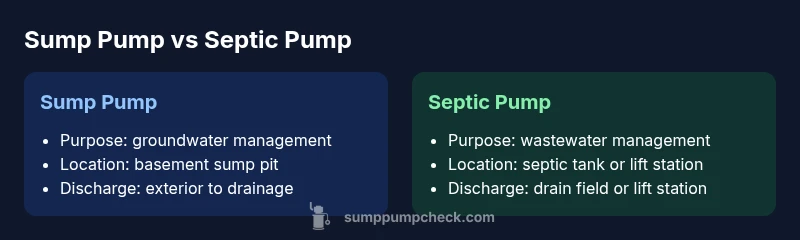
At a glance, sump pumps drain groundwater away from your foundation, while septic pumps move wastewater within a septic system. They are not interchangeable. In most homes, you’ll need a dedicated sump pump for basement flood prevention and a separate septic pump inside the septic tank or lift station to manage effluent. Your choice depends on site conditions, plumbing layout, and local codes.
What exactly are sump pumps and septic pumps?
In residential plumbing, two different devices handle very different drainage tasks. The sump pump is a groundwater-management tool installed in a basement or crawlspace sump pit to keep the living area dry. The septic pump, by contrast, is part of an on-site wastewater system that moves effluent from the tank to the drain field or lift station. Understanding the distinction between these two pumps is essential for homeowners who want to protect their property, comply with local code, and plan future maintenance. The phrase sump pump vs septic pump often confuses people because both involve pumping liquids, yet their roles, locations, and failure modes are not interchangeable. In your planning, start with the site conditions, existing plumbing, and whether you are dealing with surface water intrusion or wastewater management.
How a sump pump works: groundwater management
A sump pump lives in a dedicated pit (sump basin) at the lowest point of a basement or crawl space. When water accumulates—whether from rain, groundwater, or poor drainage—the float switch triggers the pump to turn on. The pump then transfers water through a discharge line to an exterior drainage area, storm sewer, or a dry well, depending on local codes. Many homes add battery back-up systems and alarms to alert residents if the pump fails or if water reaches a dangerous level. Regular checks of the pit, float switch, and discharge piping help prevent clogs and failure during heavy rain events. The efficiency of the system also depends on proper grading around the foundation and a clear discharge path.
How a septic pump works: wastewater handling
A septic system pumps or lifts effluent from the septic tank to the drain field or a raised lift station within the system. The pump is designed to move wastewater only after anaerobic processes separate solids from liquids. Proper sizing is important because a septic pump can be overwhelmed by high peak flows or solids buildup. The pump is usually controlled by level sensors or float switches and powered by a dedicated circuit. Maintenance includes regular septic tank pumping and ensuring that the lift station remains accessible for inspection and service. Unlike groundwater pumps, septic pumps deal with human waste and household waste-water.
Typical locations and installations in a home
Sump pumps are commonly installed in basements, crawlspaces, or other low-lying areas where water may accumulate. The septic pump sits in or near the septic tank or a lift station, often in a dedicated well or mechanical room. In rural settings, the pump may be housed in a separate outbuilding or utility area. Piping routes for sump pumps lead to exterior drainage or stormwater systems; septic pumps route to the drain field or septic effluent lines. The setup should include appropriate alarms and check valves to prevent backflow and backup. Budget for adequate space, access for maintenance, and compliance with local plumbing codes.
Core differences in function, design, and discharge paths
The central distinction is purpose: groundwater management versus wastewater handling. Sump pumps utilize a basin, a float switch, and a discharge line to move water away from the foundation. Septic pumps are part of a pressurized septic system, designed to move effluent toward the drain field. Discharge considerations differ as well: sump pump lines typically empty outside the home, while septic discharge ends up in the drain field. Both systems require electrical power, a reliable outlet, and a plan for back-up power during outages. In a single property, both systems may operate concurrently, and careful design prevents cross-contamination and backflow between them.
Maintenance expectations: lifespan, alarms, and backups
Both pumps benefit from routine inspection, but the maintenance load differs. Sump pumps rely on clean basins, working float switches, intact discharge piping, and tested backup power. Septic pumps require monitoring the lift station, checking sensors, and scheduling regular septic tank maintenance. Alarm systems for both pump types add visibility during storms or outages. Maintenance schedules should align with local codes and water usage patterns. Address potential clogs, corrosion, or worn components early, and remember that a failed pump in either system can lead to costly water damage or sewage backups.
Sizing and selection criteria
Sizing a sump pump depends on expected water load, flood risk, and the desired margin for backup. For septic pumps, sizing reflects the volume of effluent, the tank capacity, and the drain-field design. When choosing between options, consider the pump's flow rate, the head height (how high the water must be lifted), the presence of a check valve, and compatibility with backup power. Both systems benefit from professional assessment, especially when the home has a history of drainage issues or a high water table. A mismatch can lead to nuisance trips, frequent maintenance, or premature failure.
Cost considerations: upfront, installation, and long-term costs
Initial costs for a sump pump installation are typically lower than full septic-pump systems, but the total lifetime cost depends on resilience, backup options, and maintenance. Septic-pump installations may involve higher upfront investment due to tank work, electrical requirements, and field performance. Ongoing costs include electricity, routine inspections, potential pumping of the septic tank, and replacement parts. An overall cost analysis should weigh the risk of basement flooding against the risk of septic-system failure, and consider local climate, soil conditions, and water table levels. In many cases, combining a sump pump with a back-up power option provides a cost-effective safety net for homeowners.
Installation and code considerations: permits and professionals
Both sump pumps and septic pumps are subject to local plumbing codes, warranties, and permitting requirements. A sump pump installation usually requires proper drainage, a dedicated outlet, and backflow protection through a check valve. Septic pumps are installed as part of the septic system, with access to the tank and lift station for regular maintenance. In the interest of safety and compliance, many homeowners opt for a licensed plumber or septic-service professional, particularly when dealing with drainage setbacks, soil absorption areas, or complex lift-station configurations. Always verify your municipality’s rules before starting work.
Do-it-yourself maintenance vs professional service
Basic checks—listening for unusual noises, observing leaks, and testing alarms—can be performed by homeowners. However, more involved tasks, such as replacing a pump, testing the lift station, or resealing a sump pit, require professional service. The risk of improper installation includes backflow, sewage exposure, and water damage. Investing in professional maintenance provides a safety cushion and ensures compatibility with local codes and future repairs. For many households, scheduling annual or biannual service keeps both systems reliable without requiring expert level DIY skills.
Real-world scenarios: when you need a sump vs when you need a septic pump
In a home with a high water table and frequent basement flooding, a sump pump is the critical line of defense. In a rural property with an on-site septic system, a septic pump is essential to move effluent and maintain field performance. If a property experiences both groundwater issues and septic-system service needs, plan for integrated drainage strategies that minimize cross-flow. In all cases, a clean, accessible pit or pump room, adequate ventilation, and a stable electrical supply improve reliability and safety.
Common myths vs realities about pumping systems
Myth: Pumping water is enough to fix a drainage problem. Reality: Water management requires proper grading, drainage planning, and backups. Myth: Septic pumps can handle all wastewater needs. Reality: Septic systems require specific pump sizes and lift configurations. Myth: All backflow protection is optional. Reality: Check valves and backflow prevention are critical to avoid cross-contamination. Separate knowledge domains and professional guidance help homeowners avoid costly mistakes.
Planning a holistic drainage strategy for your home
A holistic approach starts with site assessment, including soil conditions, groundwater levels, and existing drainage. Map out where basement water and wastewater flow originate, and plan to separate systems whenever possible. Consider upgrades like perimeter drainage, drain tiling, backwater valves, and alarm systems. A clear maintenance calendar helps ensure your sump pump and septic pump operate as intended, reducing risk and extending system life. Collaboration with a qualified plumber or sewer-service professional ensures code compliance and optimal performance.
Quick-start steps for homeowners
- Identify which drainage problem you face: basement water intrusion or septic-system concerns. - Consult a licensed professional to confirm system types and needed upgrades. - Inspect for backups, check valves, check outlet paths, and test alarms. - Create a maintenance calendar that includes inspections, pumping schedules, and battery-backup tests. - Plan for future climate and soil changes that could affect drainage. Implementing these steps sets your home up for reliable operation and safer living spaces.
Comparison
| Feature | Sump Pump | Septic Pump |
|---|---|---|
| Primary function | Remove groundwater and prevent basement flooding | Move wastewater from the home to the septic drain field or lift station |
| Typical location | Basement or crawlspace sump pit | Near septic tank or lift station in a mechanical room |
| Power and control | Dedicated outlet; float switch; optional battery backup | Dedicated circuit; level sensors; sometimes integrated with alarm |
| Discharge destination | Exterior discharge away from foundation | Drain field or lift station discharge |
| Maintenance focus | Keep pit clean; check valve; battery backup test | Regular septic-tank maintenance; inspect lift station; pump-out intervals |
| Typical lifespan | Depends on use and maintenance; can last many years | Depends on tank size, usage, and maintenance |
| Cost considerations | Lower upfront for basic installs | Higher upfront for septic-pump systems |
| Best for | Groundwater control; flood prevention | Wastewater management for on-site septic systems |
What's Good
- Targeted solutions for distinct drainage problems
- Can be upgraded with battery backup and alarms
- Separate systems reduce cross-contamination risk
- Clear maintenance schedules extend system life
Drawbacks
- Higher upfront and ongoing maintenance costs for two systems
- Requires space and proper installation to code
- DIY installation risk if not versed in plumbing and electrical work
Sump pump vs septic pump: choose based on drainage needs
Select the sump pump if basement flooding is your primary concern. Choose the septic pump when managing on-site wastewater; in some homes, you may need both but for distinct purposes. A professional assessment ensures correct sizing, placement, and code compliance.
FAQ
What is the key difference between sump pumps and septic pumps?
Sump pumps handle groundwater to prevent basement flooding, while septic pumps move wastewater within a septic system. They serve different roles and should not be used interchangeably.
Sump pumps handle groundwater and protect basements; septic pumps manage wastewater in septic systems.
Where are these pumps typically installed?
Sump pumps are usually in basements or crawlspaces with a sump pit. Septic pumps sit in or near the septic tank or lift station in a mechanical room or dedicated area.
Sump pumps go in basements; septic pumps are by the septic system.
Can I install a sump pump for a septic system?
No. A sump pump is not designed to replace a septic pump. Septic systems require pumps sized for wastewater and proper lift configurations.
No—septic systems need specially sized pumps and proper lift setups.
Do septic pumps require separate electrical circuits?
Yes. Septic pumps usually require a dedicated circuit for reliable operation and to avoid tripping other loads. Proper electrical permits may apply.
Yes, septic pumps typically have their own circuit.
How often should I service a sump pump?
Regular inspections, at least annually, help catch worn parts and backups before a failure. Test alarms and backup power during service.
Have a yearly check and test the backup system.
Can a septic pump be used to improve drainage around the foundation?
Not recommended. Septic pumps are designed for wastewater; they won’t replace groundwater drainage solutions and could cause contamination if misapplied.
No, septic pumps aren’t for general drainage around the foundation.
Top Takeaways
- Identify the drainage problem first
- Sump pumps protect basements from groundwater
- Septic pumps manage septic-tank effluent
- Do not substitute one system for the other
- Plan for backups and regular maintenance
- Coordinate with a licensed professional