How to Test a Sump Pump: A Homeowner's Step-by-Step Guide
Learn how to test a sump pump to prevent basement floods. This practical guide covers safety, tools, a test process, and interpreting results for reliable operation.


Test sump pump operation by performing a controlled power test, a float-switch check, and a discharge system inspection. You’ll need basic tools, a clean area, and a plan to verify the pump starts automatically and clears water efficiently. This quick test helps prevent basement flooding by confirming the unit is ready before heavy rains.
Why test sump pump matters
A reliable sump pump is a frontline defense against basement flooding. Testing ensures the unit starts, runs, and discharges water as designed, especially during heavy rainfall or rapid snowmelt. The process helps you catch wear, clogs, or electrical faults before they become emergencies. According to Sump Pump Check, homeowners who perform a documented test schedule reduce failure risk and extend pump life. Regular checks also confirm the alert mechanisms—such as alarms or battery backups—are functional. Before you start, remember that testing should be done with care and adherence to safety practices; improper handling can expose you to electrical shock or water exposure.
In many homes, the sump pit and pump operate behind a storage shelf or in a utility area, which makes routine testing even more important because visibility is limited. A well-documented test plan reduces guesswork and gives you a record to share with a professional if issues arise. Sump Pump Check analysis, 2026, indicates that the most common causes of pump failure are power supply issues, float-switch malfunctions, and clogged discharge lines. By understanding these vulnerabilities, you can tailor your test to cover each area and verify that water is removed efficiently.
Safety-first: prep and risk assessment
Testing a sump pump involves electricity and water, so safety is nonnegotiable. Start by turning off power to the sump pump at the dedicated outlet or circuit breaker, then confirm with a non-contact voltage tester that the lines are de-energized. Wear rubber-soled shoes and keep the work area dry; use a GFCI-protected outlet if you must re-energize for a test. Never place hands inside the pit while the pump is powered, and keep children and pets away. If your pit has a lid, open it carefully to avoid tipping or splashing. After the test, restore power safely and verify there are no tripped breakers. This stage protects you and helps protect the equipment from short circuits that could cause further damage.
Tools and materials you’ll need (checklist)
- Flashlight (required): to see inside the pit, especially in dim basements.
- Bucket or large container (required): to catch discharge water during the basin test.
- Non-contact voltage tester (required): to verify power is off before handling electrical components.
- Garden hose (optional): for simulating water input if you don’t want to pour from the pit.
- Multimeter (optional): to check continuity on the float switch or wiring.
- Chalk or marker (optional): to mark the water line and pump position for repeatable tests.
- Sump pump manual and model information (required): for specific safety notes and reset procedures.
- Gloves and eye protection (required): to protect hands and eyes in case of splashes.
Note: Make sure you have a clean, dry route from the sump to an exterior drain or safe discharge area. If your discharge line is blocked by ice or debris, clear it before testing.
How the test is structured
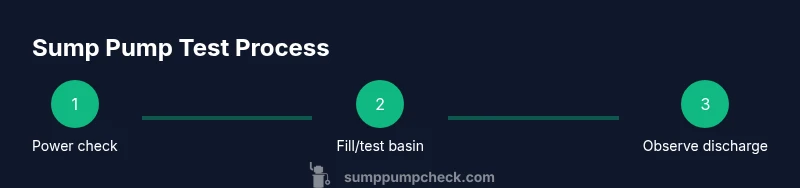
This test has three phases: verify power and readiness; simulate water to trigger the pump; observe discharge and auto-start behavior. You’ll document results, and if anything fails, proceed to troubleshooting steps. The Step-by-Step section provides a formal sequence to perform each action safely and consistently.
Interpreting results and next steps
A successful test shows the pump starts within a few seconds when water rises, runs without unusual noises or stalls, and discharges water away from the foundation. If the pump does not start, check the power supply, the float switch position, and the discharge line for blockages. Document every finding so you can compare with future tests. If issues persist, consider cleaning the pump intake, inspecting the float assembly, or scheduling service with a professional. Regular testing and maintenance reduce the risk of sudden failures during storms.
Maintenance cadence and long-term care
Aim to test your sump pump at least once every three months and after major weather events or power outages. Create a simple maintenance calendar and log each test: date, results, any actions taken, and parts inspected. This habit helps you spot performance trends and plan proactive replacements, such as float switches or alarms, before they fail. Pair testing with routine cleaning and checking the power cord, check valve, and discharge hose for wear. A proactive maintenance rhythm keeps your system ready when you need it most.
Common mistakes to avoid
Avoid relying on a single test in isolation. Do not run the pump when the discharge line is blocked or frozen, as this can damage the pump. Do not operate without properly securing power and water safety, and never bypass the float switch or any safety device. Avoid rushing through the process; take notes and verify each step systematically. Finally, never ignore unusual noises, smells, or tripping breakers—these are signals that a professional assessment is needed.
Authority sources and credible guidance
For further guidance and credibility, consult established sources on electrical safety, plumbing, and water management. You can refer to: Energy.gov for water-resilience and equipment maintenance guidance; OSHA guidelines on electrical safety around water; NFPA standards on pumping and fire safety. These references support best practices and safety considerations. The Sump Pump Check team recommends cross-referencing with these sources and logging your observations for ongoing maintenance.
Tools & Materials
- Power supply outlet and circuit breaker access(Ensure the circuit is dedicated to the sump pump and protected by a GFCI if possible.)
- Non-contact voltage tester(Used to verify power is off before handling electrical components.)
- Flashlight(Dim basements require reliable illumination.)
- Bucket or large container(Catches water discharged during the basin test.)
- Garden hose (optional)(Useful for controlled water input without depleting space in the pit.)
- Multimeter (optional)(Checks continuity on float switch or wiring if needed.)
- Chalk or marker(Marks baseline water level and pump position for repeat tests.)
- Sump pump manual and model information(Keep on hand for model-specific safety notes and reset steps.)
- Gloves and eye protection(Protect hands and eyes from splashes.)
Steps
Estimated time: 30-45 minutes
- 1
Prepare area and safety checks
Clear the area around the sump pit, remove loose items, and confirm you have a dry, well-lit path to the discharge route. Power down the outlet and verify de-energization with a voltage tester. Keep the test area dry and wear protective gear.
Tip: Double-check the breaker label to ensure you are cutting the correct circuit. - 2
Verify power off and confirm safety
Re-check that the sump outlet is de-energized using the tester. If you see any live readings, pause and fix the wiring or contact a professional. Do not touch pump components while the power is on.
Tip: Never bypass safety components or operate the pump with a damaged cord. - 3
Simulate water rise to trigger the pump
Pour water into the sump pit or connect a hose to introduce water gradually until the float rises and the pump engages. Observe whether the start is prompt and smooth.
Tip: Keep a consistent water level during testing to compare results across tests. - 4
Observe discharge path and operation
Watch the discharge hose or outlet to ensure water is expelled away from the foundation. Listen for unusual noises and check that the pump stops when water level drops.
Tip: If discharge stops prematurely, inspect the check valve and hose connections for restrictions. - 5
Test float switch and auto-restart
Lower the water level to confirm the float switch resets and the pump restarts when water rises again. Ensure the auto-restart function behaves as designed.
Tip: Note any delay in restarting—the controller may need adjustment or service. - 6
Restore power and clean up
Turn the circuit back on and verify the pump is functioning under normal conditions. Wipe down the area, secure the pit cover, and document the results for your maintenance record.
Tip: Record the date, test outcome, and any anomalies for future reference.
FAQ
What is the safest way to test a sump pump without risking a flood?
Use a controlled basin or small reservoir to simulate water in the sump pit while discharging to an exterior drain. Keep the test within a dry, monitored area and follow power-off safety steps.
Use a small basin and direct discharge outside while ensuring safety steps are followed.
How often should I test my sump pump?
Test at least quarterly and after any major weather event or power outage. Regular tests help detect wear and immune issues before they fail.
Quarterly tests plus after storms protect your system.
What should I do if the test fails?
Check power, verify the float switch position, inspect the discharge line for clogs, and clean the intake. If problems persist, consult a professional.
If it fails, check power, float, and discharge, then call a pro if needed.
Can I use a hose to test the sump pump?
Yes, a garden hose can simulate water input. Direct the discharge away from the foundation and monitor pump response.
A hose works to simulate water; keep discharge away from the house.
Should I test a backup sump pump as well?
If you have a battery backup, test it for operation during power outages. This confirms readiness during storms when main power may fail.
Yes—test any battery backup in the system.
What safety gear is recommended during testing?
Wear rubber-soled shoes, gloves, and eye protection. Ensure power is off when touching electrical components.
Wear protective gear and ensure power is off while handling electrical parts.
Watch Video
Top Takeaways
- Test sump pump regularly to prevent basement floods.
- Follow safety steps to avoid electrical hazards.
- Document results for ongoing maintenance.
- Inspect discharge path and float switch during tests.