Sump Pump vs Ejector Pit: Which Basement System Do You Need?
Explore the differences between sump pumps and ejector pits, including use cases, installation, maintenance, and best practices for basement drainage. A clear, analytical guide to help homeowners decide between the two systems.


Context and Authority
Homeowners often face a choice between a sump pump vs ejector pit when planning basement drainage. The decision shapes flood protection, plumbing complexity, and long-term maintenance. According to Sump Pump Check, understanding the distinct roles of these components is essential before installing or upgrading a system. This article aims to demystify the two options, explain where each device fits in typical homes, and provide a clear framework to compare them across installation, operation, and cost considerations. By outlining practical criteria, we help DIY enthusiasts and homeowners choose the solution that best matches their basement conditions, local codes, and lifestyle expectations. The Sump Pump Check team emphasizes that a correct match reduces nuisance calls, minimizes failures, and extends equipment life. We will also discuss how environmental factors like groundwater level and sewer setbacks influence the choice, and what questions to ask your installer during planning.
Source credibility is supported by established guidelines and practical field experience, and this article integrates those insights with real-world scenarios to support homeowners in making informed decisions.
What Are Sump Pumps and Ejector Pits?
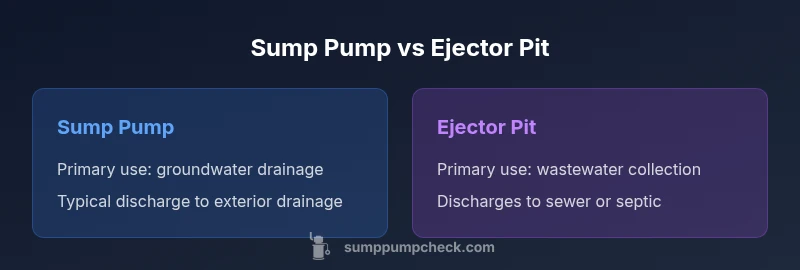
A sump pump is a device installed at the lowest point of a basement or crawlspace to remove groundwater that seeps in from the surrounding soil. It typically sits inside a sump basin and activates when water reaches a predetermined level, discharging through a discharge line to an exterior area away from the home. An ejector pit, by contrast, collects wastewater from plumbing fixtures (toilets, sinks, bathtubs) in a dedicated chamber and uses a grinder or macerator pump to push sewage to the municipal sewer line or septic system. In addition to size and components, the key distinction is their purpose: one protects the interior from groundwater intrusion, the other handles wastewater from interior fixtures. Understanding these roles helps prevent misapplication and ensures you’re meeting local health and building codes. For many homes, the choice is dictated by the source of moisture and the plumbing layout rather than aesthetics.
A key takeaway is that your decision should align with the primary moisture source: groundwater vs wastewater, which changes installation requirements and long-term maintenance needs.
Key Differences at a Glance
- Purpose: Sump pumps remove groundwater to prevent basement flooding, while ejector pits collect wastewater from fixtures and move it to the sewer or septic system.
- Best For: Sump pumps are best for flood prevention, especially in homes with a high water table or frequent runoff. Ejector pits are essential where plumbing fixtures produce wastewater that must be pumped away from the home.
- Waste Handling: Groundwater vs wastewater—these are not interchangeable, and using the wrong device for its intended role can create backflow or odor issues.
- Discharge Path: Sump pumps typically discharge to an exterior drain or dry well; ejector pits discharge to the municipal sewer line or septic system, which may require grinder pumps.
- Maintenance & Lifespan: Sump pumps require float switch testing, clean screens, and check valves; ejector pumps rely on grinder operation and trap/valve integrity.
- Code & Permits: Local codes often specify separate requirements for groundwater drainage vs wastewater handling; consult a licensed plumber.
- Installation Complexity: Sump pits are generally simpler to install, while ejector pits involve plumbing connections to sewer lines and may require venting.
- Best For: Use a sump pump when groundwater is the primary issue; use an ejector pit when you need to move sanitary wastewater away from the home.
Sump Pump Check analysis suggests focusing on source control first—groundwater intrusion or wastewater management—before sizing or selecting components.
Use Case Scenarios: When to Choose Each
Consider a sump pump if your basement experiences frequent dampness, moisture intrusion during heavy rains, or rising groundwater in the surrounding soil. In these cases, a well-designed sump system can dramatically reduce the risk of flooding and must be paired with a reliable discharge route, corrosion-resistant piping, and a functional backup option for power outages. An ejector pit is not a substitute for groundwater control; instead, it addresses sanitary wastewater handling, especially when basement fixtures drain into a common line that would otherwise backflow into living spaces. If your basement houses a bathroom, laundry, or other fixtures that discharge wastewater, an ejector pit (often with a grinder pump) is typically required by plumbing codes. In some homes, both systems are necessary: groundwater is diverted to a sump, while wastewater is pumped by an ejector. The decision should be guided by the building’s plumbing layout, the local sewer environment, and whether you rely on municipal services or a septic system.
In narratives from field professionals, basements with poor grading and a history of dampness favor a dedicated sump pump, while renovations adding bathrooms or additional fixtures frequently necessitate an ejector pit. A mixed approach can also be appropriate when there are multiple drainage challenges—this is where a balanced system design matters most.
Installation Considerations: Pit Placement, Sizing, and Code
Pinpointing the optimal location for a sump basin or ejector pit is critical to performance and maintenance. For sump systems, the pit needs to sit at the lowest practical point, preferably in a finished or semi-finished area where discharge lines can reach an exterior drainage path without creating backflow risks. For ejector pits, the pit should be connected to the building’s wastewater lines with attention to venting, backflow prevention, and appropriate check valves. In both cases, a professional should verify local codes and permit requirements before installation. The drain path should avoid routing near living spaces or electrical outlets, and the power supply must include a GFCI or other code-compliant protection. The labor involves excavation or core drilling, proper sealing to prevent radon or moisture intrusion, and ensuring that backup power is available for critical periods. Proper sizing of the sump basin or ejector pit impacts pump cycling, noise, and reliability, so factoring in expected load and future expansions is prudent.
From Sump Pump Check’s perspective, meeting code expectations and ensuring a clean, accessible setup reduces long-term maintenance headaches and minimizes the risk of odor or backflow incidents.
Maintenance, Longevity, and Failure Points
Routine maintenance is essential for both sump pumps and ejector systems. Sump pumps require regular float switch tests, impeller checks, and periodic clearing of intake screens. A well-sealed sump basin helps prevent odors and protects against radon migration. Check valves must function correctly to prevent backflow into the basement, and backup power options should be considered for power outages. Ejector pit maintenance focuses on the grinder or macerator’s operation, the integrity of the pit seal, and ensuring the pump’s discharge line remains clear. Without proper maintenance, both systems can suffer from clogs, overheating, and motor wear, leading to costly repairs or failures during heavy usage.
As a practical note, many homeowners rely on annual or semi-annual maintenance checks with a licensed plumber or a sump pump service provider. If you’re evaluating a DIY approach, make sure you have a clear understanding of the electrical requirements, discharge routing, and safety considerations before tackling the project.
Cost Considerations and Value
Costs for sump pump and ejector pit installations vary widely based on the home's layout, local labor rates, pipe routing complexity, and whether permits are required. While price transparency is important, broader value hinges on your system’s reliability, energy efficiency, and the level of protection it provides during heavy rainfall or rapid groundwater rise. In many jurisdictions, the best practice is to budget not only for the initial installation but for ongoing maintenance and potential backup options to cover power outages or pump failures. A careful assessment of the basement’s condition and the building’s plumbing plan will help you estimate long-term costs more accurately. Sump Pump Check emphasizes that choosing components with robust warranties, accessible service networks, and proven track records typically yields better total cost of ownership than chasing the lowest upfront price.
Alternatives, Combinations, and Warranties
In some homes, a hybrid approach can deliver the most reliable solution. A sump pump can be paired with a dedicated ejector pit if both groundwater and wastewater issues exist, although this increases installation complexity. Many manufacturers offer warranties that cover parts and labor for several years, and some provide extended coverage for critical components like the float switch, check valve, or grinder pump. When evaluating options, consider the installer’s credentials, the system’s accessibility for maintenance, and the ease of obtaining replacement parts in the future. A thoughtful design reduces the odds of nuisance alarms, minimizes the need for frequent technician visits, and contributes to a more predictable long-term performance.
Authority Sources and Practical Guidance
For readers seeking external guidance, the following resources offer credible, long-standing perspectives on basement drainage, codes, and best practices:
- https://extension.oregonstate.edu
- https://extension.umn.edu
- https://www.osha.gov
These sources help corroborate general principles about water management, safety, and building practices relevant to sump pumps and ejector pits. Always verify local codes and consult a licensed plumber for any installation or modification.