How Often Should a Sump Pump Run During Heavy Rain: Practical Guide
Discover how often a sump pump should run during heavy rain, what factors influence run time, and maintenance tips to protect your basement. Insights from Sump Pump Check.


During heavy rain, there is no universal number for how often a sump pump should run. Run frequency depends on rainfall rate, drainage capacity, and pump size. In storms, expect more frequent cycling or longer run times as water continues to enter the pit. A typical pattern ranges from short cycles to intermittent continuous pumping, signaling a need to inspect drainage and backflow controls.
Understanding How a Sump Pump Responds During Heavy Rain
When rain pours into the ground, water finds its way to the basement pit and the sump pump springs into action. To answer how often should sump pump run during heavy rain, homeowners must consider rainfall rate, drainage capacity, and pump size. In general, the pump cycles whenever water enters the sump basin. During storms, expectations shift: you may see frequent short cycles or longer, continuous operation as water continues to accumulate. According to Sump Pump Check, proper sizing and well-designed discharge routes help prevent erratic cycling and keep basement levels safe. The first step is to assess your system's baseline: how quickly water enters the pit, how much the drainage can handle, and whether any backflow protection is in place. The more you know about these factors, the better you can predict run-time patterns during a heavy downpour and prepare accordingly. If you notice the pump runs for long stretches without turning off, that signals potential drainage bottlenecks or a sump that is undersized for the rainfall load.
Factors That Determine Run Frequency During Rain
Several variables drive how often a sump pump runs in a storm:
- Rainfall intensity and duration: Heavy downpours deliver more water than your system was designed for, increasing run time.
- Sump basin capacity: A larger pit can collect more water before triggering the pump, slightly altering cycle length.
- Pump size and efficiency: Higher horsepower pumps move water faster, reducing the number of cycles but possibly keeping discharge steady during heavy inflows.
- Discharge piping and backflow controls: A restricted or clogged discharge line can force longer runs or continuous operation.
- Check valve and intake debris: A blocked valve or clogged intake slows water outflow and extends run time.
- Groundwater infiltration and drainage capacity: If surrounding soil is saturated, water may reach the pit faster, increasing run-time variability.
- Backup systems: When a backup kicks in, overall run time patterns change depending on the backup’s design and control strategy.
Understanding how these factors interact helps you interpret what the pump is doing during heavy rain and where to focus improvement efforts.
How to Measure and Monitor Run Time Safely
Accurately measuring run time during heavy rain requires a simple, repeatable method:
- Establish a baseline: Note the pump’s normal on/off cycle during dry or light rain to have a reference point.
- Use a timer or smart plug: Log each on/off cycle and the duration of every run, ideally over a 30–60 minute window during rain.
- Calculate run-time statistics: Compute average cycle duration and cycles per hour to gauge whether the pump is behaving normally under current rainfall.
- Inspect common bottlenecks: Check the discharge line for clogs, verify the check valve is sealing, and inspect the sump pit for debris.
- Keep safety in mind: Never reach into the pit while the system is energized; if water is rising, shut off power at the breaker and call for help if needed.
- Document trends: Compare storm events to see if run time is increasing, decreasing, or staying consistent over time.
These steps give you a practical, data-driven view of how often the sump pump runs during heavy rain and whether adjustments are needed.
Practical Scenarios: Small, Medium, and Large Basements
Every home is different, so it helps to think in scenarios:
- Small basement (roughly 100–200 square feet, modest drainage): Run times per cycle may be short (tens of seconds) with 1–3 cycles per hour during heavy rain.
- Medium basement (200–400 sq ft, decent drainage): Expect more cycles and slightly longer durations; cycles might average 30–60 seconds, with 2–5 cycles per hour.
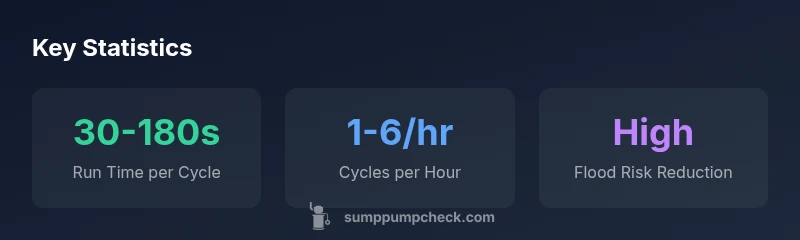
- Large basement or high inflow (above 400 sq ft, saturated soil): Run times can extend to 60–180 seconds per cycle and 3–6 cycles per hour, potentially overlapping during peak downpours.
These ranges are influenced by sump size, discharge capacity, and rainfall intensity. If you notice unusual, long-running cycles, it's worth assessing drainage and pump sizing.
Maintenance Practices to Optimize Run Efficiency
Regular maintenance reduces unexpected run-time spikes and keeps the sump pump operating reliably during storms:
- Keep the discharge path clear: Ensure the exterior discharge is free of obstructions and check for backflow.
- Inspect the check valve: A faulty or leaking check valve can cause short cycling or backflow.
- Clean the sump pit and impeller screen: Debris can slow water flow and extend run time.
- Test the float switch: Make sure it triggers at the correct water level without sticking.
- Verify electrical supply: Use a dedicated circuit with GFCI protection to avoid nuisance trips.
- Consider a backup option: A battery or water-powered backup system provides reliability when the primary pump is overwhelmed.
- Schedule professional inspections: Annual checks help spot issues before storms overwhelm the system.
Good maintenance keeps run time predictable and reduces flood risk during heavy rain.
When to Consider Upgrades or Backup Solutions
If your storm-related run times are consistently long or if you’ve recently upgraded or expanded living space, you may need to upgrade or add backups:
- Sump pump sizing: A larger or more efficient pump moves more water per cycle, reducing total run time during heavy storms.
- Battery backup sump pump: Provides continued removal if the primary pump loses power.
- Dual-pump setup: A second pump can share load and improve reliability.
- Backflow prevention: A proper check valve and backflow prevention reduce unnecessary cycling.
- Alternative drainage improvements: French drains, trench drains, or improved grading can lower inflow to the pit.
- Professional evaluation: A pro can model rainfall scenarios for your home and recommend targeted improvements.
Upgrading or adding backups is a prudent investment for homes in flood-prone areas.
Common Mistakes That Skew Run Time Readings
Beware of common misinterpretations that affect how you read pump run times:
- Ignoring rainfall intensity: A light shower is not a storm; interpret run times in context.
- Not testing during peak storms: Running tests only in dry weather hides performance gaps.
- Failing to account for backflow: A blocked discharge line can create long-on periods that aren’t typical.
- Overlooking basement drainage changes: Saturated soil or new landscaping can shift water inflow.
- Relying on a single data point: Use multiple storms to establish a reliable baseline.
- Assuming a 1:1 relationship between rain and run time: Other factors like drainage layout and pit size influence results.
Addressing these mistakes strengthens your understanding of how often the sump pump runs during heavy rain.
Getting Professional Help vs DIY During Heavy Rain Events
DIY work around a flooded basement is not always safe or effective during storms. Tools and knowledge help, but in many cases a professional evaluation is essential:
- When to DIY: Basic maintenance, battery backup checks, and simple drain clearing can be done by homeowners with proper precautions.
- When to hire a pro: Persistent long run times, unusual noises, or frequent trips indicate issues beyond DIY scope, such as pump sizing errors, backflow problems, or drainage failures.
- What a pro provides: A thorough sizing analysis, drainage optimization recommendations, and backup planning to reduce flood risk.
If the rain is heavy and your basement is at risk, the Sump Pump Check team recommends seeking professional guidance to ensure your system is ready for the next storm.
Comparison of sump pump run times by rainfall scenario
| Scenario | Typical Run Time per Cycle | Notes |
|---|---|---|
| Light rain | 10-30 seconds | Baseline measurement for dry conditions can help compare storm data |
| Moderate rain | 30-60 seconds | Often intermittent cycling; check valve status |
| Heavy rain | 60-180 seconds | Frequent cycling; potential continuous operation during peak rain |
| Storm surge/flooding | Multiple minutes | Consider backups and drainage improvements |
FAQ
How often should a sump pump run during heavy rain?
There is no universal frequency. Run time depends on rainfall intensity, drainage capacity, and pump size; typical storms can produce 1-6 cycles per hour with cycles ranging 30 seconds to several minutes.
There isn’t a single number; it varies with rain and system size.
Why does my sump pump seem to run constantly in a storm?
Constant running usually means the drainage is overwhelmed, the discharge is blocked, the float is sticking, or the pump is undersized for the rainfall load.
If it’s always running in a storm, something isn’t right.
How can I reduce run time during a storm?
Improve drainage, clear the discharge line, install a functioning check valve, and consider a larger or backup pump to handle peak inflows.
Improve drainage, check the valve, consider a backup.
Is it safe to let a sump pump run continuously?
Most pumps are designed for intermittent cycling; continuous running can overheat or wear the motor. If it runs continuously, inspect the system and consider backups or sizing corrections.
Continuous running isn’t ideal; check the system.
When should I install a backup sump pump?
If you experience frequent power outages or very heavy rainfall, a backup pump improves reliability.
A backup pump is smart in storm-prone areas.
How can I measure run time without specialized tools?
Use a simple timer to log on/off cycles during storms; compare data across multiple events to establish a baseline.
You can estimate with a simple timer.
“Understanding run-time patterns during heavy rainfall helps protect your basement and optimize energy use. With proper sizing and maintenance, cycling stays predictable rather than disruptive.”
Top Takeaways
- Monitor run times during storms to gauge system health.
- Ensure discharge paths and backflow protections are clear.
- Size and maintenance reduce unpredictable cycling.
- Backups provide resilience during power outages.
- Consult a professional for persistent long run times.