How Often Is Too Often for a Sump Pump to Run: A Home Guide
Learn how often a sump pump should run during heavy rain or high groundwater. Practical diagnosis tips and maintenance guidance from Sump Pump Check to protect basements.


Too often means the sump pump cycles more frequently than necessary for your home conditions. If your sump pump starts, runs, and stops within minutes, or runs during dry weather, that is a sign it may be operating too often. For homeowners wondering how often is too often for a sump pump to run, the key idea is to assess whether the rhythm matches actual water input. In a well‑maintained basement with normal rainfall and groundwater, a pump should run long enough to remove incoming water and then shut off. Frequent cycling can point to misadjusted float switches, clogged discharge paths, leakage, or a failing pump. The goal is a balance between pump runtime and protecting the sump basin from flood damage. Throughout this article, you’ll find practical steps and checks from Sump Pump Check to determine whether your run-time is normal or excessive. If you observe persistent cycling, plan an orderly inspection rather than assuming a single fix will solve it.
What constitutes 'too often' for a sump pump
Too often means the pump cycles more frequently than necessary for your home conditions. If your sump pump starts, runs, and stops within minutes, or runs during dry weather, that is a sign it may be operating too often. For homeowners wondering how often is too often for a sump pump to run, the key idea is to assess whether the rhythm matches actual water input. In a well‑maintained basement with normal rainfall and groundwater, a pump should run long enough to remove incoming water and then shut off. Frequent cycling can point to misadjusted float switches, clogged discharge paths, leakage, or a failing pump. The goal is a balance between pump runtime and protecting the sump basin from flood damage. Throughout this article, you’ll find practical steps and checks from Sump Pump Check to determine whether your run-time is normal or excessive. If you observe persistent cycling, plan an orderly inspection rather than assuming a single fix will solve it.
Common causes of excessive sump pump running
Several factors can push a pump to run more often than it should. Heavy or prolonged rainfall and high groundwater are obvious culprits, but less visible issues can trigger similar symptoms. A stuck or failing float switch may keep the pump energized, or a dislodged check valve or blocked discharge line can create backpressure, forcing the motor to restart frequently. Debris in the sump pit, a cracked pit liner, or improper pit size can also intensify cycling. In winters, a frozen discharge line can hold water at the outlet, prompting repeated starts as the system tries to push water through. Finally, an undersized pump or misapplied piping around the discharge can cause the system to work harder than necessary, wasting energy and increasing wear. Understanding these causes helps you target the right fix rather than guessing.
How to observe and measure runtime
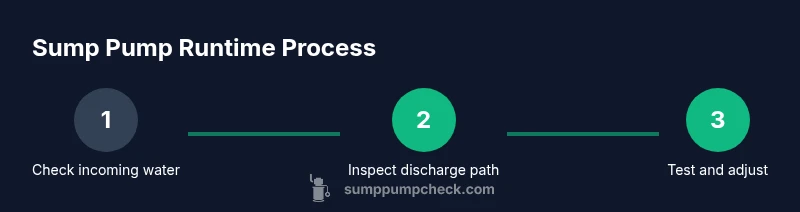
To determine whether your pump is running too much, start by logging runtime during a defined period—ideally during a rain event or when groundwater input is highest. Use a simple timer or wall clock to note the minutes of continuous operation and the number of on/off cycles per hour. If you have a whole-house water meter or a smart outlet with energy monitoring, you can estimate running hours more precisely. Keep a simple notebook: date, rain intensity, observed cycles, and any changes you made. If the pump runs for more than a typical rainstorm duration or cycles during dry spells, it’s a sign to investigate. Sump Pump Check recommends tracking run-time for at least 24 hours during a significant water input period to establish a baseline and spot deviations early.
Safety and efficiency considerations
Running a sump pump too often can raise electricity costs and shorten pump life. Always prioritize safety: shut off power at the breaker before inspecting the pump, and never touch wet electrical components. Ensure the discharge line is clear and properly routed away from the foundation. Use a GFCI outlet where the pump plugs in to reduce shock risk. Regular maintenance improves efficiency, reduces wear, and lowers the chance of a sudden failure during a flood. If you notice constant operation, review the wiring, switch, and float assembly and consider upgrading to a more efficient model or a larger unit if your water input exceeds the current pump’s capacity. The takeaway: efficiency and reliability go hand in hand with proactive checks.
Diagnostics: root-cause checklist
Use this quick checklist to locate why your sump pump is running more often than expected. Start at the water input side: is the drainage area overwhelmed by rain or groundwater? Next, inspect the mechanicals: float switch moves freely, no debris rests on the switch, and the check valve is sealing. Examine the discharge path for a partial blockage or a kinked hose. If the discharge runs uphill or back into the pit, it will trigger extra starts. Finally, verify the sump pit is watertight and not filling due to cracks or seepage around the basin. Each fix should be tested with a brief rain simulation or a controlled water source so you can observe whether run-time stabilizes. Remember, a small adjustment often yields a large improvement, so document changes as you go.
Maintenance practices to prevent excessive running
Create a routine that combines inspection, cleaning, and testing. Clean the sump pit and float switch assembly every 6–12 months and after major floods. Inspect the discharge line annually for blockages, leaks, or kinks, and ensure the check valve seals properly. Schedule professional service every 2–3 years to confirm electrical components, seals, and bearings are in good condition. Maintain a written log of run-time and weather conditions to identify trends. By staying proactive, you reduce the chance of unexpected failures and improve overall system reliability.
When to call a professional
If you cannot identify a clear cause after checking the float switch, discharge line, and valve, or if the pump continues to run excessively despite fixes, call a professional. Signs that you need help include persistent cycling after maintenance, strange noises from the motor, frequent resets of the breaker, or visible leaks around the pump housing. A licensed technician can diagnose electrical issues, confirm whether the pump is undersized for typical water input, and recommend a replacement or upgrade. Sump Pump Check emphasizes that a pro evaluation is worth it when risk to the basement is ongoing or if flood potential remains high.
Quick maintenance checklist for homeowners
- Inspect the pit and float switch; clear debris.
- Check and test the discharge line and check valve.
- Verify proper power supply and GFCI presence.
- Measure run-time during a rain event and log results.
- Schedule professional inspection every few years.
Real-world scenarios and next steps
Scenario A: A basement with infrequent heavy rain starts to cycle more often after a new landscaping project. Action: inspect the discharge path for a blockage, ensure the valve seals, and check for new groundwater intrusion. Scenario B: A pump runs continuously during a storm, then shuts off. Action: confirm you have a properly sized unit and not an undersized unit; consider a backup pump for extreme inflow. Real-world examples show how targeted checks reduce run-time and protect the basement.
Tools & Materials
- Gloves (rubber)(at least 1 pair)
- Flashlight(for dark pits)
- Screwdriver set (Phillips & flathead)(for access screws)
- Bucket(to collect water or debris)
- Towel or rag(dry surface and wipe up spills)
- Pliers(gripping clamps or clamps)
- Replacement check valve or float switch (optional)(on-hand parts for quick fixes)
- Multimeter (optional)(for electrical checks)
Steps
Estimated time: 45-75 minutes
- 1
Power down and prep
Before touching any components, switch off the sump pump circuit at the main breaker and verify power is removed using a non-contact tester. This prevents accidental shocks while you inspect the system.
Tip: Never work on wet components; keep one hand dry and use a dry cloth to handle parts. - 2
Inspect the float switch
Lift and lower the float to confirm it moves freely without sticking. If it hangs up, remove debris from the sump area and rinse the mechanism with clean water. A stuck switch can cause continuous running.
Tip: Clear debris from the pit and ensure the float has full range of motion. - 3
Check the discharge line and valve
Trace the discharge line from the pump to the exterior outlet. Look for kinks, blockages, or a faulty check valve. Clean or replace the valve if it doesn’t seal properly to prevent backflow.
Tip: A blocked discharge is a common cause of rapid cycling; fix it before testing run-time again. - 4
Test with controlled input
Pour a small amount of water into the pit to observe pump response. Note how quickly it starts, how long it runs, and whether it stops smoothly. Repeat with increasing input to simulate a storm.
Tip: Record run-time during each test to establish a baseline. - 5
Evaluate pit and seals
Inspect the sump pit for cracks or seepage around the basin. Any leakage can mimic or mask underlying issues and cause unnecessary cycling.
Tip: Seal any cracks properly and monitor for changes in run-time after sealing. - 6
Document and re-test
After addressing identified issues, re-test under similar conditions to verify that run-time has improved and cycling is normal.
Tip: Keep a log of fixes and results for future reference.
FAQ
How often should a sump pump run during heavy rain?
During heavy rain, a sump pump should run long enough to remove incoming water and then shut off. If it stays on or cycles rapidly without a clear water source, inspect the discharge path, float switch, and pit for blockages or faults.
During heavy rain, the pump should run long enough to clear water and then shut off. If it keeps cycling, check the discharge path, float switch, and pit for blockages or faults.
Can a faulty float switch cause the pump to run continuously?
Yes. A stuck or failed float switch can keep the pump energized, causing continuous or rapid cycling. Inspect and clean the switch, and replace it if it does not move freely.
Yes. A stuck float switch can keep the pump running. Inspect and replace if it won't move freely.
Is it normal for a sump pump to cycle on and off during a storm?
Some cycling during a storm is expected as water input changes. However, excessive cycling or running during dry spells indicates an issue with the water input, discharge, or the pump itself.
Some cycling during a storm is normal, but excessive cycling means you should investigate the input and discharge.
What maintenance steps prevent the pump from running too often?
Regularly clean the pit and float switch, inspect the discharge line and check valve, test run-time during rain events, and schedule professional checks every few years. Keeping logs helps detect trends early.
Keep the pit clean, check the discharge path, test run-time during rain, and have periodic professional checks.
When should I upgrade or replace a sump pump?
If run-time remains high after fixes, or if the pump is aged, undersized, or frequently failing, consider upgrading or adding a backup system to handle peak inflow. A professional evaluation can confirm sizing needs.
If run-time stays high after fixes or the pump is old or undersized, upgrade or add a backup.
Can a clogged check valve cause the pump to run more often?
Yes. A blocked check valve can allow backflow, forcing the pump to restart more often. Inspect and replace if needed to restore proper one-way flow.
A clogged check valve can cause backflow and repeated restarts. Inspect and replace if needed.
Watch Video
Top Takeaways
- Identify the true cause of excessive run-time before replacing parts
- Regular maintenance reduces cycling and extends pump life
- Document run-time and conditions to spot trends
- Call a professional if the problem persists after checks