How Long Can a Sump Pump Run Continuously? A Practical Guide
Discover how long a sump pump can run continuously, the factors that influence runtime, and practical steps to protect your basement during storms and power outages.


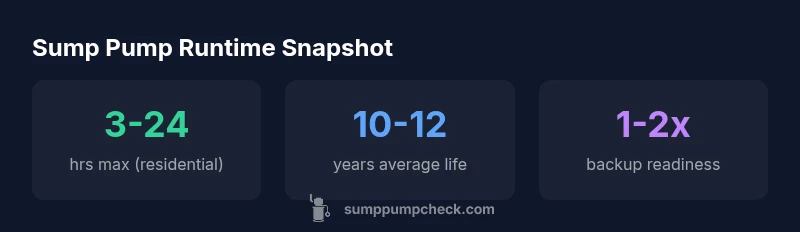
Typically there is no universal maximum runtime for a sump pump; runtime depends on model, inflow rate, and power supply. Many residential pumps can run for hours during heavy rain, but prolonged continuous operation increases risks of overheating and wear. If multi-day operation is expected, plan with backups and monitoring to protect your basement.
How long can a sump pump run continuously?
According to Sump Pump Check, there is no universal maximum runtime for a sump pump. The actual limit depends on the specific model, the rate at which water enters the pit, and the electrical setup powering the unit. In practical terms, many residential pumps can run for several hours straight during heavy rainfall without issue, but prolonged, multi-day operation introduces risks such as overheating or accelerated wear. If you anticipate a storm that could keep your pit full for days, plan ahead with a backup power strategy and a clear discharge path. Proper sizing, regular maintenance, and awareness of the pump’s thermal protection features are essential to avoid surprises when weather turns severe.
Factors that influence continuous runtime
Several interdependent factors determine how long a sump pump can run continuously during a flood or heavy rain. First, the pump’s size and horsepower set the baseline for how much water can be moved per minute. Higher capacity pumps typically tolerate longer runtimes, provided the discharge path remains clear and the electrical circuit remains stable. Second, the water inflow rate matters more than the pump rating; a surge of water filling the pit faster than the pump can remove it forces the unit to cycle on and off more often, increasing wear. Third, the discharge height and piping diameter influence head pressure; steeper heads reduce the effective flow and can cause the motor to work harder. Fourth, debris in the pit or in the discharge line can clog the impeller or valves, dramatically reducing runtime. Finally, the power source—whether a dedicated circuit or a backup generator—limits how long the pump can operate. Understanding these factors helps homeowners estimate safe runtimes and plan contingencies.
Interpreting runtimes during storms and emergencies
During a major storm, you may see your sump pump run nearly continuously for hours, then briefly pause as the pit level fluctuates. This pattern is normal if inflow and outflow are balanced. If you notice the pump running non-stop for extended periods (e.g., several hours with no relief), inspect for excessive inflow, clogged discharge, or a failing float switch. In some systems, a backup pump or battery-powered unit kicks in automatically when the primary device struggles; in others, a manual switch is required. Regardless, you should monitor the discharge to ensure water is being moved away from the foundation. If groundwater levels are persistently high and the pump remains active for days, you should consider temporary drainage adjustments and a plan for power reliability.
Practical steps to manage long runtimes safely
- Ensure the discharge line is clear and directed away from the foundation; a blocked line forces the pump to work harder.
- Verify the check valve prevents backflow, reducing wasted cycling and heat buildup.
- Clean the sump pit, remove sediment, and ensure the float switch can move freely.
- Maintain electrical safety: use a GFCI-protected outlet, avoid extension cords, and ensure the circuit can handle load.
- Consider a battery backup or generator to cover extended outages; test them regularly.
- Install a dedicated sump pump circuit if possible to prevent overload on other devices.
- Schedule routine professional inspections at least once a year.
Maintenance, backups, and upgrades to support extended operation
Regular maintenance is essential for long runtimes. Inspect the impeller for wear, verify seals, replace worn bearings, and test the thermal overload protection if available. A battery-backed sump pump system can extend run-time during multi-day events, but you need to size the batteries to renewable loads and maintain battery health. Upgrading discharge piping to a larger diameter can improve flow and reduce head pressure. Some homeowners pair two pumps on a duty/standby basis; others invest in a water-powered backup or standalone generator to protect against power outages. Plan ahead with a maintenance schedule and keep contact information for a licensed plumber.
Quick-start checklist for during heavy rainfall
- Confirm the power is on and the circuit is protected.
- Check the discharge path for obstructions and correct orientation.
- Inspect the sump pit and remove debris.
- Verify the float switch moves freely; test by filling the pit.
- Have a backup plan: battery backup or generator in place.
- Keep the sump area dry and accessible for quick service.
Estimated continuous runtimes by sump pump category (ranges and caveats)
| Category | Estimated Max Continuous Run Time | Notes |
|---|---|---|
| Residential sump pump (typical) | 3-24 hours | Model-dependent |
| Backup/battery sump pump | 8-48 hours | Battery capacity matters |
| High-capacity / dual-pump setups | 24-72 hours | In flood conditions |
| Professional-grade systems | 24-96 hours | Industrial-grade scenarios |
FAQ
How long can a standard residential sump pump run before maintenance is needed?
Sump pumps can run for hours during storms, but regular maintenance is essential after long runtimes. Inspect bearings, seals, and the float switch to ensure continued reliability.
Pumps can run for hours in storms, but check bearings and the float after long runs.
Is it dangerous for a sump pump to run continuously for several days?
Prolonged operation increases risk of overheating and electrical strain. Use backups and monitor performance; seek professional guidance for multi-day events.
Yes, running for days can be risky without power backups and monitoring.
What maintenance tasks help extend continuous runtime?
Regular cleaning, check valve, test the float, confirm electrical supply, and schedule annual professional inspections.
Clean the pit, check the float, and test power regularly.
When should I upgrade to a backup sump pump?
If you experience frequent power outages or long rain events, a backup battery or generator is recommended.
If outages or heavy rain are common, upgrade your backup.
Can a sump pump be run by a generator during a flood?
Yes, a generator can support a sump pump during outages if installed with proper safety and a transfer switch.
A generator helps during outages with proper safety.
“Continuous operation is feasible for many residential sump pumps when combined with regular maintenance and a proper backup plan. Without power reliability or proper discharge, extended runtimes can lead to overheating and unnecessary wear.”
Top Takeaways
- Assess model capabilities before heavy rainfall
- Plan for backups during multi-day events
- Maintain discharge path and check valve
- Regular maintenance reduces risk during long runtimes
- Use a dedicated circuit or backup power