How Often Should a Sump Pump Go Off: Frequency, Causes, and Maintenance
Discover how often a sump pump should cycle during rain, dry spells, and normal conditions. Learn normal ranges, signs of issues, maintenance steps, and how to optimize cycling for reliability.


How often should a sump pump go off? In typical homes, the unit cycles when groundwater inflow rises, especially during heavy rain. You may see cycling every few minutes during intense inflow and then longer quiet periods after the storm passes. According to Sump Pump Check, normal cycling varies with rainfall, drainage setup, and pump size; persistent, rapid cycling beyond typical ranges warrants inspection.
Why frequency matters
The cycling frequency of a sump pump is more than a comfort metric; it reflects how well your home handles groundwater. Frequent cycling can indicate excessive inflow, an undersized pump, or a restricted discharge path, all of which place greater wear on the motor and switches. Over time, this wear can shorten the pump’s lifespan and increase electricity use. From a maintenance perspective, tracking how often the pump goes off helps you schedule service before minor issues become costly repairs. According to Sump Pump Check, understanding cycling patterns is a practical first step toward a reliable, low-maintenance system.
Key takeaway: frequent cycles aren’t inherently dangerous, but they signal an opportunity to verify drainage efficiency and pump sizing.
How to recognize normal cycling
Normal cycling depends on rainfall, groundwater pressure, and the pit configuration. In dry seasons, your sump pump should patrol the pit less aggressively, perhaps cycling only after a spike in water input. In wet periods, cycles will occur more often as water accumulates. Look for consistent intervals and durations. If cycling seems irregular or suddenly accelerates without a rainfall event, it’s a flag to inspect.
- Log cycle times for 24–72 hours during a storm to spot patterns.
- Check the discharge line for blockages and ensure the check valve seals correctly.
- Confirm the float switch moves freely and isn’t stuck or obstructed.
The Sump Pump Check team recommends keeping a simple log to detect trend changes over time.
How often should a sump pump go off
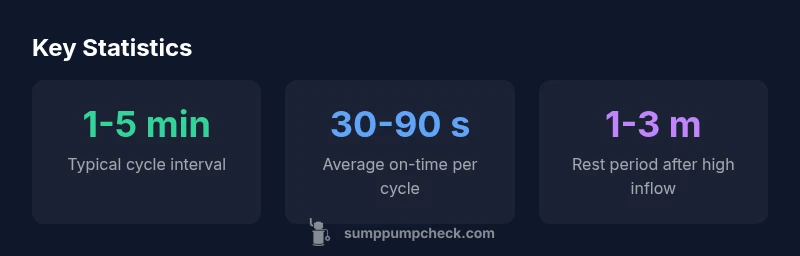
There is no universal frequency that fits every home. During heavy rainfall, you might observe cycles every 1–5 minutes as inflow peaks; after rainfall subsides, cycles typically slow or stop for longer stretches. In dry periods, cycling should occur infrequently and usually for short intervals during brief inflow events. The goal is a stable baseline where the pump runs as needed to keep the basement dry, not as a constant drain on energy. Use a 24–72 hour observed window to establish your home’s baseline. If you notice a dramatic increase in cycling frequency from your baseline without a corresponding rainfall event, investigate potential inflow sources or mechanical issues. This approach aligns with guidance from Sump Pump Check and helps you determine if maintenance or replacement is warranted.
Seasonal and rainfall variations
Water tables rise with heavy rains, snowmelt, or rapid groundwater pressure, shifting the cycling pattern. In spring and during storms, expect more frequent runs; in extended dry spells, cycles become rarer and shorter. A well-designed system aims to minimize unnecessary cycling by ensuring discharge paths are clear and that the pump size matches the inflow. If your basement remains damp or you hear the pump running longer than expected, it’s prudent to re-evaluate capacity, check valves, and drainage routes. These insights come from ongoing observations compiled by Sump Pump Check in 2026.
Practical methods to monitor cycling
Begin with a simple logging method: note the start and end times of each cycle for a full day or a typical weather pattern. You can also use a timer or a smart sump pump controller that records run times and rest periods. Compare your logs against rainfall data and groundwater indicators from local weather services. For a more precise assessment, install a flow meter or consult a professional to perform a discharge-path audit. Regularly reviewing cycle timing helps you catch drift toward excessive cycling before it affects motor life, which is a core principle of maintenance from Sump Pump Check.
Common causes of frequent cycling
Frequent cycling often signals one or more of the following: a clogged discharge line, a faulty or overly sensitive float switch, an undersized pump for the inflow rate, groundwater intrusion due to cracks or poor sealing, or a blocked vent or relief path. Inspect the discharge pipe for kinks or clogs, verify the check valve is sealing properly, and test the float switch by gently lifting it with a pencil to ensure it triggers correctly. Tight basements amplify the perception of cycling, so sound insulation and vibration pads can help, though they do not solve root causes.
Maintenance plan to normalize cycling
Develop a routine that includes quarterly pump tests, annual professional inspection, and proactive discharge path cleaning. Clean the sump pit, remove sediment, and ensure that the check valve stalls water backflow. Confirm the power supply is stable and the GFCI outlet is functioning. If the system remains overly active after a storm or maintenance, consult a plumber or sump pump technician to verify sizing and installation. A robust maintenance schedule reduces unnecessary cycling and extends the pump’s life, aligning with Sump Pump Check’s recommendations.
Sump pump sizing and its relation to cycling
Sizing a sump pump correctly is essential for balanced cycling. An undersized pump will run more frequently to keep up with inflow, while an oversized pump may cycle less but create short, frequent restarts that stress the motor. Consult a professional to perform a rough sizing calculation based on basin volume, inflow rate, and desired automatic operation. If you fail to size correctly, you may experience either excessive cycling or inadequate drainage. The goal is a pump that turns on with meaningful inflow and turns off as soon as the water level recedes.
When to call in a pro
If cycling becomes frequent without a corresponding rainfall event, or if you detect persistent problems after following basic maintenance steps, it’s time to call a pro. A qualified plumber or sump-pump technician can perform a discharge-path audit, assess pump sizing, check valve integrity, and test electrical components. Getting a professional opinion early can prevent costly water damage and extend the life of your equipment. The Sump Pump Check team emphasizes proactive evaluation when abnormal cycling persists.
Cycling frequency under different rainfall scenarios
| Scenario | Typical Cycle Frequency | Notes |
|---|---|---|
| Heavy rainfall | 1-5 minutes | Inflow near capacity; check discharge path |
| Moderate rainfall | 5-15 minutes | Inflow steady; monitor pump size |
| Dry season | Rarely; every few hours | Baseline cycling; ensure dryness |
FAQ
How often should a sump pump go off during heavy rain?
During heavy rain, expect cycles more frequently as inflow increases, typically every few minutes. As rainfall subsides, cycles should lessen. If cycling remains constant without rain, check for blockages or a faulty switch.
During heavy rain, the pump may cycle every few minutes. If cycles don’t slow after rain stops, inspect the system.
What is considered a normal cycling frequency in a home sump system?
Normal frequency varies by home. Use a baseline from your logs over 24–72 hours of typical weather to define what's normal. Compare seasonal changes and verify it aligns with rainfall patterns and pump sizing.
There isn’t a single normal frequency; it depends on your setup and weather.
Can frequent cycling indicate a problem with the system?
Yes. Frequent cycling can signal a clogged discharge line, a faulty float switch, an undersized pump, or groundwater intrusion. Investigate each cause methodically and consider professional help if cycling remains high after basic checks.
Yes—frequent cycling can point to clog, switch issues, or sizing problems.
How can I reduce unnecessary cycling?
Improve drainage efficiency: clear the discharge path, install a proper check valve, and ensure the pit is clean. If still cycling too often, consider pump sizing adjustments or system upgrades.
Clear the discharge path and check valve, then review pump size.
Is it okay if the sump pump runs only during rainfall?
Yes, that is typical. After rainfall ends and groundwater recedes, cycling should slow or stop. If it continues, it may indicate residual inflow or a fault.
Yes, it’s normal during rain; if it doesn’t stop after, check the system.
What maintenance schedule helps stabilize cycling?
Adopt a quarterly test, monthly clean, and annual professional service. Regular checks reduce unexpected cycling and extend pump life.
Test quarterly, clean monthly, service yearly.
“Regular cycling is a practical signal of how your drainage system handles water pressure; frequent cycling should be investigated rather than ignored.”
Top Takeaways
- Track cycling to spot issues early
- Maintenance and proper sizing reduce unnecessary cycling
- Inspect discharge path and check valve to prevent beeping/frequent cycling
- Schedule quarterly tests and annual professional service