Sump Pump Running Often: A Homeowner's Troubleshooting Guide
Learn practical steps to diagnose and fix a sump pump that runs often. This guide covers common causes, safe DIY checks, a diagnostic flow, and when to call a professional to prevent basement flooding.


Most likely, a sump pump runs often due to persistent basement moisture, a stuck float switch, a blocked intake, or a kinked discharge line. Start by inspecting the basin, cleaning debris, testing the float, and verifying the discharge path. If the problem persists, power down and contact a qualified technician for a detailed assessment.
What "sump pump running often" really signals in your basement
When you hear your sump pump running more than usual, it’s not just a nuisance—it’s a signal that something in or around your sump system needs attention. According to Sump Pump Check, frequent operation often points to ongoing water intrusion, a mechanical fault, or improper setup. Start by observing when the pump runs (time of day, rainfall, or snowmelt), the water level in the pit, and any unusual noises or vibrations. This awareness helps narrow down whether the issue is water-related or mechanical. In many homes, resolving recurring runs is less about a dramatic replacement and more about targeted maintenance and small component fixes. By treating it as a warning, you can protect your basement from flooding and extend the life of your pump.
Common signals to watch for
- Unexpected cycling (quick on/off bursts) can indicate a float or switch issue.
- Constant running during dry weather usually means water is entering the pit through a crack or seep.
- Slow, long-running cycles may point to a clogged inlet or discharge path.
- Odd noises or a wobbling pump can signal loose mounting or a failing bearing.
Regular observation helps you catch early warning signs before a major failure occurs.
Primary causes to check first
There are a handful of root causes that explain most cases of a sump pump running often. Begin with the simplest checks before moving to more involved fixes. Common culprits include a stuck float switch, a dirty inlet screen, a blocked discharge line, a faulty check valve, or persistent groundwater intrusion. By systematically ruling these out, you can often shrink the list of potential causes quickly and avoid unnecessary repairs. Keep notes as you test each item so you don’t overlook a step later on.
DIY safety checks you can perform today, safely
Safety comes first when inspecting electrical components near water. Before touching anything, unplug the pump or switch off the circuit, then use a non-contact voltage tester to confirm power is off. Wear gloves and eye protection when cleaning the basin and removing debris. If you notice exposed wiring, corrosion, or burnt smells, stop and call a licensed professional. Simple checks like clearing debris from the pit, cleaning the float, and ensuring the discharge line is clear can be done with minimal risk and often produce noticeable improvements.
Diagnostic flow: a practical overview you can follow
Think of the problem as a path: symptom → possible causes → tests → fixes. Start with the most likely causes and least effort tests (float movement, water entry points, outlet condition). If tests point to a specific fault, perform the corresponding fix. If none of the common causes apply, expand your investigation to groundwater patterns, soil conditions, and line integrity. Document each step to share with a technician if needed.
How to handle the most common fixes (overview before you dive in)
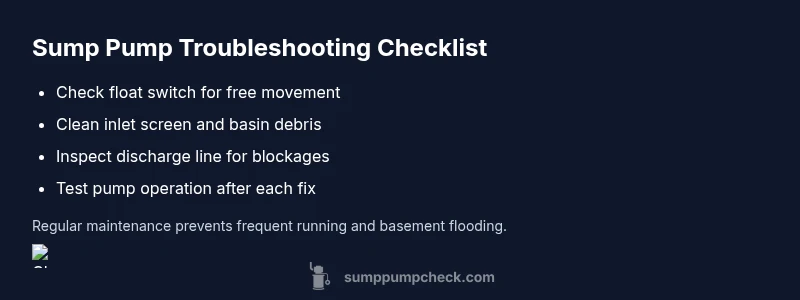
The most frequent fixes involve cleaning and replacement of simple parts rather than the whole unit. Clean debris from the basin and screen, verify the float moves freely, fix or replace a faulty check valve, and straighten or clear the discharge line. In some cases, replacing a worn switch or a corroded valve is enough to restore proper operation. Always test after each fix to confirm the issue is resolved and to prevent a false sense of security.
Maintenance and prevention tips to minimize future runs
Perform a quarterly maintenance routine: inspect the sump pit, test the float, clean the intake screen, and check the discharge path for blockages. Keep the surrounding area clear of debris, ensure proper grading around the foundation to discourage water infiltration, and consider a backup power solution for severe storm events. Regular maintenance reduces the likelihood of frequent running and protects your home from water damage.
Tools, parts, and practical considerations for DIYers
Stock up on a small tool kit, a clean bucket, a flashlight, and a replacement float switch or check valve if you’re comfortable performing a routine swap. Have emergency contact information ready for a licensed plumber or sump-pump technician in case you encounter wiring issues, persistent leaks, or abnormal sounds. Keeping a maintenance log helps you catch patterns and plan replacements before failure.
Steps
Estimated time: 30-60 minutes
- 1
Power down and secure the area
Disconnect the pump from power at the outlet or circuit breaker. Remove any standing water and ensure your safety with dry hands and dry footwear before touching any components.
Tip: Use a GFCI outlet for added protection when working near water. - 2
Inspect the float switch
Manual testing: gently lift the float and observe whether the pump activates. If it sticks or won’t rise freely, the switch may be failing and should be replaced.
Tip: Check for obstructions that limit float movement, including debris and sediment. - 3
Check the inlet and screen
Remove debris from the sump pit and clean the inlet screen. A clogged screen reduces flow and can cause the pump to run longer than necessary.
Tip: A soft brush and mild detergent work well for cleaning; avoid harsh chemicals that could damage seals. - 4
Inspect the discharge line and valve
Follow the discharge pipe to ensure there are no kinks, blockages, or backflow. Test the valve to ensure it seals when the pump stops.
Tip: Ensure the discharge terminates away from foundations and vents opposing water entry. - 5
Test the system after fixes
Restore power and slowly pour water into the pit to mimic rainfall. Confirm the pump cycles appropriately and shuts off after the water is removed.
Tip: Take notes of run times to compare against future tests. - 6
Decide on component replacement
If tests show persistent issues, consider replacing the float switch or check valve and re-testing. If the problem persists, a professional assessment is recommended.
Tip: Keep spare parts on hand for quick future replacements.
Diagnosis: Sump pump running often or cycling frequently
Possible Causes
- highStuck or faulty float switch
- highBlocked inlet screen or debris in basin
- mediumDischarge line kinked or blocked
- mediumLeaky or faulty check valve
- lowExcess groundwater intrusion or sump pit flooding
Fixes
- easyTest and replace the float switch if it sticks or fails to rise properly
- easyClean the inlet screen and remove debris from the pit
- easyUnblock or straighten the discharge line; ensure it drains away from the foundation
- mediumInspect and replace the check valve if water leaks back into the pit
- hardAddress groundwater infiltration via exterior drainage improvements or pit sealant
FAQ
Why does my sump pump run constantly even when there is no rain?
Constant running often points to groundwater intrusion, a stuck float, or a blocked discharge path. Begin by testing the float and inspecting the inlet and discharge components for blockages.
If your sump pump runs constantly, check for groundwater intrusion and inspect the float and discharge path. Start with simple tests and cleanings.
Is it dangerous if a sump pump runs often?
Frequent operation is not inherently dangerous, but it can indicate leaks or electrical hazards. Always shut off power before inspecting and consult a professional if you notice exposed wiring or persistent issues.
It's not deadly, but it can signal risks. Shut off power before inspecting and call a pro if you see wiring concerns.
How can I tell if the float switch is stuck?
Manually lift the float and observe whether the pump starts. If it won’t rise freely or runs continuously, the float switch may be faulty and require replacement.
Lift the float; if the pump doesn’t respond or stays on, the switch may be bad.
What maintenance should I perform to prevent frequent running?
Regularly clean the sump basin, test the float, ensure the discharge line is clear, and inspect the check valve. Schedule an annual professional check to catch wear and corrosion early.
Clean the basin, test the float, check the discharge, and have an annual pro check.
Can a backup battery help with frequent running during a storm?
A battery backup can provide power during outages and reduce runtime during storms, but it won’t fix a faulty float or clogged discharge. It’s a good safety upgrade.
A backup battery helps during outages but won’t fix mechanical faults; it’s a smart safety addition.
When should I replace my sump pump?
If the pump is aging, makes unusual noises, or fails to cycle correctly after fixes, it’s time to consider replacement. Upgrading to a high-efficiency unit can reduce future problems.
Consider replacement if it’s old or unreliable after fixes.
Watch Video
Top Takeaways
- Inspect float and discharge path first to identify quick fixes
- Keep the sump pit clean and free of debris
- Test after each fix to verify results
- Schedule annual maintenance to prevent frequent running