Is My Sump Pump Running Too Much? A Practical Troubleshooting Guide
Urgent, practical guide to diagnose why your sump pump is running too much, with safe fixes, maintenance tips, and when to call a pro for basement drainage issues.


If you're asking is my sump pump running too much, the most likely causes are excessive water inflow or a stuck float switch that keeps the pump on. Start with a quick check: remove inlet debris, ensure the float moves freely, verify the discharge line isn’t blocked, and confirm the check valve works. If it persists, arrange a backup or professional help.
Is my sump pump running too much? Quick take from the start
When a sump pump appears to run more than expected, homeowners often worry about a looming basement flood or rising costs. According to Sump Pump Check, this symptom typically signals an imbalance between water inflow and removal capacity, or a mechanical fault that causes the float switch to stall. The goal of this section is to help you identify whether the issue is intermittent or persistent, so you can decide if a quick DIY fix suffices or if a pro is needed. Keep the keyword in mind as you read: is my sump pump running too much is a common question, and the answer usually starts with simple checks rather than immediate replacement. This approach aligns with practical maintenance routines that prioritize safety and prevention.
First-aid checks you can do safely
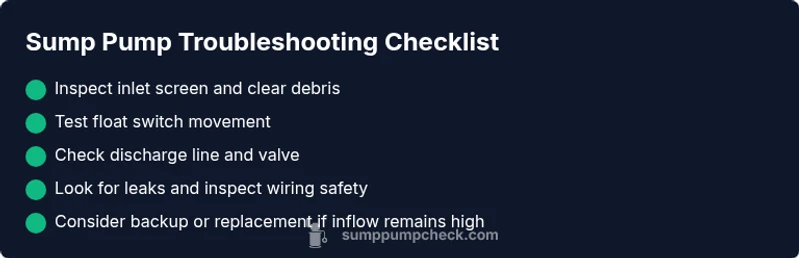
Before you reach for tools, power down the unit to avoid any electric shock risk. Look at the inlet screen for debris that could restrict water flow. A clogged screen can force the pump to work harder and longer than it should. Ensure the float assembly can rise and fall freely; if it sticks, the pump may keep running even when the basin is dry. Finally, inspect the discharge line for kinks or blockages. A blocked discharge can cause backpressure that forces the pump to cycle more aggressively. These quick checks are essential to answer the question is my sump pump running too much without diving into complex repairs.
The role of water inflow and drainage design
Excess water entering the pit from rainfall, groundwater, or plumbing leaks increases the pump’s workload. A well-designed drainage system with proper pit size and discharge routing helps balance inflow with outflow. If you’ve recently experienced heavy rain or a nearby sump pump activity, that surge can explain temporary spikes in running time. Review the drainage layout, including the pit location, the height of the discharge outlet, and whether the line runs to a municipal storm sewer or a dry well. Small changes in slope or routing can make a big difference in pump cycling.
Safety considerations and common mistakes
Never work on electrical connections with the power on. Use a GFCI outlet and keep the area dry while inspecting components. Common mistakes include using a dirty float switch, ignoring a blocked discharge, or assuming a longer runtime is always a sign of failure. If you smell burning plastic, hear grinding, or notice arcing, stop and unplug the unit immediately and seek professional help. Maintaining a safe pace for DIY checks will protect you and your home while you troubleshoot.
How to track running time and water input over a season
Keeping a simple log of rainfall, basement moisture, and pump cycles gives you a baseline to compare future events. Note the number of cycles per day, the duration of each cycle, and any changes in water level in the pit. This data helps you distinguish temporary spikes from a long-term problem. Sump Pump Check analysis suggests that consistent over-running over several weeks typically points to an inflow issue or a faulty component that requires attention.
What to do if the pump won’t reset or stop
If the pump keeps running despite clearing debris and verifying the float, it may be time to test the switch or replace a faulty float mechanism. In some cases, a more robust solution is needed, such as upgrading to a higher-capacity unit or adding a battery backup to handle long events. Remember to unplug the unit and avoid touching live wiring during any inspection.
Steps
Estimated time: 45-75 minutes
- 1
Power down and secure the area
Unplug the sump pump and place the unit on a dry surface. Use a dry towel to wipe any water and ensure you have a non-slip stance. This keeps you safe before you begin any inspection.
Tip: Always start with safety first to prevent shocks. - 2
Inspect the inlet and screen
Remove the cover and clear debris from the screen. A clogged screen reduces flow and makes the pump work harder, potentially causing extended run times.
Tip: Use a soft brush to loosen algae or sediment. - 3
Test the float switch
Manually raise and lower the float to see that the switch activates and deactivates smoothly. If it sticks or feels stiff, the switch may need replacement or adjustment.
Tip: Lubricate pivot points sparingly with manufacturer-approved lubricant. - 4
Check the discharge path
Follow the discharge line to ensure it is clear of obstructions and that the line is sloped away from the foundation. A blocked line backfeeds into the pit and keeps the pump cycling.
Tip: Secure any exposed pipe to prevent sagging. - 5
Run a controlled test
Pour a small amount of water into the pit and observe the cycle. Note if the pump stops within a reasonable time and resumes only when water accumulates, indicating inflow control is needed.
Tip: Observe for any leaks around seals during test. - 6
Decide on next steps
If the issue persists after these steps, consider upgrading to a higher-capacity pump or installing a battery backup, and contact a professional for an in-depth inspection.
Tip: Document symptoms and test results for your technician.
Diagnosis: Sump pump runs continuously or cycles very frequently
Possible Causes
- highHigh water inflow from rainfall, irrigation, or groundwater
- highStuck or dirty float switch
- mediumBlocked or restricted discharge line
- lowElectrical issues or mis-wired float switch
Fixes
- easyClear inlet screen and debris; ensure float moves freely
- mediumTest and replace faulty float switch or adjustable arm
- easyUnblock discharge line and verify check valve; ensure proper slope
- hardUpgrade pump capacity or add a backup system if inflow remains high
FAQ
Why does my sump pump run constantly even after rain ends?
Constant running after rain often means inflow remains high due to ongoing groundwater or leaks, or the float switch is stuck. Start by inspecting the float and discharge path, then check for leaks in plumbing that feed water to the pit.
If rain stops but the pump keeps running, check for ongoing water entry and inspect the float switch for sticking.
What if the discharge line is blocked or frozen?
A blocked or frozen discharge line forces the pump to work harder and cycle more frequently. Clear the blockage and ensure the line has a proper slope away from the foundation.
A blocked discharge line makes the pump cycle faster. Clear it and check the slope away from your home.
Is a backup sump pump worth it?
A backup sump pump provides protection during power failures or pump failures. It’s especially useful in flood-prone areas or homes with high inflow.
A backup sump pump adds protection when the primary unit can’t keep up.
How often should I test my sump pump?
Test your sump pump monthly and before heavy rain seasons. Document results to spot trends in performance.
Test monthly and before storms to ensure reliability.
Should I replace a pump that runs all the time?
Running continuously can indicate wear or overpowering inflow. If basic fixes don’t resolve it, plan for a higher-capacity model or professional assessment.
If basic checks don’t fix it, consider replacement and expert advice.
Can a faulty float switch cause backflow into the pit?
Yes, a faulty or misaligned float switch can fail to shut off the pump, causing backflow and continued cycling. Inspect, re-seat, or replace as needed.
A bad float switch can keep the pump running; inspect or replace it.
Watch Video
Top Takeaways
- Identify the primary cause first and document symptoms.
- Prioritize safety and basic DIY checks before calling a pro.
- Regular maintenance prevents future overrun and extends pump life.
- Upgrade or back up your system if inflow remains high or events are frequent.