How to Make Sump Pump Run Longer: A DIY Guide
Learn practical, DIY-friendly steps to extend your sump pump's run time during storms by improving efficiency, maintenance, and discharge planning. Safe, tested methods for homeowners.


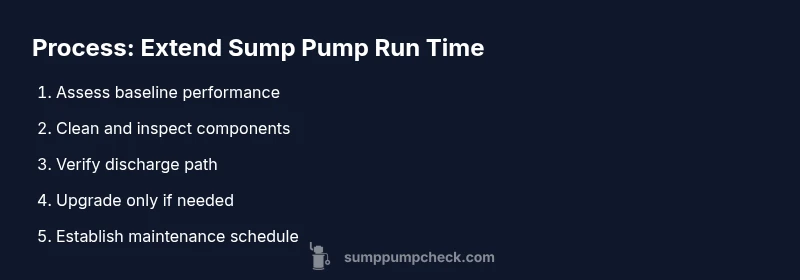
You can extend your sump pump's run time by improving efficiency, reducing load, and ensuring proper discharge. Start with a basic safety check, then perform maintenance like cleaning the impeller and checking the float switch. These steps help avoid short cycling and keep the pump running longer during heavy rains.
How Long Should a Sump Pump Run? Practical Limits and Realities
In most homes, you want a sump pump to run during peak rainfall and then rest. The goal of this guide is to help you maximize useful runtime without forcing the motor to stay on longer than necessary. A well-tuned system will start when water enters the pit, run smoothly, and shut off when the pit is empty. If your pump runs constantly or short cycles, it may indicate a bigger drainage problem or a worn component that needs attention. By addressing load, discharge, and control mechanisms, you can safely extend run time while protecting your basement.
The first step is to set expectations: you’re not trying to turn a small pump into a giant unit. You’re reducing resistance and preventing premature cycling so the pump can handle heavy loads more efficiently.
Baseline Performance and Field Checks
Before making changes, measure how the system currently behaves. Check for the following: proper power supply, intact outlet and cord, the float switch movement, and the presence of any unusual noises or vibration. Look at the water level in the pit and observe whether the pump starts reliably as the water rises. If you notice slow starts or frequent cycling, you’ll want to focus on load reduction and discharge clarity. Remember, any guide to extend run time should respect the pump’s safety limits and avoid straining the motor.
To stay aligned with best practices, document your observations and compare them to seasonal rainfall expectations. This helps you know when the system is performing as designed and when it’s time to adjust.
Routine Maintenance That Delivers More Run Time
Regular maintenance is the most impactful way to extend runtime. Clean the inlet screen and impeller to remove debris, ensure the float switch moves freely, and verify the check valve is installed correctly to prevent backflow. Tighten any loose connections, and remove clogs from the discharge line. Replace worn components such as the float switch or seals if they show signs of wear. Keeping these parts fresh reduces energy wasted on friction and backpressure, which in turn improves runtime during storms.
A clean, balanced motor uses energy more efficiently and experiences fewer interruptions. Keep a maintenance calendar and perform these tasks on a semi-annual basis for consistent results.
Upgrading Components for Efficiency and Longevity
If you’ve done the basics and still see short run times, consider upgrading components that directly impact efficiency. A more efficient impeller, a modern float switch with quieter operation, or a higher-quality electrical switch can reduce cycling and energy waste. A properly sized check valve minimizes backpressure and prevents water from forcing the pump to restart unnecessarily. When upgrading, choose compatible parts from reputable sources and follow manufacturer installation guidelines to maintain safety and warranty coverage.
Note: not all homes require major upgrades; most improvements come from optimizing what you already own and ensuring compatibility with your existing pit.
Plumbing and Drainage: Keeping the Discharge Path Clear
A clogged or undersized discharge path is one of the best reasons a sump pump seems to run longer than necessary or struggles to remove water. Inspect the discharge pipe for kinks, mineral buildup, or crushed sections. Ensure the pipe diameter matches the pump outlet and that the pitch is sufficient to allow gravity-assisted drainage. If you can, route the pipe away from buried obstacles and ensure it terminates in an appropriate drainage area. A clear path reduces backpressure and helps your pump run longer with less effort.
Backup Systems and Load Management
Consider a backup solution to handle heavy rainfall without forcing the primary pump to run all the time. A battery backup sump pump or a water-powered backup can provide extended protection while the main unit rests, thus extending its useful run time during storms. When you rely on backups, maintain them with the same diligence as your primary pump: test regularly, replace stale batteries, and keep extra parts in your maintenance kit. Backup systems can be a smart investment for long-term reliability and efficiency.
Common Mistakes That Shorten Run Time
Rushing maintenance or skipping checks is a common way to shorten run time. Avoid running the pump with a clogged intake or blocked discharge; this creates undue load and shortens the motor’s lifespan. Do not ignore a faulty float switch or a leaky seal, as both reduce efficiency and waste energy. Finally, avoid oversized or incompatible parts that create backpressure. Use compatible components and follow installation instructions to protect performance and safety.
Monitoring and Diagnostics: Track Run Time Over Time
To know whether your efforts improved runtime, establish a simple monitoring routine. Record startup times, total runtime per storm, and any changes in noise or vibration. A persistent pattern of longer cycles and shorter rest periods indicates issues that require attention. When monitoring, also note seasonal variations and rainfall intensity to contextualize changes in run time. This proactive approach helps you predict performance and plan future maintenance.
Seasonal Prep and Maintenance Schedule
Before the rainy season, perform a comprehensive check: clean the pit, inspect the check valve, test the float switch, and verify discharge clearance. After major storms, review performance and address any wear. Establish a predictable maintenance cadence, such as spring and fall checks, to ensure long-term reliability. A documented schedule makes it easier to notice trends and avoid unexpected run times during critical months.
Quick Start: 10-Minute Baseline Routine
If you’re short on time, start with a quick baseline: disconnect power, inspect and clean the inlet, verify the float moves freely, and check for obvious blockages in the discharge line. Reconnect power and run a short test with water to ensure proper operation. While this is a minimal approach, it gives you a baseline to build on with a full maintenance cycle later.
Tools & Materials
- Sump pump(Ensure power is off at the breaker before servicing.)
- Outlet tester and multimeter(Check electrical supply and continuity.)
- Screwdriver set (Phillips and flathead)(Remove access panels safely.)
- Gloves and rags(Keep hands clean; wipe debris.)
- Bucket and towels(Catch spills during cleaning.)
- Brush or small pipe cleaner(Clean inlet and screen.)
- Replacement float switch(Only if current switch shows wear.)
- Check valve (if not installed)(Prevents backflow and backpressure.)
Steps
Estimated time: 60-90 minutes
- 1
Power down and safety check
Turn off the circuit breaker and unplug the sump pump. Verify the area is dry and safe before touching electrical components. This prevents shock and avoids accidental startup.
Tip: Never bypass safety steps; water and electricity are a dangerous mix. - 2
Inspect the pump and pit
Look for cracks, leaks, or unusual wear. The pit should be clear of debris to prevent impeller jams and uneven wear on bearings.
Tip: Use a flashlight to inspect hard-to-see corners. - 3
Clean the inlet and impeller
Remove debris from the inlet screen and gently clean the impeller area to restore flow. Debris reduces efficiency and increases motor load.
Tip: Avoid dislodging small parts; take your time. - 4
Test the float switch
Manually lift the float to simulate high water and confirm the pump starts and stops smoothly. A sticky switch can cause constant cycling.
Tip: If it sticks, consider replacement. - 5
Check valve and discharge path
Inspect the discharge line for clogs or kinks. Ensure a proper check valve is installed to prevent backflow.
Tip: Backflow forces the pump to restart repeatedly. - 6
Reassemble and power up
Reconnect wiring safely, restore power, and run a test cycle with water to ensure proper operation without leaks.
Tip: Monitor for abnormal noises or overheating. - 7
Document and schedule maintenance
Record what was done and schedule the next check. A routine helps you catch problems early and extend run time over seasons.
Tip: Keep a notebook or digital log. - 8
Upgrade only if needed
Replace worn components or consider an energy-efficient model if runtime remains poor after maintenance.
Tip: Ensure compatibility with your existing pit and wiring.
FAQ
What causes a sump pump to run continuously?
Continuous running is usually caused by a high water level, a blocked discharge, a faulty float switch, or a stuck check valve. Identify the root cause and address it rather than simply resizing the pump.
If your sump pump runs nonstop, start by checking the water level and looking for discharge blockages or a faulty float switch.
How can I tell if the discharge line is blocked?
Check the line for visible obstructions and flush the line from the pump end. If water backs up, there is a blockage or a kink upstream.
Look for kinks or debris in the discharge pipe and flush to confirm flow.
How often should I perform maintenance?
Perform routine maintenance at least twice a year, ideally before storm season and again mid-year. Address any wear and replace worn parts as needed.
Do maintenance twice a year and replace worn parts to keep runtime long.
Do I need a professional for component replacements?
Basic maintenance can be done by homeowners, but electrical work or major replacements should be handled by a licensed professional to ensure safety and code compliance.
For electrical work, call a licensed professional to stay safe and up to code.
Is a backup sump pump worth it?
A backup sump pump provides protection during power outages or peak storms and can extend overall reliability. It is often a wise investment for basements prone to flooding.
Yes, a backup pump helps you stay protected during outages and heavy rain.
What safety steps should I take before maintenance?
Always disconnect power at the breaker, dry the area, and ensure tools are kept away from water. Safety first avoids shocks and injuries.
Disconnect power and dry the area before starting any work.
Watch Video
Top Takeaways
- Inspect and clean to improve flow
- Ensure a clear discharge path and check valve
- Use maintenance logs to track performance
- Consider backups for heavy rainfall
- Upgrade components only when needed