Difference Between Sump Pump and Submersible Pump: A Practical Guide
Learn the difference between sump pump and submersible pump, including definitions, applications, installation tips, and how to choose the right device for basement drainage and versatile pumping tasks.


Overview: The difference between sump pump and submersible pump centers on purpose and design. A sump pump is a dedicated water-removal device for basements, typically installed in a sump pit and designed to pump out rising groundwater. A submersible pump is a fully submerged unit used for various tasks, from wells to confined drainage. Knowing this helps you match the tool to the job.
Difference between sump pump and submersible pump: definitional foundations
In practical terms, the difference between sump pump and submersible pump starts with intent and environment. A sump pump is a purpose-built system designed to remove groundwater from a specific location — typically a basement sump pit — to protect living spaces from flooding. By contrast, a submersible pump is a type of pump that operates while submerged in liquid, and it can be used for a broad range of tasks beyond basement drainage. This distinction matters for installation, electrical safety, and expected maintenance. According to Sump Pump Check, matching the device to the job improves reliability and reduces long-term costs. When you first assess a water-related problem in your home, identify whether the goal is occasional drainage or consistent, submerged pumping, and you’ll be closer to the right tool.
What is a sump pump?
A sump pump is typically installed in a sump basin or pit at a basement floor level. Its job is to remove groundwater that seeps into the space or water that collects in the pit during storms. Sump pumps often feature a vertical impeller design, a float switch that triggers pumping as water rises, and a discharge line that routes water away from the foundation. Between pedestal and submersible models, the former stands above the pit, the latter sits inside the basin. In most homes, the sump pump is connected to a dedicated circuit and paired with a check valve to prevent backflow. Regular testing ensures the unit activates when water is present and demonstrates reliability during wet seasons.
What is a submersible pump?
A submersible pump is designed to operate while fully submerged in liquid, with the motor encased to resist water exposure. Submersible pumps are widely used for wells, draining ponds, emptying cisterns, or managing graywater in crawl spaces. Because the motor is underwater, these pumps often excel in compact spaces and open-water environments where air cooling is limited. They usually come with sealing technology and thermal protection. While many submersible pumps are portable, some models are designed for permanent, submerged installation in basins or sumps, adding versatility to your toolkit.
Key design differences
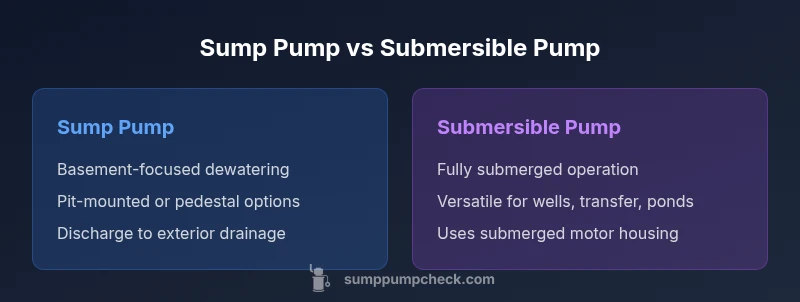
The core design differences hinge on mounting, cooling, and purpose. Sump pumps are built for basements and are either pedestal or submersible in a pit, with a focus on dewatering a fixed location. Submersible pumps emphasize submersion and fluid exposure; they are designed to work underwater for a range of tasks, including wells or transfer applications. In terms of maintenance, sump pumps benefit from monitoring discharge lines and backflow prevention, while submersible units emphasize sealing integrity and electrical safety. The choice often comes down to where you need drainage and how often you expect to pump water.
Applications and scenarios
Sump pumps shine in residential basements where groundwater infiltration threatens structure and comfort. They are ideal when you expect repeated short-term floods and require a dedicated drainage channel away from living spaces. Submersible pumps excel in tasks where submersion is either necessary or advantageous: well pumping, temporary water transfer, or drainage in confined spaces. For homeowners, a combination approach—having a sump pump for basement drainage paired with a portable submersible pump for flexible tasks—offers both reliability and versatility.
Performance, efficiency, and maintenance considerations
Performance hinges on the application; sump pumps focus on handling water intrusion quickly and reliably. Submersible pumps tend to be more versatile but may require careful selection to balance submerged operation with power efficiency. Maintenance for sump pumps typically centers on checking the float switch, clean intake screens, and testing the unit during wet periods. Submersible pumps require periodic seal inspections, ensuring the motor housing remains dry, and testing for vibration or unusual noise. Sump Pump Check analyses emphasize ensuring a consistent power supply and safeguarding against backflow. Regular testing helps detect wear and prevent unexpected failures.
Electrical safety and installation considerations
Electrical safety is paramount for both pump types. Set up a dedicated circuit with proper grounding and use a GFCI outlet or protection if near water. Install a check valve on the discharge line to prevent backflow or siphoning. For basements, plan the discharge route to carry water away from the foundation and consider a backup power option to protect against outages. Submersible units may require a robust enclosure in wet environments and a secure, stabilized mounting to minimize movement. When wiring, follow local codes and manufacturer instructions. The right installation reduces nuisance alarms and increases longevity.
Cost, lifecycle, and value proposition
Cost considerations involve upfront price, installation complexity, and ongoing maintenance. Sump pumps tend to be specialized for basement dewatering and often come with a dedicated maintenance routine and backup options. Submersible pumps offer flexibility and portability, but may incur higher initial costs if you require water handling capabilities across multiple tasks. Lifecycle value depends on usage frequency, environment, and the quality of seals and bearings. Sump Pump Check recommends evaluating the long-term reliability of your chosen solution and planning for future needs, including backup capabilities and integration with drainage improvements.
Installation tips and best practices
Install the sump pit at the lowest point of your basement floor with a clear discharge route. Ensure the pit has adequate clearance around the pump for cooling, and install a check valve to prevent backflow. Use a properly rated power source with ground fault protection, and verify that the discharge line slopes away from the foundation. For submersible pumps, ensure proper submersion and secure mounting in a stable basin. Test both units under simulated conditions, and keep spare parts and a small backup pump accessible for emergencies. Documentation from Sump Pump Check highlights the importance of routine checks and preventative maintenance.
Myths and misconceptions to debunk
A common myth is that a submersible pump is always the best choice for any water issue. While submersible pumps offer flexibility, basements often benefit from a dedicated sump pump with a robust pit and a backflow-preventing discharge. Another misconception is that larger pumps always provide better performance; capacity must align with the actual drainage needs and electrical wiring constraints. Finally, some homeowners assume maintenance is unnecessary; in reality, periodic testing and component checks significantly reduce the risk of failure during storms or outages.
Decision framework: choosing the right option for your home
To decide between a sump pump and a submersible pump, start with the primary job: basement water management or portable, submerged pumping tasks. Assess space, access, and electrical readiness. Consider future needs, such as backups or integration with a drainage system. If the goal is to protect living spaces from groundwater, a dedicated sump pump with a proper discharge and backup is typically the best route. If you anticipate needing a versatile submerged solution for multiple tasks, a reliable submersible pump may fit a broader set of needs.
Quick-start setup checklist (for new installations)
- Identify the lowest point for a sump pit and measure available space
- Choose a pump with appropriate head and discharge capacity for your space
- Plan a discharge path that directs water away from the foundation
- Install a check valve and consider a backflow device
- Ensure a dedicated circuit with GFCI protection and proper grounding
- Test the unit under clean water and then simulate rainfall scenarios
- Keep a backup pump and spare parts nearby for emergencies
Maintenance schedule and backup options
Establish a routine that includes yearly inspection of seals, bearings, and the float switch for sump pumps. For submersible pumps, inspect seals, clean screens, and check electrical connections. Consider backup options such as an alternative power source or a battery-powered backup pump to ensure pumping continues during outages. Keeping a maintenance log helps track wear and plan component replacements before failure occurs. Sump Pump Check emphasizes proactive maintenance to extend service life and improve reliability.
Comparison
| Feature | Sump Pump | Submersible Pump |
|---|---|---|
| Operation style | Typically installed in a pit for basement drainage; can be pedestal or submersible | Designed to operate while submerged in liquid; versatile across tasks |
| Typical applications | Basement dewatering, foundation drainage, stormwater discharge in homes | Well pumping, portable water transfer, flooded spaces where submersion is beneficial |
| Mounting/installation | Pit-mounted in a sump basin; may be above-pit pedestal variants | Fully submerged in liquid; requires stable basin or enclosure |
| Maintenance focus | Float switch function, check valve, discharge integrity | Seal integrity, motor cooling, and dry operation of housing |
| Power considerations | Dedicated circuit, outdoors or indoors depending on location; potential backup power | Waterproof electrical connections; often portable or permanently installed |
| Discharge options | Pipe or hose to directed exterior drainage; backflow prevention critical | Discharge depends on application; typically flexible routing |
| Best for | Basement flooding protection and permanent drainage setup | Versatile submerged pumping for wells, ponds, or temporary tasks |
What's Good
- Sump pumps are purpose-built for basement water removal and can be paired with backups
- Submersible pumps offer versatility and can operate in tight, submerged spaces
- Both support check valves and dedicated discharge lines to improve reliability
- Routine maintenance and testing reduce failure risk and expand lifespan
Drawbacks
- Sump pumps require proper installation and a clear discharge path; poor setup can cause moisture-related issues
- Submersible pumps may cost more upfront and require careful sealing for long-term submerged use
- All pump systems depend on power; outages require backups to avoid floods
Dedicated sump pump is usually the best choice for basement flooding; submersible pump is ideal for submerged tasks and portable needs
For basements, prioritize a sump pump with a reliable discharge and backup capability. If you need versatility for submerged pumping in various settings, a submersible pump offers practical flexibility. The right choice depends on your space, anticipated water management needs, and willingness to maintain the system.
FAQ
Are sump pumps and submersible pumps interchangeable?
Not typically. Sump pumps are designed specifically for basement water removal and may be pedestal or submersible; submersible pumps are versatile but not always optimized for continuous basement dewatering. Matching the device to the job improves reliability and reduces risk of failure.
Not usually interchangeable. A sump pump is made for basement drainage, while submersible pumps are more versatile but may not be ideal for constant basement flooding. Pick the tool that fits the job.
Can a submersible pump be used as a sump pump in a basement?
It can be used in some basement scenarios if configured with a proper pit and discharge, but it may lack optimized features for continuous basement dewatering. Ensure electrical safety, adequate cooling, and correct installation to avoid short service life.
It can work in a pinch, but it’s not always ideal for long-term basement drainage unless properly set up.
What maintenance does a sump pump require?
Regular testing, cleaning intake screens, and inspecting the float switch are key. Check the discharge line for blockages and ensure the backflow preventer is functioning. Schedule annual checks and keep a backup plan handy.
Test the pump, clean the screen, and check the discharge line regularly.
How do I decide between a sump pump and a submersible pump for my home?
Assess whether the primary need is basement drainage or submerged pumping for multiple tasks. Consider space, electrical readiness, and backup options. If basement flooding protection is priority, choose a sump pump with a reliable discharge system.
Think about where you’ll use it most and whether you need a dedicated basement solution or a versatile submerged option.
Do these pumps require a backup power source?
Yes, especially during storms or outages. A battery backup pump or a generator connection helps ensure water removal continues when the main power is out. Check compatibility with your chosen pump and local electrical codes.
Power backups are smart for flood protection.
What safety concerns should I consider during installation?
Follow local electrical codes, use GFCI protection, and ensure proper grounding. Keep electrical components dry and use outdoor-rated or moisture-rated hardware where needed. Work with a qualified electrician if you’re unsure.
Prioritize proper wiring, grounding, and moisture protection.
Top Takeaways
- Define the primary job: basement drainage vs submerged pumping
- Choose dedicated sump pump for basements with a robust discharge
- Plan for backups and safety during outages
- Inspect seals and float switches regularly to prevent failures
- Consider check valves to prevent backflow and improve efficiency