Is Sump Pump and Submersible Pump the Same? Practical Guide
Explore whether a sump pump and a submersible pump are the same, with practical differences, uses, installation tips, and maintenance guidance for homeowners.


Quick answer: A sump pump and a submersible pump are not exactly the same. A sump pump is a dedicated basement water-removal device, typically installed in a sump pit. Many sump pumps are submersible, meaning the motor operates underwater, but not every submersible pump is designed for a sump pit; the distinction matters for installation, maintenance, and reliability, per Sump Pump Check.
Is the phrase 'is sump pump and submersible pump the same' accurate?
Understanding the terminology is essential for proper selection and installation. In practice, a sump pump is a purposeful device designed to remove water from a sump pit in a basement, while a submersible pump refers to the motor being submerged in liquid. The two concepts overlap, but they are not interchangeable in all situations. The distinction matters for code compliance, safety, and long-term reliability. According to Sump Pump Check, many homeowners confuse these terms, which can lead to choosing a pump that doesn’t fit the pit or drainage plan. Being precise helps prevent misorders and installation errors, especially in wetter climates or homes with higher groundwater.
For homeowners, the practical takeaway is simple: know what problem you are solving first (basement water intrusion vs. generic pumping) and then select a device that fits that role. This clarity reduces repair costs and downtime after heavy rain events. In this guide, we break down the terminology, share practical examples, and offer a framework to evaluate options without overpaying for features you don’t need.
How Sump Pumps Work in Basements
Sump pumps are designed to remove groundwater that collects in a basement sump pit. The typical installation places the pump at the lowest point in the basement, with an intake screen and a check valve to prevent backflow. When water in the pit reaches a float switch or electronic sensor, the motor activates and discharges water through a discharge pipe to a safe exterior location. A sump pump’s primary job is targeted drainage: intercepting rising water before it floods living spaces. Maintenance involves keeping the pit clean, testing the float switch, and ensuring the discharge pathway remains clear. In many homes, a backup power source and a secondary pump increase reliability during storms or prolonged outages. For homeowners, this setup minimizes risk, protects flooring, and reduces the likelihood of mold growth after flooding events. The Sump Pump Check team emphasizes planning for capacity and redundancy to match local conditions.
What Makes a Submersible Pump Submersible?
A submersible pump is defined by its submerged motor design: the motor is sealed and operates underwater. Submersible pumps are used for a variety of tasks beyond basements, including wells, ponds, and fluid transfer, where the pump sits inside the liquid being moved. The advantages include quieter operation, reduced vibration, and fewer external components exposed to the environment. However, submersible pumps may require careful sealing, thermal protection, and more complex maintenance when used in outdoor or corrosive settings. When evaluating a submersible pump, check the enclosure material, motor rating, impeller design, and linkage to a compatible power source. While many submersible pumps are suitable for water removal, not all models are intended for sump pits, so selecting the right form factor is crucial for reliability and warranty coverage.
Common Configurations: When a Sump Pump Is Submersible
In modern basements, many sump pumps are submersible models installed in a dedicated sump pit. Submersible units offer advantages such as reduced noise and compact form factors that fit beneath floor material. pedestal sump pumps, by contrast, keep the motor above the pit and may offer easier service access. The choice often hinges on pit size, basement layout, and local codes. For tight spaces, a compact submersible pump can be easier to install, while homes with extensive water intrusion might favor a robust, pedestal-style sump pump for straightforward service. A key point is compatibility: ensure the pump’s discharge piping, float switch (or electronic sensor), and check valve align with the home’s drainage design and exterior landscaping.
Key Differences in Design, Use, and Maintenance
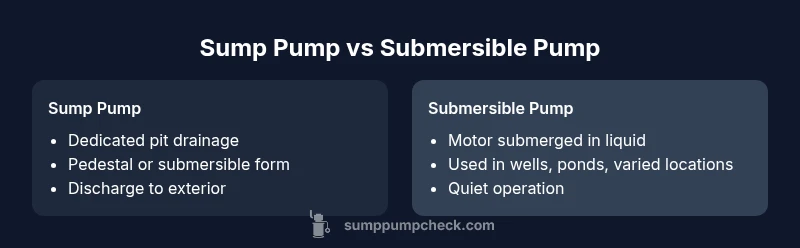
- Primary purpose: sump pumps are designed for basement water removal, often with a dedicated pit; submersible pumps are defined by submerged motor design and broad usage cases.
- Installation context: sump pumps typically reside in a pit and discharge outdoors; submersible pumps can be placed where they are most needed, including wells or utility sinks.
- Noise and vibration: submersible units generally operate quieter because the motor is underwater; pedestal options may generate more audible vibration.
- Maintenance needs: sump-pump systems benefit from pit cleanliness and a functioning check valve; submersible units require attention to seals, bearings, and thermal protection, particularly in challenging environments.
- Cost considerations: both types vary widely by model and features; a proper assessment of flow rate, head pressure, and durability is essential to avoid overspending.
Installation and Compatibility Considerations
Before purchasing, homeowners should assess pit dimensions, discharge routing, electrical requirements, and building codes. A sump pump installed in a standard 18–24 inch pit often works well with compact submersible models, but larger basements may need deeper pits or higher-capacity units. Electrical safety is critical: dedicated circuits, GFCI protection near damp areas, and proper conduit routing reduce shock hazards. Check valves are essential to prevent backflow, and a battery backup can provide protection during outages. If you are replacing an old unit, verify compatibility with existing piping, pit liner, and local drainage regulations. In some jurisdictions, codes require discharge lines to terminate above grade or into a storm sewer, which influences pump selection and installation approach. Sump Pump Check recommends evaluating climate, groundwater levels, and your home’s drainage plan to select a pump that aligns with safety and long-term reliability requirements.
Maintenance and Longevity: Keeping Either Device Reliable
Regular maintenance extends the life of both sump and submersible pumps. Start with a yearly pit cleaning to remove sand, silt, and debris that can degrade performance. Test the float switch or electronic sensor monthly to ensure automatic activation. Inspect discharge piping for cracks or clogs and verify that the check valve seals properly to prevent backflow. For submersible pumps, inspect seals and bearings for wear, and consider replacing wiring if insulation appears brittle. Moisture, corrosion, and mineral buildup can shorten service life, especially in poorly vented basements or outdoor installations. Finally, keep a maintenance log and schedule professional inspections if you notice unusual noises, reduced flow, or frequent cycling. A sensible maintenance plan reduces the risk of unexpected failures and costly repairs.
Comparison
| Feature | Sump Pump | Submersible Pump |
|---|---|---|
| Primary purpose | Basement water removal in pits | General pumping in various settings |
| Typical installation location | Within a sump pit in basement | Anywhere water needs moving; may be above ground or in a reservoir |
| Motor placement | Motor may be outside in pedestal models or submerged in some designs | Motor is submerged inside the pumped liquid |
| Maintenance needs | Regular pit cleaning, check valve and float/switch checks | Check seals, bearings, and electrical connections; monitor for overheating |
| Noise considerations | Can be quiet with proper mounting; pedestal models may be noisier | Submersible motors are quieter due to being underwater |
| Price range | Moderate to high depending on model and features | Similar range, varies by features and certifications |
| Best for | Dedicated basement drainage and backup capable | Versatile pumping in portable or multiple scenarios |
What's Good
- Clear purpose for basement water management
- Quiet operation possible with submersible designs
- Flexible installation options (pedestal or submersible)
- Wide availability and support resources
Drawbacks
- Installation may require pit and discharge piping
- Submersible pumps can be pricier and harder to service
- Maintenance may be more challenging in harsh outdoor conditions
- Some models require compatible electrical and drainage setups
Choose based on your space and drainage design: a dedicated sump pump is best for fixed basement pits; a versatile submersible pump is ideal when you need flexible placement and quiet operation.
If your goal is basement flood protection with a dedicated pit, the sump pump is usually the better fit. For flexible pumping in multiple locations or where noise is a concern, a submersible pump offers advantages. In both cases, ensure compatibility with discharge piping and local codes, and plan maintenance accordingly.
FAQ
Is a sump pump the same as a submersible pump?
Not exactly. A sump pump is designed for basement water removal from a pit, while a submersible pump refers to a motor submerged in liquid and can be used in various applications. They overlap, but proper selection depends on the task.
Not exactly the same. Sump pumps handle basement drainage, while submersible pumps are defined by a submerged motor and can be used in many settings.
Can I use a submersible pump as a sump pump?
In many cases, a submersible pump can be used for temporary or auxiliary water removal, but not all submersibles meet sump-pump requirements like pit fit, discharge, and check valve compatibility. Check manufacturer guidance and local codes.
A submersible can sometimes serve as a sump pump, but check specs and codes first.
What maintenance should I perform regularly?
Regularly clean the sump pit, test the float switch, inspect discharge lines and check valves, and verify electrical connections. For submersibles, inspect seals and bearings and review warranty terms.
Clean the pit, test the switch, check lines and valves, and inspect seals regularly.
Do sump pumps require a backup power source?
Backup power improves reliability during outages. Many homeowners pair a primary sump pump with a battery-backed backup pump or a water-powered backup, depending on local power stability and code requirements.
Backup power is highly recommended to prevent flooding during outages.
What installation factors affect performance?
Pit size, discharge routing, check-valve condition, and electrical supply all affect performance. Incorrect installation can reduce efficiency and shorten pump life.
Pit size and discharge routing matter; ensure correct electrical setup.
How long should a sump pump typically last?
Lifespan varies by model, maintenance, and usage. Routine inspections and timely replacements extend life, but no fixed number applies to every unit.
It varies—keep up with maintenance to maximize life.
Top Takeaways
- Assess pit size and drainage paths before buying
- Prioritize check valves and backups for reliability
- Choose submersible for quiet operation and flexibility
- Ensure electrical safety and code compliance