Barracuda Sump Pump Parts: Maintenance, Replacement & Troubleshooting
Explore essential barracuda sump pump parts, how they work, common failure modes, and maintenance tips. Learn to replace parts safely, source genuine Barracuda components, and extend your sump pump’s life with practical guidance from Sump Pump Check.


Barracuda sump pump parts form the backbone of reliable water removal. This guide explains essential components, typical failure points, and practical maintenance to extend life. Learn how to identify, replace, and source genuine Barracuda parts. Whether you're a DIY enthusiast or a homeowner, understanding these parts helps prevent basement floods and lowers repair costs over time. This quick answer gives the high-level overview, while the full article dives into part-by-part details, replacement steps, and sourcing tips.
What are Barracuda sump pump parts and why they matter
Barracuda sump pump parts refer to the array of components that keep Barracuda-brand sump pumps moving water out of basements. For homeowners, understanding these parts is essential to diagnose failures, plan repairs, and extend the unit’s life. barracuda sump pump parts can include mechanical and electronic components that wear over time due to water, debris, and cycling loads. According to Sump Pump Check, routine inspection of the pump housing, impeller, seals, and electrical connections reduces the risk of sudden flooding and costly emergency calls. This guide focuses on the most common Barracuda components, how they interact, and practical strategies to maintain them. It also covers when replacement is necessary and how to source genuine Barracuda parts to preserve performance. By recognizing the role of each piece, you’ll approach maintenance with confidence and reduce downtime during heavy rainfall and seasonal storms.
Key Barracuda components and their roles
A Barracuda sump pump relies on several core parts working in concert. The housing and impeller move water efficiently, while the seal kit prevents leaks at the shaft. The mechanical float switch detects water level and triggers the pump, and the check valve controls backflow in the discharge line. The motor and power cord supply the energy, and the lid helps protect internal parts from debris. Regular inspection of each component is essential to spot wear before it escalates into a failure. When you know how each piece contributes to performance, you’ll diagnose problems faster and plan targeted replacements. Routine maintenance and using compatible Barracuda parts are the best guard against unpredictable basement flooding.
Common failure patterns with Barracuda parts
Common Barracuda-part failures often stem from wear and environmental factors. Impeller wear or clogging reduces pumping efficiency and can cause overheating. Seals may start to leak, creating moisture around the motor and a drop in pressure. The mechanical float switch can stick or misread water levels, leading to short cycling or failure to start. Check valves can wear or become stuck, allowing backflow that defeats pumping effort. Wiring and power connections may corrode in damp basements, increasing the risk of electric faults. Recognizing these patterns early—unusual noises, slow draining, or visible leaks—helps you act before a full pump failure forces a basement flood.
Maintenance best practices for Barracuda sump pumps
A practical maintenance routine keeps Barracuda parts operating smoothly. Create a simple monthly visual check: inspect for corrosion, loose screws, and debris in the housing and discharge outlet. Run a full test cycle quarterly to ensure the unit activates reliably and discharges water. Clean the inlet screen regularly to prevent clogs, and flush the discharge line to minimize mineral buildup. Keep the area around the unit dry and free of clutter to reduce moisture exposure to electrical components. If you have a battery backup, test it during storms so it’s ready when mains power fails. Using high-quality, compatible Barracuda parts for any replacement supports long-term reliability.
Replacement options: genuine Barracuda parts vs aftermarket
When a part fails, choosing between genuine Barracuda parts and aftermarket alternatives matters for reliability and warranty coverage. Genuine Barracuda parts are designed to fit specific models, preserve performance, and maintain warranty validity. Aftermarket parts can be cheaper upfront but may lack precise tolerances or materials, leading to fit issues or reduced lifespan. Always verify compatibility with your Barracuda model and consult the user manual or a professional if you’re unsure. If you rely on your sump pump during severe weather, investing in genuine Barracuda components minimizes risk and supports consistent performance over time.
How to diagnose issues using Barracuda parts
Diagnosis starts with a systematic check of symptoms and the parts involved. If the pump runs but water is not moving, inspect the impeller and housing for debris or damage. If it runs continuously, check the float switch alignment and the control board for fault codes. Leaks around the seal kit indicate a deteriorating seal that should be replaced promptly. A buzzing or overheating pump often points to motor or power issues, requiring closer inspection of the wiring and cord integrity. By testing each component in sequence, you can confirm the root cause and decide whether a repair or replacement is more cost-effective.
Step-by-step replacement guide for common parts
Before you begin, disconnect power to the sump pump and drain water from the basin. Safety first. For an impeller replacement, remove the housing cover, access the impeller, and carefully detach debris before installing a new impeller with the correct orientation. Replace the mechanical seal kit if you notice dampness around the shaft, following the manufacturer’s torque specs. To replace a float switch, detach the old switch from the arm and install the new one, ensuring it trips at the appropriate water level. Reassemble, reconnect power, and run a controlled test to confirm proper operation. Always replace gaskets and O-rings with new ones for a seal-tight setup.
Sourcing, warranty, and safety considerations
Always prioritize safety and warranty when dealing with Barracuda parts. Verify the model compatibility first, then purchase from authorized distributors or the manufacturer’s official partners. Keep a spare impeller, seal kit, and float switch on hand for proactive maintenance. Document replacement dates to track wear and schedule next service. Follow electrical safety guidelines, keep the work area dry, and never work on a live circuit. If you’re unsure about any step, consult a licensed technician to avoid personal injury or equipment damage.
Troubleshooting quick-check checklist
- Check for visible leaks around seals and gaskets.
- Listen for unusual noises indicating impeller or motor issues.
- Verify float switch movement without obstruction.
- Inspect the discharge line for clogs or backflow.
- Test the unit under load to ensure complete cycle and discharge. If issues persist, replace worn Barracuda parts with genuine components and retest.
Common Barracuda sump pump parts with typical lifespans and maintenance notes
| Part | Typical Lifespan (years) | Common Failure Modes | Replacement Cost Range | Maintenance Tips |
|---|---|---|---|---|
| Impeller | 3-7 | Wear, clogging, cracks | $25-$120 | Inspect during inspections; clean debris; replace if wobble occurs |
| Seal Kit | 5-10 | Leaks from shaft area | $20-$60 | Replace at first sign of moisture; reseal housing after replacement |
| Mechanical Float Switch | 5-8 | Sticking, misalignment | $15-$40 | Test monthly; ensure smooth travel of float arm |
| Check Valve | 5-10 | Wear, stuck valve | $10-$40 | Ensure outlet is clear; test backflow with water |
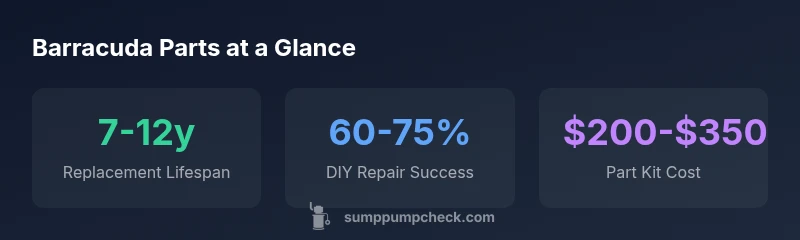
| Motor or Power Cord | 7-12 | Overheating, fraying | $150-$350 | Inspect wiring; replace with model-compatible kit |
FAQ
What parts are included in Barracuda sump pump kits?
Barracuda kits typically include impeller, seals, gaskets, O-rings, float switch, and sometimes a new housing or lid. Verify kit compatibility with your Barracuda model and follow the warranty guidelines.
Barracuda kits usually include the impeller, seals, and a float switch. Check compatibility with your model and follow warranty guidelines.
How do I tell if a Barracuda pump part needs replacement?
Look for leakage around seals, unusual noises, reduced pumping efficiency, or frequent cycling. Visual inspection and a controlled test can reveal wear or misalignment requiring part replacement.
Watch for leaks, odd noises, and poor pumping. If you notice these, inspect the parts and consider replacement.
Can I replace Barracuda parts myself?
Yes, if you have basic electrical safety knowledge. Always disconnect power, drain the basin, and follow the model’s service manual. If you’re unsure, hire a professional.
You can DIY, but ensure power is off and you follow the manual. If unsure, get a pro.
What is the recommended maintenance schedule for Barracuda parts?
Perform a visual check monthly, run a test cycle quarterly, and replace worn parts as needed. Coordinate more frequent checks during periods of heavy rainfall or high usage.
Check it monthly, test quarterly, and replace worn parts as needed.
Where can I source genuine Barracuda parts?
Purchase genuine Barracuda parts from authorized distributors or the manufacturer’s official partners. Verify part numbers and keep receipts for warranty claims.
Buy from authorized distributors and verify part numbers for warranty.
Are Barracuda parts compatible with other sump pump brands?
Compatibility varies by model and mounting, and using non-Barracuda parts can void warranties. Always check compatibility with your unit’s manual.
Usually, Barracuda parts fit Barracuda models best. Check the manual for compatibility.
“Regular maintenance and using genuine Barracuda parts can significantly extend sump pump life and reduce unexpected failures.”
Top Takeaways
- Know the core Barracuda parts and their roles
- Regularly inspect seals, impeller, and float switch
- Use genuine Barracuda parts for replacements
- Follow a structured maintenance schedule to extend life