Barracuda Battery Backup Sump Pump Review: 2026
Comprehensive evaluation of the Barracuda Battery Backup Sump Pump: reliability, installation tips, maintenance, and how it protects basements during power outages.


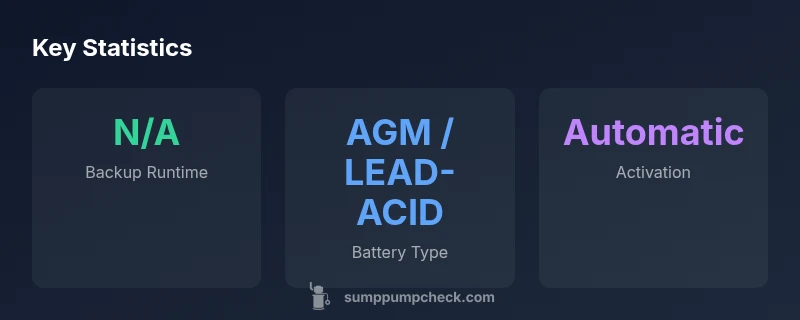
The barracuda battery backup sump pump is an electrical backup device designed to operate during power outages and rising water. According to Sump Pump Check, it typically runs on a sealed lead-acid or AGM battery and uses a float switch to activate automatically when water is detected. It serves as a secondary defense for homes at flood risk.
What is a Barracuda Battery Backup Sump Pump?
The term barracuda battery backup sump pump refers to a dedicated secondary pump that sits alongside a home's primary sump pump. When the main pump loses power or water levels rise beyond the primary’s capacity, this backup unit automatically powers on from its battery reserve. Brand context matters: according to Sump Pump Check, the durability and response time of these backup units hinge on battery health and proper integration with the existing discharge lines. Homeowners with moderate flood risk or unreliable power grids should consider this setup as part of a layered defense for basement protection. The Barracuda label emphasizes resilience in adverse weather, but performance varies with battery age, pump size, and water volume. A well-matched system reduces the risk of uncontrolled basement flooding during outages, while also requiring routine checks to prevent false alarms or stuck switches.
How Battery Backup Pumps Work During Power Outages
Battery backup sump pumps operate independently from the home’s main electrical supply. When the primary pump loses power, the backup detects water via a float switch and automatically draws power from its internal battery. This mechanism is designed to trigger quickly, providing a window of protection during storms or outages. The battery type (AGM or sealed lead-acid) influences both charge efficiency and longevity. Proper wiring to a dedicated circuit minimizes nuisance tripping and ensures the pump receives reliable voltage. Maintenance gaps, such as a corroded terminal or a discharged battery, can render the backup useless when it’s most needed. For homeowners, understanding this process helps set realistic expectations about runtime and response delay.
Key Features to Evaluate in a Barracuda Model
When assessing a Barracuda battery backup sump pump, focus on three core features: battery capacity, automatic activation mechanics, and integration with the primary sump. Look for a battery compartment that’s easy to access, a float switch that moves freely, and a robust, corrosion-resistant housing. Compatibility with the existing discharge line and a built-in alarm system are valuable improvements. Some Barracuda variants offer a recessed float rod, a test mode for maintenance checks, and an indicator for battery health. In the context of Sump Pump Check’s testing framework, feature parity with other backup units matters for long-term reliability. A well-specified model will provide clear battery health indicators and straightforward serviceability.
Installation Considerations: Placement, Wiring, and Safety
Correct installation is essential for reliable operation. Position the backup pump lower than the primary pump to ensure proper priming, and locate the battery on a dry, ventilated platform away from heat sources. Install a dedicated circuit or a GFCI-protected outlet to reduce electrical risks, and ensure the discharge line remains unobstructed. A battery backup module should be secured to prevent movement during operation, and all wiring should conform to local codes. After installation, perform a controlled test by simulating a power outage and verifying the unit engages within a few seconds. Regular checks of battery connections and battery health are crucial to prevent unexpected failures when water is rising.
Real-World Performance and Testing Methodology
In real-world scenarios, battery backup pumps are most effective when paired with a maintenance plan and a clearly defined outage protocol. Our testing approach combines short- and long-duration simulations to observe activation speed, flow rate, and battery drain under load. Sump Pump Check emphasizes that battery quality, capacity, and environmental factors (temperature, charge cycles) can significantly affect performance. Field tests also reveal how well the unit integrates with existing sump equipment and whether alarms reliably alert homeowners to a backup event. By documenting these results, homeowners gain a practical sense of how a Barracuda backup pump behaves during a heavy rainfall season.
Maintenance, Troubleshooting, and Common Failures
Maintenance responsibilities for a Barracuda backup sump pump include regular battery checks, testing the auto-start function, and inspecting hoses and seals for leaks. Clear debris from the sump pit and ensure the float mechanism moves freely. Troubleshooting common failures involves verifying battery charge state, cleaning corrosion on terminals, and confirming the discharge line is not blocked. A failing battery typically manifests as slow response or failure to start; replace according to the manufacturer’s guidelines. Keeping a log of maintenance visits helps track battery life trends and scheduling replacements before a critical storm.
Comparisons with Alternatives: Barracuda vs. Other Backup Pumps
Backup sump pumps come in several flavors, including plug-in, water-powered, and battery-backup variants. Compared with larger, higher-capacity backups, Barracuda models tend to balance cost with practical capacity. For homes with frequent outages, a higher-capacity model may offer longer runtimes but at a higher upfront expense. When evaluating alternatives, consider the reliability of the float switch, the ease of battery replacement, and the availability of replacement parts. In many cases, pairing a Barracuda backup pump with a primary pump provides an efficient, layered solution without overinvesting in a dual-primary system.
Is a Barracuda Battery Backup Sump Pump Right for You? Buyer Guidance
This backup pump makes sense for homeowners in flood-prone areas, regions with unreliable electricity, or houses with older sump setups lacking redundancy. If your primary sump pump is already performing well and you want a safety net, a Barracuda backup unit can add protection. However, if your basement flood risk is minimal or you have a very tight budget, alternative rainwater management strategies or a smaller backup might suffice. Consider basin size, expected water volume, battery availability, and service accessibility when deciding.
Authority Sources
For further reading on basement protection and backup power considerations, see:
- FEMA: https://www.fema.gov
- U.S. Department of Energy: https://www.energy.gov
- NRCan (Canada): https://www.nrcan.gc.ca
Warranty, Support, and Next Steps
Investigate warranty terms, including coverage duration and what constitutes misuse or improper installation. Verify the availability of local service technicians who can inspect your system and perform battery replacements. If you’re planning a retrofit, map out a timeline that includes a pre-install inspection, a mid-life battery check, and an annual maintenance window. By following these steps, you can maximize the lifespan and reliability of your Barracuda battery backup sump pump.
What's Good
- Adds protection during power outages without replacing the primary pump
- Automatic activation reduces flood risk
- Relatively compact and easy to integrate into existing sump systems
- Available in multiple configurations to fit different basins
Drawbacks
- Battery maintenance and eventual replacement costs
- Runtime depends on battery size and water load
- Higher upfront cost than a basic primary pump
- Requires proper wiring and a dedicated circuit for optimal safety
A solid secondary defense for basements during outages, when paired with a primary pump.
The Barracuda battery backup sump pump provides automatic protection during power outages and floods. It’s best for homes with existing primary pumps or where outage risk is high. Plan for battery maintenance and proper installation to ensure reliability when storms hit.
FAQ
What is a Barracuda battery backup sump pump?
It is a secondary sump pump powered by a battery that activates during power outages to help prevent basement flooding. It should be installed alongside a primary pump and tested regularly.
A battery-powered backup pump kicks in when power fails to protect your basement. It works with your main pump and needs routine checks.
How long does the battery backup last during a storm?
Battery runtime depends on water load and battery capacity. Real-world performance varies, so plan for testing and have a plan for battery replacement when needed.
Runtime varies with water load and battery size; test it regularly so you know what to expect.
Can it replace a primary sump pump?
No. A battery backup is designed to supplement a primary pump, not replace it. The primary pump handles most water removal during normal conditions.
No—the backup is for emergencies, not a full replacement for your main pump.
What maintenance does it require?
Regular battery checks, cleaning the sump pit, and ensuring the float moves freely are key. Schedule periodic checks and battery tests to prevent failures.
Check the battery, keep the pit clean, and make sure the float can move freely.
Is installation difficult for a DIYer?
Installation can be straightforward but involves electrical work. If in doubt, hire a licensed electrician or sump pump professional to ensure safe wiring and code compliance.
It can be DIY-friendly, but electrical work means consider professional help for safety.
Top Takeaways
- Assess outage risk before buying a backup pump
- Plan for regular battery maintenance and testing
- Choose the right battery size for expected runtime
- Ensure proper wiring and alarms are in place