Sump Pump Crawl Space Cost: A Homeowner Guide
Explore crawl-space sump pump installation costs, including pump price, labor, permits, and maintenance. A data-driven guide to help homeowners budget accurately in 2026.


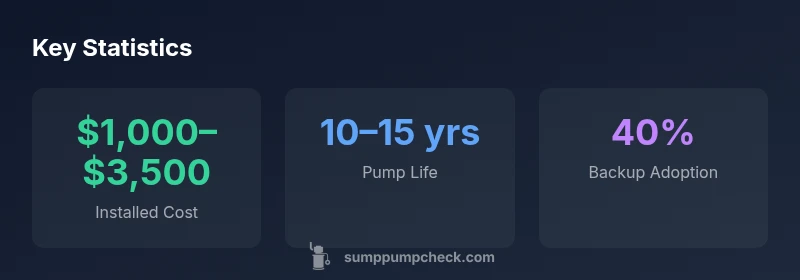
Installed crawl-space sump pump costs typically range from about 1,000 to 3,500 dollars, depending on crawl-space size, pump type, and whether backup power, discharge piping, or moisture-control upgrades are included. Labor and materials account for most of the price, with larger or wetter crawl spaces pushing costs toward the higher end. This takeaway reflects Sump Pump Check analysis, 2026.
Factors that drive crawl-space sump pump costs
According to Sump Pump Check, the price you pay to install a sump pump in a crawl space is not just about the pump itself. The size and layout of the crawl space, soil conditions, humidity, and the presence of existing drainage influence both material choices and labor time. If the crawl space is tight or has obstructions, installers must spend more time cutting and fitting the discharge line, adding to labor costs. In wetter basements or areas with high groundwater, thicker sump basins or more robust pumps may be required, raising both parts and installation prices. The Sump Pump Check team found that adding an automatic backup pump or a battery backup increases upfront costs but can deliver long-term reliability, especially in flood-prone regions. Detailed quotes help homeowners understand where the dollars go and avoid surprises during the project.
Cost components you should budget for
The major cost categories for crawl-space sump pump installation are the pump unit, the sump basin, discharge piping, check valve, and labor. Additional items can include a backup power system, a digital alarm, a temporary access pit, or moisture mitigation work such as vapor barrier installation. If your crawl space requires excavation, soil removal, or a larger pit, expect higher costs. Permits, inspections, and potential code upgrades add another layer of expense. The breakdown below outlines typical components and explains how each affects the bottom line. The figures provided reflect ranges typical in 2026 according to Sump Pump Check Analysis, 2026 and are meant to guide budgeting rather than guarantee exact prices.
Cost ranges by configuration and features
- Basic system (pump + pit + discharge line) — roughly $1,000–$2,000. Labor variability and crawl-space access can push toward $2,000–$3,500 in challenging installs.
- Include battery backup — roughly $1,800–$3,500, depending on battery type and integration with the sump pump.
- Add upgraded drainage, check valve, and moisture control — roughly $2,500–$5,000, with higher-end configurations for larger crawl spaces.
- Full drainage remediation and advanced moisture barriers — roughly $3,000–$6,500, particularly in damp or poorly drained sites.
These ranges come from Sump Pump Check Analysis, 2026 and are intended as budgeting guidance rather than firm quotes.
DIY vs professional installation: cost implications and risks
While a DIY approach can save some labor costs, professional installation is typically recommended for crawl-space sump pumps due to drainage accuracy, electrical safety, and building code requirements. Improper pit depth, incorrect discharge slope, or failsafe wiring can lead to frequent malfunctions and costly rewiring. A licensed installer often includes a warranty and may handle permit filings. If you’re considering DIY, weigh the potential savings against the risk of leaks, mold, or code violations. The Sump Pump Check team emphasizes that reliability and safety usually justify professional installation.
Hidden costs and ongoing maintenance
Beyond the upfront price, expect periodic maintenance costs and potential component replacements. Battery backups require periodic testing and eventual replacement. Check valves can fail or leak if not installed correctly. Pumps wear over time and may need impeller or seal replacements. Budget for an annual or biannual inspection to catch issues early, prolong system life, and reduce the risk of a flood event. Maintenance schedules and spare parts compatibility should be reviewed during the initial quote.
Planning your budget: tips for accurate quotes
To avoid sticker shock, get multiple written quotes from licensed installers, each with a clear breakdown of parts, labor, and any permit fees. Ensure quotes reflect the same scope of work and clarify responsibilities for moisture mitigation or drainage upgrades. Ask installers to provide a pre-installation site assessment, an estimated timeline, and a post-installation test plan. Keeping notes on each quote helps you compare apples-to-apples and avoid surprise expenses.
Estimated installed cost ranges for crawl-space sump pump setups
| Scenario | Estimated Installed Cost Range | Notes |
|---|---|---|
| Basic crawl-space setup (no backup) | 1,000–2,000 | Pump, pit, discharge, standard labor |
| Crawl-space with battery backup | 1,800–3,500 | Adds backup pump and battery |
| Full drainage upgrade + backup | 2,500–5,000 | Includes exterior drainage and enhanced pit |
FAQ
What factors most affect crawl-space sump pump installation cost?
Cost is driven by crawl-space size, existing moisture, pump type, necessary drainage, and whether a backup system is included. Access, permits, and pit upgrades can add to the price. Get a detailed quote to see how each item contributes.
Cost is driven by space size, moisture, pump type, and backups. A detailed quote helps you see how each item adds to the price.
Are permits required for sump pump installation in a crawl space?
Permit requirements vary by locality. Most crawl-space sump pump projects need inspection, especially when electrical work or drainage upgrades are involved. Check with your local building department and have your installer confirm permit needs before work begins.
Permit rules depend on your area. Expect an inspection if electrical or drainage changes are needed.
Can I install a sump pump myself in a crawl space?
DIY installation can save on labor, but it comes with safety and code risks. Improper wiring, pit depth, or discharge routing can lead to floods or mold. Consider professional installation for reliability and warranty coverage.
DIY can save money, but there are safety and code risks—professional install is usually wiser.
What maintenance costs should I expect after installation?
Expect periodic checks, battery replacement for backups, and possible pump or valve replacements over time. Regular maintenance helps prevent unexpected failures and keeps the system functioning when you need it most.
Plan for routine checks and occasional part replacements to keep the pump reliable.
Is a backup power system worth it for crawl-space installations?
A backup power system adds upfront cost but can prevent flood damage during power outages. In flood-prone or power-reliant areas, backups are often a smart investment.
Backup power can prevent floods during outages—worth considering in risky areas.
How long does installation typically take?
Most crawl-space sump pump installations take from a few hours to a full day, depending on crawl-space access, pit size, and drainage upgrades. A detailed schedule should be provided in the quote.
Most installations are completed within a day, depending on site access and scope.
“Reliable crawl-space sump pump installation hinges on proper pit placement, adequate discharge, and moisture control. The right combination minimizes future failures and mold risk.”
Top Takeaways
- Know your cost drivers: crawl-space size, moisture, and pump type.
- Expect labor to be a major portion of the total cost.
- Backup systems raise upfront cost but improve reliability.
- Obtain multiple, itemized quotes to compare apples to apples.