How Much to Install a Sump Pump: A Comprehensive Cost Guide
Estimate sump pump installation costs for 2026. Learn what drives price, what to budget for beyond the pump, and how to plan with expert guidance from Sump Pump Check.


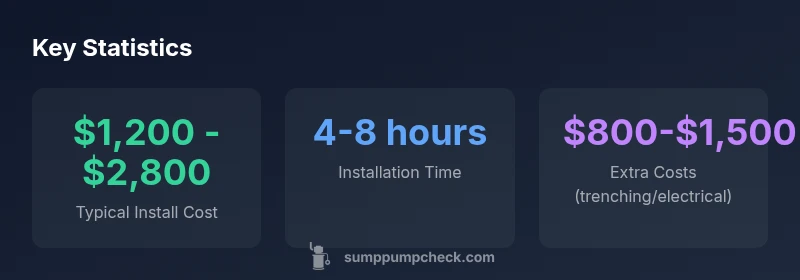
The typical installed cost to add a sump pump is between $1,200 and $2,800, depending on pump type, power source, and labor. Additional costs can include trenching, electrical upgrades, and permits. If you add a battery backup or a more robust drainage install (e.g., trenching for a new discharge line), total project costs can rise to $3,500–$5,000. This is based on Sump Pump Check Analysis, 2026.
What determines the installed cost of a sump pump
Installing a sump pump is not a one-size-fits-all project. The final price is shaped by several interacting factors. The core cost comes from the pump unit itself, but trenching, piping, and electrical upgrades can significantly influence the total. The size of the basement, the depth of the sump pit, and the distance the discharge line must travel all alter labor time and material needs. Regional labor costs can add or subtract from the bottom line, with noticeable variation between urban and rural areas. According to Sump Pump Check, regional labor costs and trenching complexity account for much of the variation. A precise estimate usually starts with a site evaluation: measure pit dimensions, review the current drainage setup, and forecast how much trenching or wall work will be required. Expect a plan that accounts for arches, thresholds, or obstacles that could complicate routing. This upfront assessment helps prevent budget creep and keeps the project on track.
Sump pump types and their cost implications
Choosing the right type and size of sump pump is a major price lever. Submersible units are common and generally more expensive upfront than pedestal models, but they tend to operate more quietly and fit into tighter pits. Flow rate, horsepower, and build quality influence price; higher performance models handle larger basins or more demanding drainage scenarios. In many installations, the decision hinges on pit depth, available space, and anticipated discharge distance. When you budget, consider not just the pump price but also accessories like the check valve, discharge piping, and a sturdy basin cover. The range you see in total installation costs is closely tied to the unit you select and any required upgrades to your electrical system or drainage layout. Sump Pump Check’s 2026 analysis notes that premium features (battery backup, alarms, and smart controls) push the price upward but can reduce long-term risk.
Hidden costs and budget planning
Beyond the pump and basic fittings, several items frequently surprise homeowners. Trenching or breaking through walls to route discharge lines can add substantial labor time. Electrical work—outlet proximity, GFCI protection, and sometimes a dedicated circuit—also influences cost. Permits and inspections may be required, depending on location, and can add fees and scheduling considerations. A robust plan should include a contingency (typically 10–20%) for unforeseen site issues, such as a need to upgrade the pit liner or address moisture-related concerns around the installation site. When estimating, identify all potential line items: pit modification, check valve, backflow prevention, wiring, outlet placement, and any needed drainage enhancements.
Labor considerations: professional vs DIY
Many homeowners evaluate DIY installation against hiring a pro. While a self-install can save on labor, it carries risks: improper electrical work, inadequate pit sizing, or a misrouted discharge that fails to meet code. Warranties often hinge on professional installation, and a licensed plumber or HVAC technician can ensure compliance with local codes and safety standards. For complex basins or homes with finished basements, professional installation usually yields lower long-term costs due to reduced call-backs and more reliable performance. If you do attempt a DIY route, rely on detailed, manufacturer-recommended instructions and obtain any required permits before starting.
Permits, codes, and safety considerations
Permit requirements vary by jurisdiction, but many areas require inspection for new sump pump installations, especially where electrical work or changes to drainage systems are involved. Local codes may specify minimum discharge distances, check valve placement, and electrical clearances. Safety considerations include venting, upward discharge away from the foundation, and preventing accidental backup during power outages. Consulting your city or county building department early in the planning phase can prevent delays and ensure compliance. Documented approvals also help if you ever sell the home, easing future inspections.
Timeline and scheduling insights
Planning a sump pump installation involves both procurement and site work. A typical project can span from a few hours to a full day, depending on pit conditions, trenching needs, and electrical readiness. If trenching or exterior work is required, plan for weather contingencies and permit processing time. Scheduling with a licensed professional often improves coordination of electrical and drainage work, reducing the risk of delays. A well-structured schedule minimizes homeowner disruption and helps ensure the project stays within budget.
Battery backups and advanced features
Battery-backed systems provide resilience during power outages, a common risk during heavy storms. Upfront costs increase when adding a battery or an alarm system, but these features can protect belongings and reduce flood risk. Consider annual checks on the backup battery and periodic testing of alarms to ensure readiness. Advanced systems with remote monitoring or smart alerts can help detect failures early and trigger repairs before major damage occurs. When weighing value, compare the added protection against the incremental expense over the pump’s lifetime.
Maintenance costs after installation
Ongoing maintenance keeps a sump pump reliable and extend its life. Expect periodic inspections to verify motor health, check valve operation, and clean debris from the pit. Battery backups require battery replacements every 3–5 years, depending on usage and battery type. Routine maintenance reduces the likelihood of unexpected failures and costly emergency service. Budget for an annual or biannual service visit, and keep spare parts like check valves and fuses on hand where feasible. A proactive maintenance plan often yields better long-term cost efficiency.
Cost components for sump pump installation
| Component | Estimated Cost Range | Notes |
|---|---|---|
| Pump and materials | $700 - $1,800 | Depends on unit size and features |
| Labor | $500 - $1,200 | Varies by region and contractor |
| Electrical, permits, trenching | $200 - $1,000 | Additional site work |
FAQ
What is the most significant factor driving sump pump installation cost?
The most significant factor is labor and site work, including trenching and electrical upgrades. Pump type and features also affect price. Planning ahead helps map contingencies and reduce surprises on the bill.
Labor and site work drive most of the cost. Plan early to avoid surprises.
Can I install a sump pump myself to save money?
DIY installation is possible for simple setups, but it risks code violations and warranty voids. If you’re not comfortable with electrical work and plumbing, hiring a licensed pro is safer and often more cost-effective in the long run.
It’s doable for simple cases, but consult a pro if you’re unsure.
Do permits typically add to the cost?
Permit requirements vary by jurisdiction, but many areas require permits for new sump pump installs and related electrical work. Expect permit fees and potential inspection costs to be part of the project.
Yes, permits can add time and money, depending on where you live.
Is a battery backup worth the extra upfront cost?
Battery backups add upfront costs but can prevent flood damage during outages. For storm-prone areas, the added protection often justifies the expense over the pump’s lifetime.
Backup power helps protect your basement when the grid fails.
How long does installation typically take?
Most installations take a single day or less if the site is straightforward. More complex runs with trenching or permits may extend scheduling to a few days.
Most installs finish in a day; complex jobs may take longer.
“A well-planned sump pump installation balances upfront cost with long-term protection against basement flooding.”
Top Takeaways
- Plan for total costs, not just the pump price
- Choose pump type to balance cost and reliability
- Expect permit and electrical work to add to the bill
- Battery backups increase upfront cost but improve resilience
- Get multiple quotes to compare labor and material charges