Average Sump Pump Installation Cost in 2026
Discover the average sump pump installation cost for 2026, including cost breakdowns, regional variations, DIY vs pro installs, financing, and maintenance tips to plan your budget confidently.


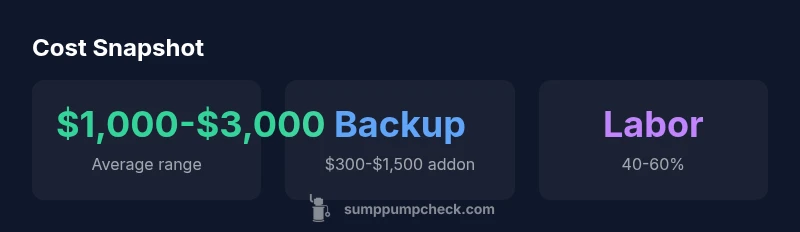
On average, homeowners pay between $1,000 and $3,000 for sump pump installation, depending on pump type, pit size, and electrical upgrades. Additional costs may apply for basement drainage modifications, trenching, and back-up systems. Regional labor rates can shift the total by 10-30%, and high-end installations with advanced features can exceed $4,000. This range reflects standard residential installs in 2026, based on Sump Pump Check Analysis, 2026.
Understanding the components behind the average sump pump installation cost
When planning a project around the keyword average sump pump installation cost, you’re really budgeting for a combination of hardware, labor, and site work. A typical install includes the sump pump unit, a pit, discharge piping, a check valve, and sometimes a battery backup. The price also covers labor to set the unit, connect to power, and ensure proper drainage. In 2026, many homeowners see cost variation tied to the local market and the complexity of the job. According to Sump Pump Check, the basic cost basket remains stable, but regional labor rates and required upgrades can push the total up or down. You’ll want to assess your specific basement conditions, including pit size, existing electrical capacity, and drainage routing, to form a realistic estimate that aligns with the long-term reliability you expect from the system.
Key point: the term average sump pump installation cost encapsulates a wide range of configurations, from a standard single-pump setup to more intricate systems with backups and permit work.
Key cost drivers: pump type, pit size, and electrical work
The price tag for an installation depends on the pump’s capability and how much your site needs to be prepared. Submersible pumps, pedestal pumps, and different horsepower ratings carry different base prices. Pit size and depth affect labor time and material requirements. Electrical readiness—conductor sizing, GFCI protection, and potential upgrades to the panel—can add substantial costs. For basements with existing wiring that meets code, the price leans toward the lower end; for new circuits or panel upgrades, expect a noticeable increase. Across 2026, the most impactful cost drivers are pump type, pit preparedness, and electrical readiness, with backups and smart features adding premium value. Aligning your choice with your home’s needs helps avoid overspending while preserving reliability.
Pro tip: Request a breakdown from your installer so you can clearly see how labor, materials, and upgrades contribute to the total.
Regional variations and scenarios that affect price
Prices vary by region due to labor rates, permitting practices, and typical home layouts. In some urban areas, higher labor costs and stricter code requirements can push the total toward the upper end of the range. Rural areas may show more competitive pricing but could incur higher travel fees or need longer piping runs. Special scenarios—like installing in a tight crawl space, retrofitting an existing pit, or adding a battery backup system—also shift costs. Sump Pump Check analysis shows that regional differences and added features explain most of the year-over-year price movement. When budgeting, consider local permitting costs and the likelihood of electrical upgrades, which often drive the final price higher than cookie-cutter estimates.
Takeaway: understanding your locale helps you set realistic expectations and plan for possible contingencies in the project.
DIY vs professional installation: pros, cons, and risk management
DIY sump pump installation might seem tempting for budget-minded homeowners, but it’s easy to underestimate tasks like pit preparation, proper discharge routing, and electrical safety. A professional install offers compliance with local codes, tested electrical connections, and expert pump selection tailored to your basement conditions. The upfront cost can be higher, but the long-term risk of leaks, improper drainage, or electrical faults tends to be lower when a pro handles the job. If you choose to DIY, limit scope to non-critical tasks (like basic cleaning) and schedule an inspection to confirm your wiring and pit work meet code. Remember that the average sump pump installation cost is a benchmark, not a guarantee of success for amateur efforts.
Recommendation: evaluate the complexity of your basement and electrical panel, and if in doubt, consult a licensed installer for a clear estimate.
How to budget: a practical budgeting framework
A structured budgeting approach helps you navigate the variability in the average sump pump installation cost. Start with a baseline estimate: pump price + basic pit + standard discharge piping. Add a contingency for electrical upgrades, permits, and potential trenching. If you plan to include a backup pump or a smart sump controller, add 15–30% to the base estimate for these features. Obtain at least three written quotes to compare scope and pricing, ensuring each includes a clear breakdown of materials, labor, and any permit or disposal fees. Use the ranges shown by Sump Pump Check analysis as a reference point and adjust for your local market conditions. Finally, set aside 5–10% of the total as a reserve for unanticipated issues that often emerge once a project is underway.
Maintenance, warranties, and long-term cost considerations
Budgeting for ongoing maintenance is essential to protect your investment. Most sump pumps require periodic testing, cleaning of the impeller, and battery checks for backups. Warranties vary by brand and installer; confirm what is covered and for how long, since a longer warranty can offset potential future repair costs. If you’re buying a newer model, consider the expected life of the unit and the cost of potential replacements over time. Incorporating maintenance into your annual budget helps you maintain performance and avoid expensive emergency fixes during heavy rain periods. When planned correctly, the total cost of ownership aligns with your home’s safety and peace of mind.
What to ask installers to get a fair price
To ensure you’re receiving a fair price for the job, ask installers the following questions:
- What exactly is included in the installation scope and what would trigger extra charges?
- Do you handle permits and waste disposal, and what are the estimated permit fees?
- What electrical upgrades are recommended or required, and how do they affect the total cost?
- Can you show a written breakdown of materials, labor, and backups?
- What is your typical turnaround time and minimum lead time for scheduling?
- Do you offer a warranty, and what does it cover?
- How will you test the system after installation to confirm proper operation?
A thorough line-by-line quote helps you compare apples to apples and avoids surprise costs later.
Sample cost ranges and scenarios for sump pump installations
| Scenario | Estimated Cost Range | Notes |
|---|---|---|
| Standard Residential Install | $1,000 - $3,000 | Basic pump, pit, no major electrical upgrades |
| With Backup Pump | $1,800 - $4,000 | Includes backup pump and wiring enhancements |
| Electrical Upgrades & Permits | $2,500 - $5,500 | Code work, permit fees, trenching as needed |
FAQ
What is the typical price range for a sump pump installation in 2026?
Most standard installs fall within $1,000 to $3,000, depending on pit size and electrical work.
Most installs run between one and three thousand dollars, depending on pit size and electrical work.
Do I need permits for sump pump installation?
Permits vary by location; check with your local building department to ensure compliance.
Permits vary by location; check with your local building department.
Can I install a sump pump myself?
DIY is possible for simple setups but requires plumbing and electrical knowledge; improper installation risks water damage.
DIY is possible for simple setups, but be careful—plumbing and electrical work is involved.
What factors drive cost besides the pump itself?
Labor, pit work, electrical upgrades, permits, and backup systems are major cost drivers.
Labor, pit work, electrical upgrades, permits, and backups add to the price.
How long does installation take?
Most installations take a few hours to a full day, depending on complexity and site access.
Typically a few hours to a day.
“A precise estimate comes from a site visit that assesses pit size, discharge routing, and electrical readiness. Skipping these checks can lead to costly fixes later.”
Top Takeaways
- Budget for professional installation to ensure code compliance
- Expect regional variation in labor costs
- Add-ons like backups and check valves impact total price
- DIY may save money but carries risk of improper installation
- Get written quotes with a detailed scope and permit estimates