Cost to Install Sump Pump in Crawl Space: A Practical Guide
Explore the true cost to install a sump pump in a crawl space, including labor, materials, permits, backup options, and maintenance. Compare scenarios, budget wisely, and plan for reliable flood protection.


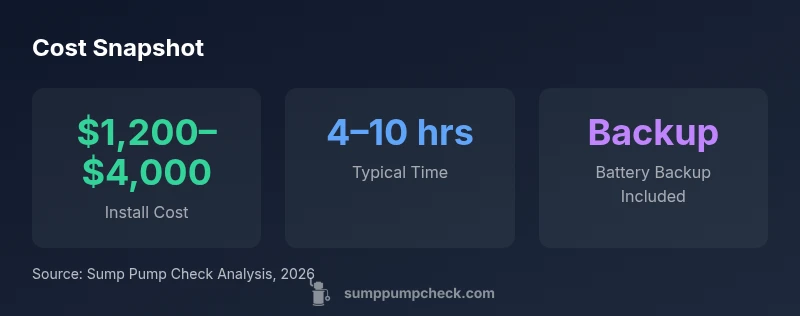
On average, the cost to install a sump pump in a crawl space ranges from about $1,200 to $4,000, with most projects landing between $2,000 and $3,000. Costs vary by pump type, crawl-space access, electrical wiring, drainage planning, and whether an automatic backup system is included. Factors such as trenching, venting, and local permit fees can push the total higher.
Understanding the cost drivers for crawl-space sump pump installation
For homeowners exploring the cost to install sump pump in crawl space, it's essential to understand the main cost drivers. The total price isn't just the pump itself; it includes the pump unit, discharge piping, check valve, wiring, pit excavation in the crawl space, weatherproofing, and potential trenching or sealing. The pump type matters: submersible models are common in crawl spaces, while pedestal pumps may cost less upfront but could require more robust mounting. The electrical work, including a dedicated circuit and GFCI protection, adds to labor costs. Backup options like battery-powered pumps raise both material and labor costs but improve reliability during power outages. Drainage planning—whether the line will discharge under a deck, to a yard, or toward a sump pit—affects trenching length and materials. Permits or inspections required by local building codes can also vary widely by municipality; in some regions, no permit is needed, while others require a formal review. According to Sump Pump Check, a careful assessment of crawl-space access, moisture levels, and the home's electrical readiness typically yields a more accurate range than a single price quote. A complete budget should include contingencies for unexpected complications, such as structural dampness, mold remediation costs, or the need to re-route existing utilities. By considering these factors, homeowners can set expectations and avoid sticker shock when the technician arrives.
The Sump Pump Check team emphasizes that starting with a crawl-space assessment helps tailor a realistic cost window, which can prevent surprises later in the project.
Cost components explained: pumps, labor, permits, and extras
Understanding where money goes helps you negotiate confidently. The pump itself can range from basic submersible units to high-capacity, energy-efficient models with multiple stages. Labor costs reflect crawl-space access, the complexity of pit excavation, and whether walls or joists need modification. Electrical work—new outlets, dedicated circuits, and GFCI protection—often dominates the labor portion in older homes. Drainage considerations influence trenching length, pipe materials, and backflow prevention devices. Permits and inspections vary by jurisdiction; some municipalities require a formal plan check, while others do not. Extras such as backup pumps, alarms, float switches, and battery backups add to both material costs and installation time but significantly improve system reliability during power outages or floods. Financing options, warranties, and maintenance plans should also factor into the total. As a rule of thumb, plan for a contingency of 10–20% to cover unexpected site conditions, especially if the crawl space has moisture, mold, or limited headroom. The goal is a robust, code-compliant system that performs under stress and reduces long-term flood risk for your home.
How crawl-space access and design affect installation time
Access to the crawl space is a major determinant of how long installation takes. Tight or awkward entry points often require additional bracing, careful maneuvering of pump components, and sometimes vacuum extraction of debris before work can proceed. Low clearance under joists can necessitate alternative mounting positions or a different pump model, affecting both price and time. If the crawl-space floor has standing water or significant moisture, mitigation steps may be needed before the pump can be installed, such as sealing the pit or improving drainage, which adds days to the schedule. A professional will also evaluate existing utilities: electrical panels, outlets, and wiring routes influence the length of wiring runs and permit complexity. In practice, a straightforward crawl-space install might take a half-day, while more complex scenarios with trenching or backup systems can extend to a full day or more. Planning for a weekend or two may be prudent if weather or access concerns arise, and you’ll gain confidence knowing the crew has anticipated contingencies. Consistent communication with your contractor can prevent delays and misaligned expectations.
Budgeting for common crawl-space scenarios
Different crawl-space configurations yield distinct cost profiles. A standard install in a reachable crawl space with a basic submersible pump and no backup typically lands in the lower mid-range of the cost spectrum, with modest time requirements and minimal trenching. If access is limited or if trenching and substantial piping are required, costs increase—reflecting both material outlay and labor intensity. A scenario that includes a battery backup, alarm, and more robust discharge routing will push total costs toward the upper end of the range but offers increased protection during power outages and heavy rain. Local permit fees, inspections, and additional approvals can further affect the final price. When budgeting, homeowners should also consider potential mold remediation or dehumidification in damp crawl spaces, which can substantially influence overall expense. The key is to match the system’s features and capacity to your property’s moisture profile and flood risk, rather than chasing the most expensive option. Sump Pump Check’s framework recommends evaluating risk tolerance, climate patterns, and long-term maintenance needs to select a plan that provides the best balance of cost and reliability.
Financing, permits, and ongoing maintenance considerations
Financing options for sump pump installations range from simple upfront payments to financing plans offered by contractors or retailers. Permits, if required, can add administrative steps but ensure the installation meets local codes and safety standards. Some regions offer rebates or incentives for flood-mitigation upgrades, so it's worth checking with your local building department or utility provider. Maintenance is a critical ongoing cost: periodic pump testing, debris removal, float switch checks, and battery backup testing extend system life and reduce the probability of failure during storms. Budget for replacement parts, especially seals, gaskets, and check valves, which wear with use. Documenting maintenance in a home file helps keep resale value intact and provides evidence of proactive flood prevention. If budgeting is tight, negotiate a phased approach—install a basic system first and add features like backup power or alarms later as funds allow.
Planning tips and a practical checklist to control costs
To keep the project within budget while ensuring reliability, use this checklist:
- Get at least three written quotes from licensed plumbers or sump-pump specialists.
- Have a crawl-space assessment done to determine access and moisture levels.
- Confirm electrical readiness (dedicated circuit, GFCI protection).
- Clarify whether trenching, venting, or pipe routing is required and who will handle permits.
- Consider a backup system for power outages and heavy rainfall.
- Ask for a warranty on both labor and components and request a maintenance plan.
- Schedule installation during the off-season to potentially save on labor costs.
- Request a written, itemized breakdown of costs and a project timeline to prevent scope creep.
Following these steps helps maintain control over the price while securing a durable, code-compliant system that protects your crawl space and home.
Case studies: real-world cost examples
Case Study A involved a standard crawl-space install in a 1,000-square-foot home with easy access. The project included a basic submersible pump, standard discharge piping, a check valve, and no backup. The final cost landed in the lower end of the range, with installation completed in about five hours. Case Study B dealt with a tight crawl space, some trenching, and an optional battery backup. The final price was higher due to labor intensity and materials, but the homeowner gained a backup system for power outages and a more robust drainage route. In both cases, the homeowners benefited from upfront planning and multiple quotes to secure a fair price. The Sump Pump Check team notes that these examples illustrate how access, scope, and added features influence final costs and that a thoughtful plan helps homeowners achieve flood protection without overspending.
Cost and time estimates for crawl-space sump pump installations
| Scenario | Estimated Cost Range | Typical Install Time | Notes |
|---|---|---|---|
| Standard crawl-space install | $1,200–$2,500 | 3–6 hours | Basic pump, no backup, minimal trenching |
| Limited access or trenching | $2,000–$3,500 | 6–10 hours | Permits may apply |
| Backup system included | $2,500–$4,000 | 6–12 hours | Battery backup and alarm add cost |
FAQ
What factors drive the cost to install a sump pump in crawl space?
Key cost drivers include pump type and size, back-up features, crawl-space access, trenching needs, wiring, and permit fees. The moisture profile and mold remediation needs can add to the total. Planning around these variables helps set a realistic budget.
The main cost drivers are pump type, crawl-space access, and wiring; permits add variability.
Do I need a permit to install a sump pump in my crawl space?
Permit requirements vary by locality. Some areas require a permit and inspection; others do not. Check with your local building department before scheduling work to avoid delays or fines.
Permits depend on your city; check with your local building department.
How long does installation typically take?
A standard crawl-space sump pump install usually takes 4–8 hours, depending on access and trenching needs. More complex layouts or backup systems can extend this to a full day.
Most installs take a half to a full day depending on access.
Can I install a sump pump in crawl space myself?
DIY installation is possible for simple setups if you have electrical and plumbing experience. For safety and code compliance, many homeowners hire a licensed pro, especially where electrical work and permits are involved.
DIY can work for simple setups, but licensed pros are safer for electrical work.
What maintenance is required after installation?
Regular testing, float switch checks, clean discharge lines, and periodic dehumidification in damp spaces help prevent failures. Keep spare seals and batteries on hand if you have a backup pump.
Test the pump regularly and keep lines clear.
Is a battery backup worth the extra cost?
If power outages are common in your area or you experience frequent storms, a battery backup significantly increases safety and flood protection. Weigh the upfront cost against potential water damage risk and reduced downtime.
Backup is worth it if outages are frequent; it protects against flood risk.
“A well-planned crawl-space sump pump installation reduces flood risk and protects your home's value, but the final cost depends on crawl-space access, pump features, and electrical readiness.”
Top Takeaways
- Get multiple quotes from licensed pros.
- Assess crawl-space access before choosing a pump type.
- Include permit and trenching costs in your budget.
- Consider a backup power option for reliability.
- Schedule annual maintenance to extend life.