Sump Pump Cost to Replace: A Practical Guide for 2026
Learn the factors that influence sump pump cost to replace, including pump type, labor, permits, and upgrades. A practical, data-driven guide based on Sump Pump Check Analysis, 2026, to help homeowners budget confidently.


The sump pump cost to replace typically ranges from roughly $800 to $2,500 for a standard setup, with higher prices for battery backups, smart controls, or full-system upgrades. Material quality, labor rates, and installation complexity are the main drivers, so expect a broader range if you add features or reinstate old discharge lines. This guide from Sump Pump Check helps you budget accurately for 2026.
Sump Pump Cost to Replace: Key Concepts
The phrase sump pump cost to replace sits at the intersection of equipment price, labor, and installed complexity. For many homeowners, the headline figure is driven by the pump type (submersible vs. pedestal), the material quality, and whether upgrades are included. In 2026, prices reflect broader choices, from basic, budget models to high-efficiency units with battery backups and smart features. Beyond the purchase price, you should account for labor, permits if required, and the cost of disposing of the old unit. The Sump Pump Check team emphasizes that a thoughtful replacement plan often yields long-term savings by reducing flood risk and maintenance calls. As you budget, compare the total cost of ownership, not just the sticker price, and remember that installation quality is a major determinant of performance and durability.
Pump Types and Cost Profiles
Choosing between submersible and pedestal pumps is a primary driver of cost. Submersible units, which sit inside the sump pit, tend to cost more upfront due to greater engineering complexity but offer quieter operation and better protection in many pits. Pedestal pumps are typically cheaper initially but may require more maintenance over time. In 2026 estimates, the pump type influences both initial price and long-term reliability. If a homeowner prioritizes space, noise, or ease of replacement, a submersible model may be preferred, while a pedestal pump can be a cost-effective option for larger pits with straightforward discharge paths.
What Affects Labor and Installation Costs
Labor costs depend on your local market and the complexity of the job. If the pit is shallow, access is easy, and existing plumbing can be reused, installation will be more affordable. Conversely, long discharge runs, difficult access, old piping, or the need to trench or waterproof walls can raise labor hours substantially. Permits, if required by your municipality, add another line item. A professional install typically includes wiring, GFCI protection, testing, and a warranty on workmanship. When estimating, include a margin for incidental repairs that might arise during pit cleaning or line reconfiguration.
Common Upgrades and Their Price Impact
Upgrades such as a battery backup, water-powered backup, check valve replacement, and reinforced discharge piping add to the initial cost but provide greater resilience during power outages and flood events. High-efficiency pumps, variable-speed motors, and smart monitoring can further raise the price yet save energy and reduce nuisance beeping. Each upgrade has a cost impact that should be weighed against flood risk, property value, and the potential avoidance of future service calls. The Sump Pump Check team notes that for many homes, a balanced upgrade strategy offers the best value.
Regional Variations and Permits
Costs can vary by region due to labor rates, permitting requirements, and local code interpretations. In some areas, permits and inspections are mandatory for sump pump installations, which adds to the total. Regions with harsher winters may see higher costs for corrosion-resistant components and longer service calls. When planning, contact your local building department or a trusted installer to confirm permit requirements and typical pricing in your area, and ask for a written estimate that itemizes parts, labor, and any permit fees.
Hidden or Optional Costs to Watch For
Some contractors may charge for disposal of the old unit, drain cleaning, or trenching that isn’t initially anticipated. Additional items such as new check valves, replacement discharge pipes, or sump pit repairs can appear after the initial assessment. To avoid sticker shock, request a comprehensive quote that breaks down each component and asks what happens if the project scope grows. Involving a trusted professional from Sump Pump Check can help you anticipate these costs before work begins.
Budgeting: How to Get the Best Value
Start with a realistic budget that includes a baseline replacement and a margin for upgrades. Get multiple quotes and compare not only price but warranties, service plans, and response times. Consider cost-saving strategies like scheduling during off-peak periods, bundling maintenance with replacement projects, or choosing a mid-range pump with essential upgrades rather than premium options. Remember that investing in proper installation and an appropriate backup solution can prevent costly flood damage and ongoing maintenance.
Financing, Warranty, and Insurance Considerations
Many homeowners finance major home improvements, including sump pump replacements. Look for warranties that cover both parts and labor, and check whether the warranty transfers if you sell your home. Some homeowners insurance policies may provide limited coverage for flood-related damages, but coverage for the replacement itself is uncommon. Review policy details with your insurer and your installer to understand what’s protected and what isn’t. A clear plan reduces both financial and emotional stress when storms hit.
Maintenance Practices That Extend Life and Delay Replacement
Regular maintenance can extend the life of a replacement and minimize the risk of premature failure. Schedule annual checks of the check valve, discharge line, float switch, and power supply. Clean out debris from the sump pit, test the pump, and verify the battery backup status if present. A proactive maintenance routine helps you maximize the return on your replacement investment and reduces the likelihood of emergency replacements in the future.
Replacement cost scenarios for sump pump upgrades and installation
| Scenario | Typical Cost Range | What’s Included |
|---|---|---|
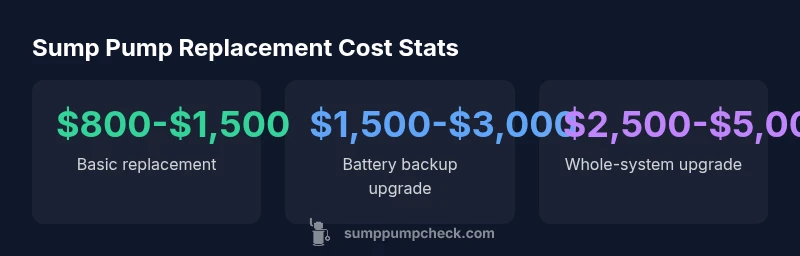
| Basic replacement | $800-$1,500 | New pump, basic wiring, standard discharge |
| Standard replacement with upgrades | $1,200-$2,100 | New pump, discharge line, check valve, testing |
| Battery backup upgrade | $1,500-$3,000 | Backup power source, wiring, battery maintenance |
| Whole-system upgrade | $2,500-$5,000 | High-efficiency pump, smart controls, waterproofing considerations |
| Regional/permit-influenced | $1,000-$4,000 | Permits, inspections, regional labor variance |
FAQ
What is the typical cost to replace a sump pump?
A typical replacement runs roughly from $800 to $2,500 for a standard setup, depending on pump type and labor. Upgrades like battery backups or smart controls can push costs higher. Always request a detailed estimate that distinguishes parts, labor, and any permits.
Typically between eight hundred and twenty-five hundred dollars, depending on pump type and upgrades. Get a detailed estimate that separates parts, labor, and permits.
Should I buy a battery backup when replacing?
Yes. A battery backup adds protection during power outages, which are common during floods. It increases upfront cost but can prevent expensive flood damage and reduce emergency calls.
Yes, a battery backup is usually worth the extra cost for flood protection during outages.
Do permits affect costs?
Permits can add to the total cost, depending on local regulations. Some areas require inspections for sump pump replacements, which adds time and fees but helps ensure code compliance.
Permits can add time and fees, but help ensure the job meets local codes.
How long does installation take?
Most standard replacements take a few hours to a full day, depending on pit condition, pit size, and any required pipe work. Complex jobs with upgrades may take longer.
Most installs take a few hours to a full day, depending on complexity.
Is DIY sump pump replacement feasible?
DIY may save labor costs, but electrical, plumbing, and code issues can create safety risks. If you’re not confident with electrical wiring and plumbing, hire a licensed pro.
DIY can be risky; hire a pro if you’re not confident with electrical and plumbing work.
Will homeowners insurance cover replacement?
Most homeowners policies do not cover the replacement cost itself, but flood-related damage may be covered. Check your policy and discuss with your insurer and installer.
Insurance usually covers flood damage, not the replacement cost itself. Verify with your insurer.
“"Proper installation and thoughtful upgrades protect your home from flooding and often pay for themselves over time. Budget smartly by weighing upfront costs against long-term reliability."”
Top Takeaways
- Assess pump type and features to set a realistic budget
- Budget includes both parts and labor, plus potential permits
- Upgrades raise cost but improve reliability and resilience
- Request itemized quotes to avoid hidden charges
- Include a maintenance plan to extend replacement life