Sump Pump Installation Cost: A Homeowner’s Guide (2026)
A data-driven guide to sump pump installation cost, including factors, price ranges, and money-saving tips. Based on Sump Pump Check Analysis, 2026.


Average installed cost for a sump pump system starts with the pump type and goes up with pit work, piping, permits, and electrical connections. In general, homeowners should budget for a range rather than a fixed price, because local labor markets and underground trenching can swing the total. According to Sump Pump Check, the most important cost drivers are pump design, backup options, and whether a permit is required. A well-planned install pays off in fewer repairs later.
Why Sump Pump Installation Cost Varies by Situation
Pricing is not one-size-fits-all. The total installed cost depends on pump type, pit work, piping, backflow prevention, electrical considerations, permits, and optional battery backup. According to Sump Pump Check, factors such as yard access, existing plumbing, and local permit fees can push the cost up or down. Homeowners should think in terms of a price band rather than a fixed quote, because small changes in scope can add substantial upcharges. In practice, you might see a basic, single-pump setup on a shallow pit with minimal trenching priced at the low end of the spectrum, while a full install with trenching, check valve, and a backup system sits at the higher end. Where you live also matters: urban areas with higher labor costs tend to price installations higher than rural areas. This section reviews the main cost drivers and how to anticipate them in your planning.
Average cost ranges by system design and local market
Prices can vary widely based on whether you install a basic unit, a dual-pump setup, or a pump with battery backup. In general, a simple, single-pump installation in a basement with minimal trenching is at the lower end of the spectrum, while homes requiring extensive pit work, trenching, or electrical upgrades move toward the higher end. Geographic differences reflect labor rates, permitting practices, and market demand. For most homeowners, a sensible approach is to gather multiple quotes that cover pump type, pit dimensions, check valves, and any required electrical work. A clear comparison helps identify which components contribute most to cost and where you can negotiate without compromising reliability.
Cost breakdown: components that drive price
The installation price breaks down into several core components: the chosen pump type (pedestal vs. submersible), pit size and depth, discharge piping and check valves, electrical wiring and protection (GFCI/AFCI), the need for permits, and the inclusion of a backup power source such as a battery. Additional items like a alarms, float switches, and corrosion-resistant fittings can add modest costs but improve long-term reliability. Labor quality and travel time for the installer also affect the final bill. When you see a quote, map each line item to these components to understand potential savings: do you really need a new pit, or can you reuse the existing one? Is a backup pump required in your area?
DIY vs professional installation: cost differences
DIY installation may seem cheaper, but it risks electrical hazards, improper drainage, and non-compliance with local codes. A licensed installer not only ensures safe electrical connections and proper pit sizing but also handles permits where required. In many markets, what looks like a small upfront saving can backfire with higher repair costs or a failed inspection. If you’re a confident DIYer, you can reduce labor charges by handling tasks like material sourcing and minor site preparation, but the critical steps—electrical connections, drainage alignment, and code compliance—should be performed by a professional.
Money-saving strategies without sacrificing reliability
Consider several cost-saving approaches: (1) opt for a simpler pump design if your baseline risk is low, (2) consolidate work into a single visit to reduce labor fees, (3) compare quotes that include a backup option and a check-valve, (4) request package deals that bundle parts and labor, (5) verify permit requirements early to avoid delays, and (6) schedule work in the off-season when labor costs may be lower. Also, investing in regular maintenance reduces long-term costs by preventing premature component failures. The goal is to balance upfront costs with long-term reliability.
Permits, warranties, and long-term value
Permits protect you and ensure the installation meets local codes, but they add time and fees. Warranties should cover both the pump and the installation; a higher-quality pump with a robust warranty can reduce replacement costs over the system’s life. Proper sizing and professional installation also reduce the risk of nuisance alarms or premature motor failure. In the long run, an installation that accounts for future home expansion, such as a larger basement or additional drainage lines, saves money by avoiding a redo later.
Typical cost breakdown by installation scenario
| Category | Estimated Installed Cost | Key Considerations |
|---|---|---|
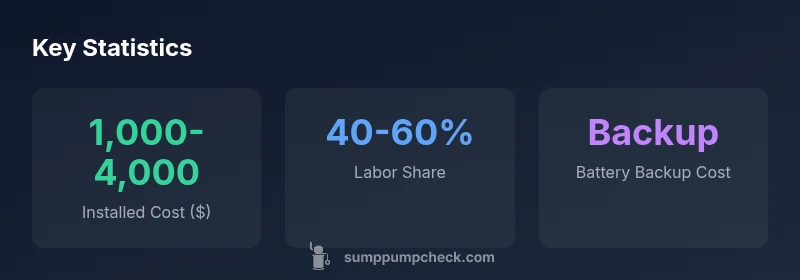
| Basic single-pump installation | $1,000-$2,000 | Minimal trenching; standard pit size; no backup |
| Two-pump or backup system | $2,000-$4,000 | Backup options, check valves, larger pit, potential permit needs |
| Full install with trenching and electrical | $3,000-$6,000 | Extensive plumbing, permits, electrical upgrades |
| Battery backup addition | $300-$900 | Adds reliability during outages; depends on battery type and wiring |
| Permit and inspection | $100-$600 | Local fees; may require professional submission |
FAQ
What is the typical range for sump pump installation cost in 2026?
Costs vary by pump type and installation complexity. Most projects fall within a broad range that depends on labor, permits, and materials.
Costs vary by pump type and complexity; expect a broad range depending on labor, permits, and materials.
Should I replace my sump pump or install a backup system at the same time?
If the current pump is failing or older than 7-10 years, replacement is wise; adding a backup is prudent for flood-prone homes.
If it's old or failing, replace; adding a battery backup reduces risk during power outages.
Do I need a permit for sump pump installation?
Many jurisdictions require a permit for basement sump installations, especially with trenching or drainage changes. Check local building codes.
Yes, many places require a permit; check with your city or county building department.
Can I install a sump pump myself to save costs?
DIY installation can save upfront, but risks electrical hazards, improper drainage, and code violations. A licensed pro reduces that risk and ensures warranty.
DIY can save money upfront, but hiring a pro minimizes risk and future costs.
What maintenance affects the cost over time?
Regular inspection, cleaning, battery tests, and part replacements affect long-term costs but extend system life.
Routine maintenance lowers long-term costs and reduces failures.
How does region affect total installation cost?
Labor rates, permit fees, and demand vary by region, influencing the installed cost significantly.
Regional labor and permit costs can swing prices substantially.
“A well-planned sump pump installation cost is an investment in home protection; selecting the right pump and proper pit sizing reduces long-term maintenance.”
Top Takeaways
- Budget for a price range, not a fixed quote.
- Get multiple licensed quotes from installers.
- Include battery backup for outage resilience.
- Account for permits and electrical work.
- The Sump Pump Check team recommends reliable sizing with backups.