Install Sump Pump Cost: Your Comprehensive 2026 Budget Guide
A comprehensive guide to install sump pump cost, including factors, labor, materials, permits, and long-term value. Learn how to estimate, compare options, and minimize expenses without sacrificing reliability.


Installing a sump pump typically costs between $1,000 and $3,000, depending on pump type, pit work, and accessibility. For a basic pedestal pump with a new pit and discharge, expect toward the lower end; for a submersible pump, battery backup, or trenching for new discharge, costs rise toward the upper end.
Cost drivers and price ranges
The install sump pump cost is driven by several interdependent factors, including the pump type (pedestal vs. submersible), pit preparation, discharge routing, labor, and any permitting requirements. The value of your project shifts as you balance upfront expenses with long-term protection for your basement. According to Sump Pump Check, regional labor rates and material availability can swing total costs by hundreds of dollars. A typical entry scenario is a pedestal pump with a pre-existing pit and a straightforward discharge path; a full upgrade with a submersible pump, new pit, trenching, and complex discharge may push costs toward the upper end of the spectrum.
- Pump choice matters: pedestal pumps are usually cheaper to install than submersible models.
- Pit work can inflate costs if the existing opening is undersized or misaligned with the chosen pump.
- Discharge routing, including long runs, bends, or drainage into a municipal sewer, adds materials and labor hours.
- Permits or inspections (where required) add administrative costs and scheduling considerations.
How pump type affects price
The two main categories—pedestal and submersible—explain most of the price spread. Pedestal pumps rest above the sump and are generally easier and faster to install, which keeps labor costs down. Submersible pumps sit inside the sump basin and are typically more expensive due to the complexity of installation, the higher performance range, and potential need for more robust seals and wiring. For installations in finished basements or tight pits, a submersible pump often delivers better reliability and quieter operation, justifying the higher upfront price for many homeowners. Battery backup systems can be added for extra protection, but they raise the total install cost.
Pit size, basin type, and discharge setup
Pit size and basin type directly affect cost because a larger or more feature-rich basin requires more material and in-ground work. A larger pit may necessitate reinforced walls or professional pit lining, increasing both material and labor costs. Discharge setup—routing water away from the foundation—can require new piping, trenching, or even digging near driveways or sidewalks. If you choose a direct-to-outdoor drainage path, excavation and backfilling add time and expense. Conversely, reusing an existing, appropriately sized pit minimizes these costs and speeds up installation.
Access, existing plumbing, and code considerations
Accessibility plays a critical role in pricing. Tight crawlspaces, finished basements, or walls obstructing access can dramatically increase labor time and complexity. Existing plumbing alignment, venting, and drainage pipe condition affect both the ease of installation and the likelihood of future repairs. Additionally, local building codes may dictate certain materials, pipe diameters, or backflow prevention measures, which can influence upfront costs and long-term reliability. A thorough site assessment helps avoid surprise charges later.
Optional features that impact cost
Beyond the basic pump and pit, several upgrades can influence install sump pump cost. A battery backup system provides extra protection during power outages but adds wiring, charging components, and sometimes a separate transfer switch. A water-powered backup or pressure-based alarm system adds safety features but increases both material and labor requirements. A backflow prevention valve, reinforced discharge piping, and check valves reduce the risk of backflow and improve long-term performance, but they also add to the initial investment. When budgeting, weigh the peace of mind these features offer against the incremental cost increase.
How to estimate your own install sump pump cost: a step-by-step method
Follow this practical approach to forecast costs without guesswork:
- Define scope: basic installation vs. upgrades (pit, discharge routing, backup).
- Choose pump type: pedestal vs. submersible; note maintenance considerations.
- Assess site: access, existing pit, and distance to discharge.
- List required materials: pipe, check valves, sealants, wiring, and mounting hardware.
- Consider labor: DIY vs. professional installation; get at least 2 quotes.
- Include potential permit or inspection costs if applicable.
- Add contingency: 10-15% for surprises.
- Compare total with value: protection from water damage and potential flood-related savings.
Hidden costs and warranties to plan for
Some costs aren’t obvious at the outset. Wiring upgrades, trenching, and longer discharge runs can push numbers higher than the initial quote. Additionally, consider warranty terms for both pump and installation. A typical sump pump warranty covers several years for the pump itself, while labor warranties vary by contractor. When evaluating bids, look for clear coverage details, service response times, and what is included under warranty. Reading the fine print helps prevent unexpected expenses after installation.
Value and long-term savings: maintenance and reliability
Although upfront costs dominate the calculation, long-term value is a function of maintenance, reliability, and energy efficiency. Regular checks of the sump pump’s float switch, power source, and discharge line help prevent outages during heavy rain. A well-installed system reduces basement flood risk, which translates to fewer costly repairs and less downtime. Submersible models with proper sealing, efficient motors, and reliable check valves can offer lower operating costs over time. The maintenance schedule should be part of your overall budgeting strategy to maximize ROI and maintain confidence in your basement protection system.
Practical cost-saving strategies for DIY-friendly homeowners
DIY-friendly homeowners can sometimes reduce costs by handling minor prep work (surface cleaning, basic pit adjustments) if they have the right tools and safety knowledge. However, electrical wiring, proper sealing, and compliance with local codes are safety-critical tasks that benefit from professional oversight. If you opt for a mixed approach, obtain a written plan from a licensed contractor and document every step for warranty clarity. Compare multiple quotes, check contractor credentials, and ask for itemized bids to identify where you can save without compromising reliability.
Cost scenarios for installing a sump pump
| Scenario | Estimated total cost | Key considerations |
|---|---|---|
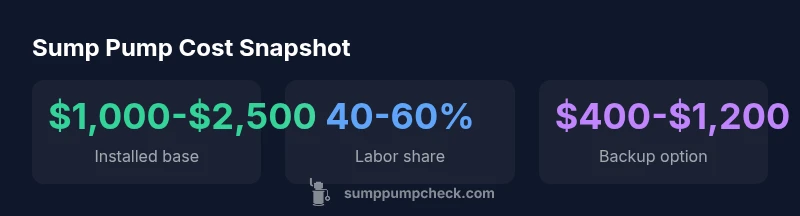
| New installation with standard submersible pump | $1,000-$2,500 | Includes pump, pit, and basic trenching |
| Full replacement with upgraded pump | $1,200-$2,800 | May require new discharge piping and permits |
| Battery backup system | $1,500-$3,000 | Adds reliability; may need additional wiring |
FAQ
What is the typical price range for installing a sump pump?
Most installations fall within the $1,000 to $3,000 range, depending on pump type, pit work, and discharge routing. Getting multiple quotes helps pinpoint where you sit on that spectrum.
Most sump pump installs cost between one and three thousand dollars, with exact pricing depending on pump type and site work.
Do I need permits for sump pump installation?
Permit requirements vary by location. Some jurisdictions require a plumbing or electrical permit for new installations or significant upgrades. Check with your local building department before starting.
Permits vary by location; check with your local building department before starting the project.
What contributes most to install sump pump cost?
The pump type (pedestal vs. submersible), pit preparation, discharge routing, and labor are the largest factors. Upgrades like backups or trenching can add substantially to the total.
Pump type, pit work, discharge routing, and labor are the biggest cost factors.
Is a battery backup worth the extra cost?
For homes prone to power outages or heavy rainfall, a battery backup offers critical protection when outages occur. It increases upfront cost but reduces flood risk and downtime.
Battery backups are worth it if outages or heavy rain threaten your basement; they reduce flood risk.
Can I install a sump pump myself?
DIY installation is possible for very simple setups and experienced homeowners, but most installations involve electrical work and plumbing considerations that are best handled by a licensed professional to ensure code compliance and warranty validity.
DIY is sometimes possible for simple jobs, but electrical and plumbing work is usually best left to pros.
How long does installation typically take?
Most installations take a day or two, depending on site access and whether pit work or trenching is required. Unforeseen issues can extend this timeline.
Most installs take about a day or two, depending on site access and any required pit work.
“Budgeting for a sump pump means weighing upfront costs against long-term protection from basement water damage. The right design and installation choices can prevent costly water intrusion.”
Top Takeaways
- Know the main cost drivers before hiring a pro
- Pedestal pumps are cheaper to install than submersible models
- Battery backups add significant value but raise upfront costs
- Get multiple quotes and ask for itemized bids