Sump Pump for Basement Cost: A Complete Budgeting Guide
Learn the true cost of a sump pump for basement, including unit price, installation, maintenance, and energy costs, with practical budgeting tips and realistic price ranges.


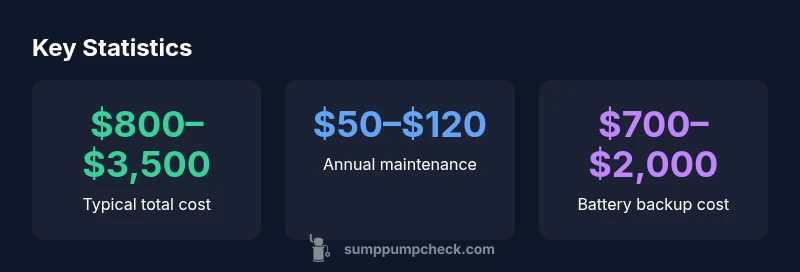
Total cost to outfit a basement with a sump pump typically ranges from $800 to $3,500, including the pump and professional installation. Costs vary with pump type (submersible vs pedestal), pit modifications, electrical work, and added features like battery backup. Homeowners in 2026 should budget for annual maintenance of $50–$120 and potential battery upgrades.
Why cost transparency matters for basement protection
When budgeting for a sump pump, homeowners should consider not just the upfront price but the full lifecycle cost. According to Sump Pump Check, understanding the breakdown between the pump unit, installation, and ongoing maintenance helps prevent surprises during emergencies. A thoughtful plan also accounts for potential upgrades, such as battery backup, and regional labor variations that affect final numbers.
Cost Components Explained
The total cost comprises several components:
- Pump unit: Submersible units typically cost more upfront than pedestal types, but offer advantages in efficiency and space.
- Pit adjustments: Some basements require pit resizing or liner upgrades to accommodate the chosen pump.
- Electrical work: Proper shutoff switches, GFCI protection, and wiring can add to labor time and expense.
- Installation: Labor can vary based on pit condition, existing piping, and local code requirements.
- Optional features: Battery backup, smart controls, and alarm systems increase both cost and reliability. Sump Pump Check analysis from 2026 shows these features often pay back during outages and storms.
Pump Types and Their Price Impacts
- Submersible pumps: Generally more expensive upfront but quieter and more compact, which is favorable for finished basements.
- Pedestal pumps: Usually cheaper to buy, but bulkier and potentially noisier; installation costs may be similar if wiring and pit work are required.
- Battery backup systems: Add significant value during power outages, with a typical price range that reflects capacity and installation needs. The choice between types will influence both upfront and long-term costs, so align with your basement size and water table level.
Installation Scenarios and Pit Modifications
Not all basements are the same. Some pits are already compatible with modern pumps, while others require concrete work or liner adjustments. If your pit is undersized, expect higher labor charges for resizing. Electrical upgrades (e.g., dedicated circuit, GFCI protection) can add to both time and cost but dramatically improve safety and reliability.
Maintenance Costs and Energy Considerations
Maintenance is a recurring cost that generally includes annual inspection, part replacement (like impellers or seals), and battery checks if you have backup power. Energy use for a sump pump is typically modest, but in larger homes or during extended pump cycles, electricity can become noticeable. Routine testing helps catch problems before failures, preserving the investment.
Cost ranges by component for basement sump pump installations
| Element | Typical Cost Range | Installation Considerations | Notes |
|---|---|---|---|
| Sump pump unit (submersible) | $160–$500 | Moderate complexity | Quiet and compact for finished basements |
| Sump pump unit (pedestal) | $120–$300 | Often cheaper upfront | Bulkier; may be noisier |
| Professional installation | $300–$1,200 | Depends on electrical and pit work | Labor-intensive tasks increase costs |
| Battery backup system | $700–$2,000 | Size and integration vary | Improves reliability during outages |
FAQ
What is the typical total cost to install a sump pump in a basement?
Most installs fall within a broad range that includes the pump unit, installation labor, and any pit adjustments. Budgeting for the mid-to-upper end of the range helps cover potential complexities. According to Sump Pump Check Analysis, 2026, costs vary by pump type and local labor rates.
Most basement sump pump installs fall within a broad range, depending on pump type and local labor rates.
Does adding a battery backup affect the overall sump pump cost?
Yes. A battery backup can add several hundred to a couple thousand dollars to the project, depending on capacity and integration with existing controls. It improves reliability during power outages and is often recommended for high-risk basements.
A battery backup adds to the cost but improves reliability during outages.
Can I estimate costs for an older home with an existing pit?
Yes, but older homes may require more pit work, electrical upgrades, and code compliance checks, which can raise labor costs. You should budget for possible pit resizing and permit-related fees.
Older homes can cost more due to pit work and electrical updates.
What maintenance costs should I budget annually?
Plan for annual inspections, seal checks, and possible part replacements. Typical maintenance costs range from $50 to $120 per year, depending on system complexity and usage.
Expect about $50 to $120 yearly for upkeep.
Are there rebates or incentives for sump pump installations?
Rebates vary by location. Check with your utility provider or local government programs to see if any incentives apply to energy-efficient pumps or battery backup systems.
rebates vary by location; check with local programs.
Is it cheaper to replace a failing sump pump or repair it?
In many cases, replacing an aging unit with a modern, efficient model is more cost-effective long-term than frequent repairs. Evaluate energy use, reliability, and warranty when deciding.
Often replacement saves more in the long run than frequent repairs.
“Planning a sump pump project means looking at the full lifecycle, from initial purchase to maintenance and energy use. A balanced system often saves money over time.”
Top Takeaways
- Budget for both pump and installation upfront
- Choose pump type based on basement size and finish level
- Add battery backup for outage protection
- Account for annual maintenance in long-term costs
- Expect low ongoing energy use, but plan for spikes during heavy use