Cost of Basement Sump Pump: Budgeting for Installation and Maintenance
Discover the true cost of basement sump pumps—from unit price to installation, backups, and maintenance—and get practical budgeting tips, hidden-fee alerts, and guidance for comparing quotes.


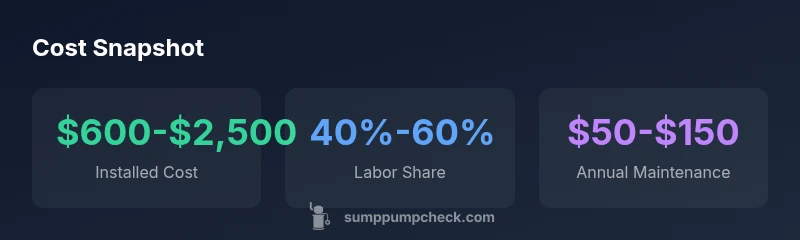
The cost of basement sump pump projects typically runs about $600 to $2,500, with most homeowners budgeting $1,200 to $1,800 for a standard submersible unit and professional installation. Prices depend on pump type, local labor rates, and whether existing discharge piping can be reused. According to Sump Pump Check, careful planning helps you avoid surprises.
Understanding the total cost: what goes into the price
The total cost to add or replace a basement sump pump includes the pump unit, installation, and any related work. The pump itself can vary widely in price depending on capacity, material, and features (manual vs automatic float, built-in alarm, or battery backup). On installed systems, typical ranges are $600–$2,500, with most homeowners budgeting around $1,200–$1,800 for a standard submersible model and professional installation. Labor rates change by region, and if trenching or reworking existing piping is needed, prices rise. If you can reuse an existing discharge line or minimize electrical work, you may shave a portion of the cost. The Sump Pump Check analysis emphasizes planning for required flow, head pressure, and backup power from the start to avoid surprises in the final invoice. When you receive quotes, ensure each line item is clear: pump price, installation, piping, fittings, electrical work, and any permit fees. A transparent quote makes comparing options easier and helps you choose long-term value.
Cost ranges by pump type and features
Pricing for basements sump pumps varies with features. Submersible models often cost more upfront than pedestal units due to sealing and higher capacity, with unit prices commonly ranging from $100–$500. Pedestal pumps can be cheaper, typically around $80–$350 for the unit. Installed costs for a typical setup usually fall in the $600–$2,500 range, depending on labor and materials. Optional battery backup systems add roughly $150–$600 to the total, while features such as automatic float switches, alarms, and water-powered backups may add $50–$300 per feature. Larger pumps designed for higher flow or homes with aggressive groundwater can push costs toward the upper end. If your discharge line requires upgrades or a new trench, expect additional materials and labor.
Regional price variation and installation complexity
Prices vary by region due to labor markets, permit requirements, and local code expectations. Urban areas often carry higher labor rates and more frequent inspections, which can raise the installed cost. In contrast, rural areas may offer lower rates but require additional scheduling or access considerations. Installation depth and pit size also influence price: deeper pits, more concrete work, or tighter basements can add to both material and labor costs. The cost of basement sump pump projects can shift by a few hundred dollars depending on accessibility and crew availability. Planning with a local contractor who understands your municipal requirements helps keep surprises to a minimum.
Hidden costs and common add-ons
Beyond the basic pump and install, many projects incur hidden or optional costs. A check valve, backflow prevention devices, and discharge piping upgrades add to the bill. Electrical work—such as a dedicated GFCI outlet or a connection to a home’s main panel—may require an electrician and permits. Old sump pits sometimes need lining or reinforcement, and disposal of an old unit can carry a small fee. Battery backups, alarms, and monitoring systems provide resilience but add to the initial cost. To avoid sticker shock, request a detailed quote that itemizes pump, labor, piping, electrical, permits, and any accessories.
Strategies to reduce cost without compromising reliability
- Opt for standard features first: a reliable submersible pump with essential protections often meets most homes’ needs.
- Bundle services: ask about combined installation with other basement waterproofing or drainage work to gain vendor discounts.
- Compare multiple quotes: ensure each quote breaks out pump price, labor, piping, electrical, and permits so you can compare apples to apples.
- Consider a backup option upfront: battery backups improve resilience and may be more cost-effective if added later.
- Schedule off-season: some contractors offer lower rates during off-peak periods.
What to expect in a professional quote
A quality quote should present a clear line-item breakdown: pump model and price, labor/installation, piping and fittings, electrical work, permit fees, disposal of old equipment, and warranty terms. Look for a transparent warranty on the pump and a reasonable installation warranty. If the quote is vague, ask for specifics on pump capacity, head height, and expected run-time during peak use. A comprehensive quote helps you compare options and plan for maintenance across years. The Sump Pump Check team recommends prioritizing long-term reliability and serviceability when budgeting rather than chasing the lowest upfront price.
Typical cost breakdown for basement sump pump projects
| Cost Component | Typical Range (installed) | Notes |
|---|---|---|
| Sump Pump Unit (submersible) | $100-$500 | Basic to mid-range models |
| Labor & Installation | $300-$1,000 | Professional install; varies by region |
| Discharge Piping & Check Valve | $50-$400 | Materials and fittings included |
| Electrical & Permits | $80-$400 | Outlet, wiring, and permit fees |
| Battery Backup (optional) | $150-$600 | Adds resilience and run-time |
FAQ
What is the typical cost range for installing a basement sump pump?
Most installations fall in the $600–$2,500 range, depending on pump type, features, and local labor rates. A standard setup commonly sits around $1,200–$1,800. Always request a breakdown with pump, labor, piping, electrical work, and permits.
Most installs cost between six hundred and twenty-five hundred dollars, with typical setups around twelve hundred to eighteen hundred dollars. Get a line-by-line quote.
Should I install it myself or hire a pro?
Electrical work and drainage work in basements carry safety and code risks. Hiring a licensed pro ensures correct sizing, code compliance, and reliable operation. DIY can save upfront costs but may incur higher long-term risk.
Electrical and drainage work in basements is best left to a licensed professional to ensure safety and code compliance.
Do I need a battery backup for my sump pump?
A battery backup is highly recommended for reliability during power outages or heavy rainfall. It adds roughly the cost of a booster system but greatly reduces the chance of a flooded basement during outages.
Battery backups are highly recommended; they provide protection during power outages and heavy rains.
How long does installation typically take?
Most residential installations take one to two days, depending on pit accessibility, trenching needs, and whether existing piping can be reused.
Most installs take one to two days, depending on access and piping work.
What maintenance costs should I expect annually?
Expect a basic maintenance check annually, with possible minor costs for part replacements or battery backups. Regular testing helps prevent unexpected failures.
Annual checks are simple and protect against unexpected failures. Expect occasional minor part costs.
What should I include in a quote to compare options fairly?
Look for a breakdown by pump, installation, piping, electrical work, permits, disposal, and warranty terms. Ensure the pump capacity and head height are specified.
Get a line-item breakdown and specify pump size and head height to compare quotes accurately.
“Budget for both the initial unit and installation, plus essential backups and maintenance. A well-planned setup pays off in reliability and peace of mind.”
Top Takeaways
- Set a realistic budget range before shopping.
- Compare line-item quotes, not just total price.
- Factor in backups and maintenance for long-term value.
- Expect regional price variation and potential permits.
- Choose reliability over the lowest upfront cost.