Submersible Sump Pump Cost: A 2026 Guide
Discover realistic cost ranges, installation factors, and long-term value for submersible sump pumps. Learn how horsepower, backup options, and regional labor affect the total price in 2026.


According to Sump Pump Check, the typical total first-year cost for a submersible sump pump—including purchase and installation—ranges from $600 to $1,800, with battery-backup upgrades raising the ceiling toward $2,500. This article breaks down the main cost drivers, price bands by feature, and how long-term savings can affect your return on investment.
Overview: Understanding the submersible sump pump cost
The total submersible sump pump cost encompasses more than the pump itself. Homeowners typically pay for the unit, a basin if needed, discharge piping, check valve, electrical supply work, and professional installation. The submersible sump pump cost is influenced by horsepower (e.g., 1/3 HP vs 1/2 HP), the build material (cast iron vs. reinforced plastics), and included safety features such as alarms or float switches. In practice, the upfront price is only one part of the economic picture; the long-term value comes from reliability, energy use, and flood prevention. According to Sump Pump Check, most households see substantial ROI when a properly installed submersible unit avoids basement flooding, which saves on water damage remediation costs over time.
Price drivers: horsepower, materials, and features
Price bands are driven by several core choices. Higher horsepower pumps deliver greater water removal capacity, but they cost more upfront. Materials—cast iron housings tend to last longer and resist corrosion better than some plastic housings, yet plastic can be lighter and cheaper. Features like integrated alarms, moisture sensors, and auto-reset float switches increase convenience and protection but add to the price. A well-chosen combination of horsepower and features reduces the risk of nuisance failures during heavy rain, which can save money by avoiding emergency repair calls.
Price bands: basic to premium models
- Basic/basic-plus: $100–$250 for pump unit; installation adds $200–$500, total often around $400–$750. These models cover essential pumping with minimal extras.
- Mid-range: $250–$500 for pump unit; installation adds $300–$700, total typically $550–$1,200. Features may include durable housings and better float switches.
- Premium with backups: $500–$900+ for pump; installation $500–$1,000; total often $1,000–$1,800, with battery backups or alarms pushing higher. Battery backups can add $120–$700 to the upfront cost but improve reliability during power outages.
Installation costs and labor factors
Installation cost varies with the complexity of the basement and existing plumbing. If a new discharge line or special pit is required, or if electrical work demands a permit and a dedicated circuit, labor charges climb. Local labor rates, accessibility of the sump basin, and whether trenching is needed for outdoor discharge all influence price. In most markets, a straightforward replacement with minimal pit work sits at the lower end of the spectrum, while complete overhauls or new installations push the total higher.
Battery backups, alarms, and safety features
Battery backups provide protection during outages but sharply increase upfront cost. They also extend the system’s useful life by ensuring continuous operation during storms. Alarms, level indicators, and auto-fill features add peace of mind but come with added components and wiring complexity. For homes in flood-prone areas, the extra investment in a battery backup often pays for itself through reduced flood damage risk and labor costs to remediate water intrusion.
Regional variation and contractor pricing
Prices vary by region due to labor costs, permit requirements, and availability of skilled technicians. Urban areas may see higher installation costs but access to quicker service, whereas rural regions might offer lower labor rates but longer wait times. Sump Pump Check analyses indicate regional cost differences can account for a meaningful portion of the total installed price, so obtaining 3–4 quotes is a prudent step before committing.
Operating costs and long-term value
Energy consumption for submersible sump pumps is typically modest, especially with efficient motors. An energy-conscious model can reduce yearly electricity costs, which compounds with the preventive value of flood protection. When evaluating cost, consider not only the upfront purchase and installation but also potential savings from avoiding flood damage, reduced pump runtime due to efficiency, and longer service life with quality components.
Submersible vs pedestal: price and maintenance
Submersible pumps live in the sump basin and are sealed to resist water intrusion, often delivering quieter operation and easier removal for maintenance. Pedestal pumps sit outside the basin and may require less expensive installation but can be louder and require more space. For cost considerations, pedestal units generally start with lower upfront prices, but reinstallation of plumbing and potential future upgrades can offset those savings. In many cases, the better long-term value is a well-matched submersible unit with proper installation.
Buying tips and gotchas: buy smart, not fast
Before purchasing, define your flood risk, basin size, and power availability. Verify warranty terms, ensure the unit is appropriately rated for your expected water flow, and confirm that proper discharge piping and a check valve are included. Don’t overlook permits or electrical work required by local codes. Finally, ask about service after install—availability of local technicians can greatly affect long-term performance and cost.
Typical installed cost components for a submersible sump pump
| Component | Typical Cost Range | Notes |
|---|---|---|
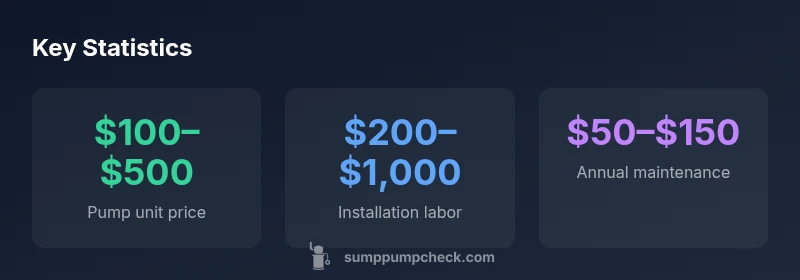
| Pump unit (submersible) | $100–$500 | Price varies by HP and features |
| Installation labor | $200–$1,000 | Depends on pit, wiring, and permits |
| Battery backup kit | $120–$700 | Adds resilience but increases upfront cost |
| Discharge piping & check valve | $50–$300 | Essential upgrades if needed |
| Total installed cost (basic) | $400–$1,800 | Range based on setup and region |
FAQ
What is the typical cost range for a submersible sump pump?
A typical submersible sump pump costs between $100 and $500 for the unit, with installation pushing total installed price to roughly $400–$1,800 depending on pit work and regional labor rates. Battery backups and advanced features can raise the ceiling further.
In short, most homes pay a few hundred dollars for the pump plus installation, with backups driving the price higher.
How much does installation usually cost?
Installation typically ranges from about $200 to $1,000, depending on pit size, electrical work, and whether new discharge piping or permits are required. Complex installs in tight spaces or high-demand regions rise toward the upper end.
Installation costs vary a lot with your basement setup and local permit requirements.
Is a battery backup worth it?
Yes for homes prone to power outages or heavy storms. A backup increases upfront cost but reduces flood risk during outages, often delivering strong long-term value.
Battery backups are a smart safety net for power outages and severe weather.
What maintenance costs should I expect annually?
Annual maintenance is typically modest, often around $50–$150 for routine checks and minor component replacements. Regular testing helps prevent bigger problems later.
Maintenance is usually a small annual expense if you service it regularly.
Should I choose submersible vs pedestal based on cost?
Submersible units are often pricier upfront but offer quieter operation and better protection against moisture. Pedestal pumps may be cheaper initially but can incur higher long-term costs due to wear and maintenance.
Submersibles tend to be the better long-term value despite higher upfront cost.
Do prices vary by region?
Yes. Regional labor rates, permit requirements, and availability of skilled installers can cause price variation. Get multiple quotes to gauge the local market.
Regional pricing varies; get several quotes to compare.
“When budgeting for a submersible sump pump, think beyond the sticker price. A reliable model paired with proper installation and a battery backup can halve the risk of basement flooding and save money over the long run.”
Top Takeaways
- Define your flood risk and sump basin size before shopping
- Expect installation to influence total cost as much as the pump itself
- Battery backups add cost but improve reliability
- Compare total installed cost, not just unit price
- Maintenance remains relatively affordable over time