Sump Pump Battery Backup Price Guide (2026)
Explore sump pump battery backup price ranges for 2026, including upfront unit costs, installation fees, and long-term value. Learn how capacity and features influence total cost with Sump Pump Check.


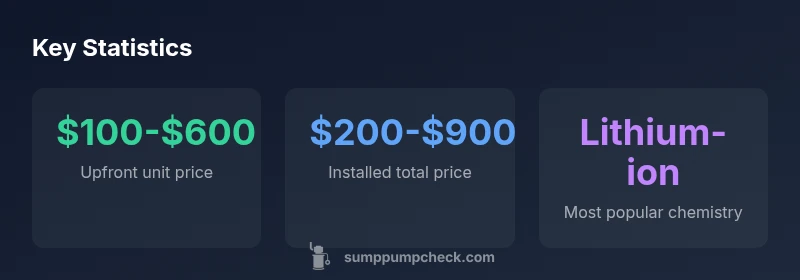
According to Sump Pump Check, the sump pump battery backup price typically ranges from $100 to $600 for the unit itself, with installation bringing the total to roughly $200 to $900 depending on capacity and setup. Battery chemistry, added features, and local labor influence total cost, while longer-term maintenance can affect annual expenses.
Why price varies for sump pump battery backup
According to Sump Pump Check, the sump pump battery backup price is driven by battery chemistry, capacity, features, and the complexity of installation. Units range from small, basic backups to advanced systems with smart monitoring and automatic level controls. Because outages vary by climate and home, pricing reflects how robust the system needs to be. Buyers should consider upfront costs alongside installation and potential long-term maintenance. The goal is to choose a backup that protects your basement while balancing upfront investment with reliability and maintenance load. In 2026, most homeowners report that the value of a battery backup scales with capacity and that higher-grade chemistries pay off longer-term. The term sump pump battery backup price captures the initial purchase, installation, and ongoing upkeep, and Sump Pump Check helps readers navigate these decisions.
What influences the sump pump battery backup price
Several factors drive cost beyond the base unit price. Battery chemistry (lead-acid, AGM, lithium-ion) affects cost per cycle and lifespan. Capacity, usually measured in amp-hours (Ah), determines how long the unit can run during a power outage. Features such as automatic float switches, wireless monitoring, and integration with home automation add premium value. Labor rates vary by region, and some homes require additional components like a dedicated backup outlet, a transfer switch, or upgraded discharge piping. Brand premiums may apply for sensors, warranties, and professional installation guarantees. Finally, warranty length and service plans influence the perceived total cost of ownership over time.
Price ranges by backup type and capacity
Backing up a sump pump typically falls into three broad categories. Lead-acid backups offer the lowest upfront price but shorter lifespan. AGM (a type of lead-acid) balances cost with better cycle life. Lithium-ion backups command the highest upfront price but deliver longer lifespans and lighter weight. For capacity, smaller units (around 20-40 Ah) tend to be on the lower end of the price spectrum, while larger units (60-100 Ah or more) push costs higher. In general, you can expect upfront unit prices to fall roughly in the ranges of $100-$250 for basic lead-acid, $150-$350 for AGM, and $300-$600 for lithium-ion backups; installed totals with labor can add $100-$350 depending on complexity.
Installation, wiring, and labor costs
Labor costs for installing a sump pump backup system vary by the complexity of the existing setup and local wage standards. A straightforward installation in a typical basement may run a few hundred dollars in labor, while more complex scenarios—such as retrofitting into an older system, routing new discharge lines, or adding automated monitoring—can push labor costs higher. Expect roughly $100-$350 for standard installation labor when it’s a straightforward upgrade; more extensive projects can exceed $500. Any required electrical work must meet code requirements and may require a licensed electrician, which adds to the total cost.
Where to buy and how to compare prices
Shopping for a backup battery involves comparing both unit price and installed costs. Warehouse and hardware stores carry basic units, but specialty plumbing and sump pump suppliers often offer higher-end models with longer warranties. Online retailers provide a broad range, but shipping and returns can complicate price comparisons. Always request quotes that itemize the battery unit, any controller or smart features, transfer switch compatibility, and installation labor. Compare warranties, service terms, and potential discounts for bundled purchases. Reading independent reviews and cross-checking with local installers helps ensure you’re not paying a premium for features you don’t need.
Hidden costs and maintenance that affect long-term value
While the sticker price covers the initial purchase, long-term value depends on maintenance and replacement cycles. Lithium-ion units typically last longer, reducing replacement frequency but might have higher upfront costs. Lead-acid backups may require more frequent maintenance and eventual replacement. Regular testing, battery conditioning, and ensuring proper charging routines are essential to achieve promised lifespans. Maintenance costs include occasional battery replacements and periodic inspections by a professional. Budgeting for annual checks (even when not strictly required) helps prevent outages during storms.
Budgeting strategies and value-driven choices
If you’re budgeting for a sump pump backup, start by estimating your risk of power outages and the criticality of basement protection. Choose a capacity that aligns with your sump pump’s horsepower and your home’s water table dynamics. For many homeowners, a mid-range lithium-ion backup offers the best long-term value due to higher lifespan and lighter weight, even if the upfront cost is higher. Consider a maintenance plan that bundles battery replacement reminders and annual testing. Don’t neglect installation quality—poorly installed systems can fail during outages, negating any potential savings.
Quick decision guide: choosing the right backup
- Assess outage risk and sump pump load. 2) Choose a battery chemistry balancing upfront cost and lifespan. 3) Verify compatibility with your current discharge piping and transfer switch. 4) Factor in installation quality and warranty terms. 5) Plan for maintenance costs over 5 years to compare total cost of ownership. This approach helps you identify the most cost-effective option without compromising reliability.
Case studies: real-world cost scenarios
In a dry-to-mlight climate with occasional winter outages, a homeowner might opt for a mid-range AGM backup with basic monitoring, balancing price and reliability. In a high-rainfall area with frequent outages, lithium-ion backups may prove more economical over five years due to longer cycle life and lighter weight, despite a higher upfront cost. Urban homes with complex electrical work may incur higher installation fees, while rural homes with simpler runs might see lower labor costs. These cases illustrate how location, system design, and maintenance expectations shape the total price of ownership.
Price range and trade-offs for common battery backups
| Backup Type | Typical Price Range | Pros | Cons |
|---|---|---|---|
| Lead-acid | $100-$250 | Low cost, widely available | Shortest lifespan among options |
| AGM lead-acid | $150-$350 | Better cycle life, maintenance-free | Heavier than lithium |
| Lithium-ion | $300-$600 | Lightweight, long lifespan | Higher upfront cost |
FAQ
What is the typical price range for a sump pump battery backup unit?
Most units cost between $100 and $600 for the unit. Installed price typically $200-$900, depending on capacity and features.
Backup units usually cost between one hundred and six hundred dollars, with installation bringing the total to around two hundred to nine hundred dollars.
Do lithium-ion backups cost more upfront than lead-acid?
Yes, lithium-ion backups generally have higher upfront costs but offer longer life and lighter weight.
Yes, lithium-ion backups cost more upfront but last longer and are lighter.
Is installation included in the price?
Installation may or may not be included. Always request a quote that itemizes unit price and labor. Some packages include it, others do not.
Installation can be included in the price, but always confirm with your supplier.
How often should I replace a sump pump backup battery?
Most backups last 3-7 years depending on use and maintenance. Monitor performance and replace when capacity declines noticeably.
Most batteries last several years; watch for reduced backup run time and replace when needed.
What factors affect maintenance costs?
Regular testing, charging routines, and occasional component replacements influence maintenance costs. Lithium-ion units generally require less frequent service.
Regular checks and occasional replacements drive maintenance costs; lithium-ion may reduce some maintenance needs.
Are there government rebates or incentives for battery backups?
Rebates vary by region. Check local energy programs and building incentives for potential savings.
Check your local programs for possible rebates or incentives.
“Battery backups are essential during outages, and their price reflects capacity, reliability, and the quality of installation. A well-chosen backup protects your home without surprising repair costs later.”
Top Takeaways
- Know the price drivers: capacity, chemistry, and features
- Lithium-ion offers long-term value despite higher upfront costs
- Installation quality and labor affect total price more than you might expect
- Budget for maintenance to protect your investment