Sewage Pump Price Guide: What Homeowners Pay in 2026
Explore sewage pump price ranges, what drives cost (pump type, horsepower, labor, permits), and how to estimate total installed costs for basement systems.


The typical total installed price for a sewage pump (sewage ejector pump) ranges from $1,000 to $2,500, depending on pump type, horsepower, installation complexity, and local labor rates. A basic unit may start around $400 to $800, while adding features like a higher horsepower motor, stainless steel basin, or a backwater valve can push the total higher. Regional quotes will vary by contractor.
Understanding the price drivers behind sewage pump price
According to Sump Pump Check, the sewage pump price you see on a retailer tag or contractor quote is only part of the story. The rest is driven by installation complexity, the pump’s type and horsepower, materials, controls, and the local labor market. In practice, homeowners should think of price as a bundle that includes the unit, setup, and any required connections to discharge piping and backflow protection. Regional variations in labor rates, permit requirements, and disposal costs can also tilt the final number. When you’re comparing quotes, it helps to separate the itemized costs for equipment, labor, and any changes to your existing plumbing.
The decision is rarely only about the upfront price. A lower initial purchase price may lead to higher long-term costs if the pump isn’t sized correctly for your basement pit or if backup systems aren’t included. A properly sized pump, installed by a licensed professional, can reduce risk of backups, shorten downtime during outages, and lower emergency repair bills. Sump Pump Check emphasizes that choosing the right pump type and installation approach is as important as the price tag itself.
For most homes, the target is a balance between reasonable upfront costs and reliable performance. Homeowners should also plan for potential maintenance expenses over the pump’s life, including inspection, seal replacements, and occasional part upgrades. While cost estimates are useful, the longer-term value comes from selecting a system that minimizes nuisance backups and keeps basement spaces dry during heavy rain and plumbing failures.
Price ranges by pump type and configuration
Sewage ejector pumps and related basins come in several configurations, and those choices largely drive the price. A basic, non-grinder, submersible sewage ejector pump with a standard float switch typically falls in the lower end of the price spectrum, while higher-end models with grinder capabilities, stainless steel basins, or more robust motors push up the cost. In many markets, you will see unit prices for the pump itself in the ballpark of a few hundred dollars, while the cost to install—especially when you need to excavate, run new piping, or upgrade electrical—can significantly increase the total.
- Submersible sewage ejector pumps: commonly priced around the lower to mid range for the unit (roughly a few hundred dollars) depending on horsepower and material.
- Grinder pumps: higher upfront cost due to grinding mechanism and more complex installation.
- Pedestal pumps: sometimes cheaper upfront but may require more careful setup depending on the pit construction.
- Afloat controls: automatic float switches and controls add to both price and reliability.
Installation complexity matters as much as the pump choice. If your pit is large, located in a tight space, or requires new wiring, permit handling, or a new discharge line, contractor labor can become the dominant cost factor. In short, the cheapest pump paired with a difficult install may end up costing more than a mid-range unit with straightforward installation.
Regional factors also affect price. Urban areas with higher labor rates or stricter permitting processes will show higher installed costs, whereas rural areas with simpler permitting can be more affordable. When you’re budgeting, it’s helpful to think in terms of a quote that includes equipment, labor, permits, and any excavation or disposal charges, rather than focusing only on the pump price.
Installed cost vs pump price: a closer look
The price you see for a sewage pump often looks separate from the installation bill. The pump price covers the device itself, but the installed cost includes the pump together with labor, piping, check valves, access lids, electrical work, and sometimes permit fees. In many homes, the labor portion can equal or exceed the pump price, particularly when workers must open floors or walls, trench a discharge line to the sewer, or upgrade drainage or venting. If you compare quotes, request a detailed breakdown that includes: (1) the pump model and horsepower, (2) the basin size and material, (3) the float switch type, (4) any backflow prevention components, and (5) the estimated job time and disposal charges.
While the unit price may seem steep, the long-term value comes from selecting configurations that prevent backups, minimize downtime, and require fewer service calls. A well-installed system is less prone to clogs, overflow, and nuisance beeps, which can add up in both stress and cost over time.
For homeowners evaluating multiple quotes, it’s worth asking installers to show how each option affects both the upfront cost and the expected service life. A slightly higher upfront investment with a more durable pump and better controls can yield lower total cost over 5–10 years by reducing maintenance and replacement cycles.
Sewage pump price and installation cost ranges
| Component | Typical price range (USD) | Notes |
|---|---|---|
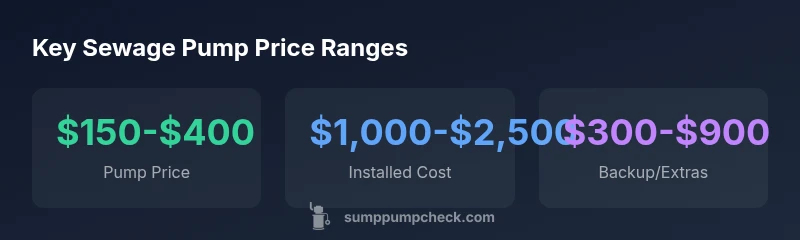
| Sewage pump price (sewage ejector pump) | "$150-$400" | Depends on horsepower and material |
| Installed cost (pump + labor) | "$1,000-$2,500" | Installation complexity varies by basement and piping |
| Optional components (backup pump, alarm, backflow valve) | "$300-$900" | Adds reliability but increases upfront cost |
| Maintenance costs (annual) | "$50-$150" | Includes inspection and seal checks |
FAQ
What factors influence sewage pump price the most?
The price is driven by pump type (grinder vs non-grinder), horsepower, materials (cast iron vs stainless), basin size, and controls. Installation complexity, regional labor rates, and permit requirements also affect total costs.
Price mostly comes from the pump type, power, materials, and how much wiring and piping the job needs.
Is it worth adding a battery backup for a sewage pump?
A battery backup reduces downtime during power outages and can prevent basement flooding, but it adds upfront and replacement costs. Consider your home's power reliability and potential backup needs when deciding.
A backup helps during outages but costs more upfront; weigh reliability against price.
Can I install a sewage pump myself to save money?
DIY installation is possible in simple setups but risky in more complex basements. Incorrect sizing or wiring can lead to backups or electrocution hazards. Hiring a licensed pro is generally safer and more cost-efficient long-term.
DIY can be risky; it's usually better to hire a pro for safety and reliability.
What is the typical lifespan of a sewage pump?
With regular maintenance, most pumps last several years, commonly in the 8–15 year range depending on usage and environment. Performance can gradually decline before failure.
Most pumps last many years with proper care.
When should I replace instead of repair?
If repairs exceed the cost of a replacement or if the pump is old, a replacement is usually more cost-effective and reduces ongoing risk of failure.
If repairs are costly or the unit is old, replacement makes more sense.
“A well-sized and properly installed sewage pump protects your home from costly backups and unnecessary downtime.”
Top Takeaways
- Know price drivers before you buy
- Budget for installation, permits, and piping changes
- Consider backups and alarms for reliability
- Get multiple quotes and compare itemized costs
- Regular maintenance extends pump life and reduces risk