Ejector Pump Installation Cost: A Homeowner's Guide
Explore the true ejector pump installation cost, factors driving pricing, and budgeting tips. Learn how to compare quotes, plan permits, backups, and ongoing maintenance for a dry basement.


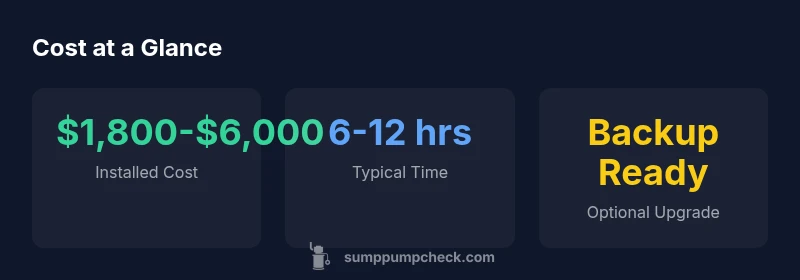
According to Sump Pump Check Analysis, 2026, ejector pump installation cost depends on basement size, pit depth, and backup options. Typical installed costs range from about $1,800 to $6,000, with higher-end setups around $5,000–$6,000+. Final prices hinge on discharge routing, permit requirements, and local labor rates. Homeowners should obtain multiple quotes and ensure quotes itemize parts, labor, and permits.
What ejector pump installation cost includes
The cost to install a sewage ejector pump goes beyond the price tag on the pump itself. In most homes, the total installed cost covers several components and activities. The pump unit is just one piece; you also pay for the discharge piping, check valve, and any required alarms or float switches. Pit enclosure, material durability, and lid sealing affect price because they influence long-term reliability. Labor charges cover trenching, pit excavation, backfilling, and wiring—often the bulk of the expense. Permits and inspections vary by jurisdiction and can add time and expense. Finally, site prep such as moving furniture, cutting concrete, or drilling into a concrete floor can push costs higher. According to Sump Pump Check, quotes typically itemize parts and labor so homeowners can spot add-ons, and they note that many quotes exclude optional items like battery backup, check-valves upgrades, or radon mitigation; these can be negotiated or added later as needed.
Factors that drive cost
Several variables shape the final price of ejector pump installation. The size of the pit and the depth required to reach an adequate wastewater level affects excavation time and material costs. The pump’s capacity, efficiency, and whether you add a battery backup, automatic float switch, or high-quality check valve all push costs up. Labor rates vary by region and contractor; in some areas, journeyman electricians and plumbers command premium pricing. Existing plumbing and electrical work can reduce or increase the bill; reusing an existing discharge line or wiring path lowers cost, while adding new conduits raises it. Permitting requirements depend on local codes and inspectors’ schedules, which can add days to weeks of lead time. Finally, warranties and service agreements add value but may come with higher upfront costs. The Sump Pump Check team notes that most homes benefit from professional installation to ensure code compliance, long-term reliability, and proper backup integration.
Typical cost ranges by scenario
Price ranges for ejector pump installation vary by project type and basement configuration. A simple replacement in the same pit with standard components often falls in the range of $1,800–$3,000, including labor. If you’re starting from scratch in an unfinished basement and need pit work, wiring, and a discharge line routed to an exterior exit, expect $2,500–$4,800. Adding a battery backup, integration with an alarm, or a high-efficiency pump typically adds $900–$2,000 to the base. For complex installations—multiple pits, long discharge runs, or retrofits in tight spaces—costs can reach $4,800–$6,000 or more. Always obtain at least three written estimates to capture regional price differences, and ask for itemized quotes that separate equipment from labor and permit fees. These ranges reflect typical market conditions in 2026 and may vary by contractor and location.
How to estimate for your basement
To estimate ejector pump installation cost for your home, start with a quick site assessment and a few phone checks. Step 1: Measure current pit dimensions and note the desired pump capacity and backup needs. Step 2: Check whether your existing discharge pipe can be reused or needs new routing. Step 3: Request written quotes from at least three licensed contractors, with a clear scope and a breakdown of parts, labor, and permits. Step 4: Add 8–15% contingency for unexpected site conditions or permit delays and consider long-term maintenance costs (pump impeller wear, seals, and alarms). Step 5: Factor in local permit fees and potential electrical upgrades. Use a simple calculator: base pump price + installation cost + permits + backup option – any reuse savings. The Sump Pump Check methodology emphasizes transparent, itemized quotes and accounting for maintenance, so you don’t underestimate ongoing costs.
Cost-saving tips and best practices
Smart planning can reduce ejector pump installation cost without sacrificing reliability. Get multiple quotes and compare itemized line items rather than overall totals. If possible, reuse an existing discharge path and pit size to limit excavation. Choose a reputable, code-compliant pump with a solid warranty rather than the cheapest model. Bundle backup options and alarms where appropriate to avoid repeated service calls. Schedule work during off-peak seasons when labor markets are steadier. Finally, budget for annual maintenance, including lid checks and impeller inspection, to prevent costly failures that require emergency service.
Permits, warranties, and timing considerations
Permitting rules vary widely by locality, so check with your city or county before starting. Some jurisdictions require permits for new ejector pump installations or major electrical work, while others treat simple replacements as maintenance. A permit can add time and a small fee, but it helps ensure code-compliant wiring, venting, and safety devices. Warranties commonly cover pumps and installation for a defined period; read the fine print to know what is covered and what could void coverage. Weather, contractor schedules, and supply chain conditions can affect timing. With careful planning and a clear scope, you can minimize delays and keep the ejector pump installation cost within a reasonable range.
Cost factors for ejector pump installation
| Cost Factor | Typical Range | Notes |
|---|---|---|
| Equipment & Pump | $400-$1,000 | Quality model choices affect price; higher efficiency and backup options cost more |
| Labor & Installation | $1,000-$3,000 | Based on complexity and regional rates |
| Pit Excavation & Preparation | $200-$900 | Requires dry work; accessibility matters |
| Permits & Inspections | $50-$500 | Local codes determine cost and duration |
FAQ
What is the typical cost range for ejector pump installation?
Most installations fall within a broad range depending on pit work, backup options, and permits. Expect simple replacements toward the lower end and complex retrofits toward the upper end. Always request itemized quotes to see how much is allocated to equipment, labor, and permits.
Costs vary, but quotes are usually itemized and fall into simple to complex ranges depending on pit work and backups.
Do I need a permit for ejector pump installation?
Permit requirements depend on your locality and the scope of work (new pits or electrical upgrades). Check with your local building department and request that the contractor handles permit coordination when possible.
Permits depend on where you live and the work done; ask your contractor to manage permits.
Can I install an ejector pump myself?
DIY installation is generally not recommended due to electrical, plumbing, and venting risks. Improper setup can lead to backups, leaks, or code violations. Hire a licensed professional for safety and reliability.
It's risky to install yourself; hire a licensed pro for safety and reliability.
How long does installation take?
Most installations take a day or two depending on pit work, routing, and permit processing. Scheduling may extend this if inspections or weather impact access.
Most jobs take 1–2 days, depending on site conditions and permits.
What affects the cost the most?
Pit size/depth, discharge routing, backup options, and permit requirements are the biggest cost drivers. Equipment choice and labor rates also influence final pricing.
The biggest cost drivers are pit depth, routing, backups, and permits.
Should I budget for a battery backup with my ejector pump?
Yes. A battery backup reduces downtime during power outages and adds to upfront costs, but it can save significant expense from failed backups during outages.
Battery backups are wise—they reduce outages and future repair costs.
“A properly sized and professionally installed ejector pump is a long-term safeguard for a dry basement and reliable wastewater handling. Investing in professional installation reduces the risk of costly backups and code violations.”
Top Takeaways
- Understand cost ranges and factors
- Get multiple quotes with line-item detail
- Plan for permits and backups
- Budget for ongoing maintenance