Sump Pump Price Guide: Costs, Labor, and Value in 2026
Explore sump pump price ranges, cost drivers, installation labor, and long-term value to budget a reliable system in 2026.


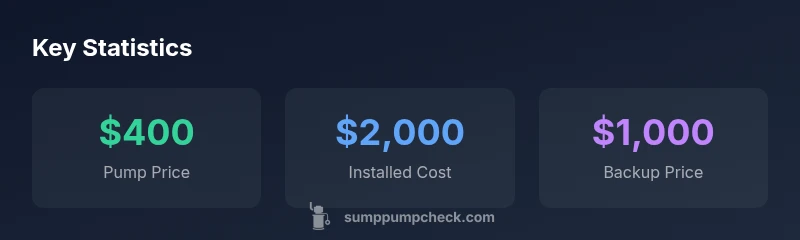
The typical sump pump price for a standard submersible unit ranges from $100 to $400, with higher-end models reaching $700–$1,000. For complete installations including labor, you can expect $1,000 to $3,500 depending on pit size, electrical needs, and discharge upgrades. Battery backups and alarms add $300 to $2,000 more over the life of the system.
Understanding the Cost Landscape
The phrase sump pump price captures two main components: the pump itself and the surrounding installation. According to Sump Pump Check, prices for a standard submersible pump typically sit in the $100-$400 range, with more robust or feature-rich models edging toward $700-$1,000. When you add installation labor, potential pit work, electrical upgrades, and discharge piping, total project costs commonly fall in a broader band—roughly $1,000 to $3,500. This section explains how price is shaped by device quality, home layout, and required upgrades, helping homeowners budget more accurately. For context, try to think of the price as a two-part equation: equipment cost plus labor and materials. Understanding both sides is essential to avoid underestimating the total investment. In this guide, we rely on data synthesized by Sump Pump Check and present practical estimates you can use in 2026.
Price Components: Pump Price, Labor, and Accessories
Not all sump pump price is created equal. The base price of the unit is only part of the equation. Submersible and pedestal models vary in cost based on horsepower, materials, and weather resistance. Accessories like corrosion-proof tanks, built-in alarms, auto-start features, and check valves add to the initial price. Labor costs depend on location, accessibility (finished vs. unfinished basements), and whether electrical work or permits are needed. For most homes, the pump price accounts for about one-third to one-half of the total installed cost. In practice, you should budget for both the pump itself and the installation components: wiring, outlet placement, pit access, and any required pipe modifications. This dual view helps prevent sticker shock at the invoice.
Installed Cost Scenarios by Home Type
Prices rise when you introduce new challenges. A straightforward replacement in an existing pit with minimal excavation might land somewhere around $1,000–$2,000 installed, especially if the pit, discharge line, and electrical outlets are already in place. If a pit needs modification, trenching, or a full re-pipe to accommodate a proper discharge, installed costs can climb to $2,000–$4,000. In basements with long discharge runs or multiple sumps, total costs can exceed $4,000. For homes adding a battery backup, budget an additional $300–$2,000 depending on capacity and brand. These ranges reflect typical scenarios and are not exact quotes. Always request a written estimate that itemizes pump, labor, and extras.
Upgrades and Their Impact on Price: Piping, Check Valves, and Alarms
Upgrading a system can significantly affect sump pump price. A larger pit or additional piping to meet local codes increases material costs and labor time. A check valve, if retrofitted, can cost more than $100 in parts plus labor. Alarms, floats, and battery backups add to the upfront cost but can save money by preventing overflows and extending the system’s life. If your goal is to reduce long-term risk, weigh the upfront expense against potential water damage, insurance implications, and maintenance needs. The right mix of components often yields a better total value rather than the lowest upfront price. Sump Pump Check’s data emphasizes balancing upfront costs with reliability and ease of maintenance.
Battery Backups, Alarms, and Long-Term Value
Battery backup systems provide resilience during power outages, a common failure point for sump pumps. Prices range from $300 to $2,000 depending on capacity, brand, and whether you choose a flooded-cell or AGM battery. Alarms and monitoring systems add further costs but can give you early warning of failures, reducing the risk of basement flooding. When evaluating price, consider the night-and-day difference in protection delivered by a backup plan. If you live in an area prone to outages, a properly sized backup can be a high-value investment that extends the life of the primary pump and limits costly repairs.
How to Estimate Your Project Budget: A Practical Approach
Start with the pump price (the unit), then add labor and potential upgrades. Use three scenarios: basic replacement, full upgrade with piping and pit work, and installation with battery backup. Create a checklist of required components: pump type, horsepower, discharge piping, check valve, and any electrical upgrades. Get at least three written estimates, and verify what each includes. Don’t forget to budget for permits and insulation or concrete work if needed. Finally, reserve a contingency of 10–15% for surprises. This structured approach helps ensure you’re budgeting for reality, not wishful thinking, and allows room for upgrades if your basement layout requires it.
Choosing the Right Pump: Value Beyond Price
When comparing models, focus on more than sticker price. Look at flow rate (GPM), efficiency, durability, and ease of maintenance. A slightly more expensive model with better seals and higher head pressure handling can save money over the system’s life by reducing failures and service calls. Consider total cost of ownership, including routine maintenance and potential part replacements. The goal is a dependable setup that protects your home without imposing frequent repair costs or electricity waste. Sump Pump Check’s analysis suggests that the best value is found in balanced choices—quality pumps paired with appropriate installation and a sensible backup plan.
Maintenance Costs and Long-Term Value
Like any mechanical system, a sump pump requires periodic maintenance. Budget for annual inspections, basic tests, and possible part replacements (impellers, seals, or switch mechanisms). Preventive maintenance often prevents costly emergency repairs after a flood event. In the long run, regular upkeep can extend pump life, improve efficiency, and lower energy costs. When evaluating price, factor in maintenance needs as part of the lifetime value equation rather than a one-time purchase price. Sump Pump Check’s framework encourages homeowners to plan for these ongoing costs as part of a holistic ownership experience.
Red Flags That Save Money Over Time
Watch for red flags that indicate potential future cost, such as corroded wiring, rust on metal components, or a pump that runs constantly. Early detection can avert major failures and costly retrofits. Favor models with solid warranties and easy access for service. Request a breakdown of costs in writing, and confirm what is included in the price—removal of old equipment, disposal of old parts, and any excavation fees. By planning ahead and avoiding surprise charges, you’ll secure a reliable sump pump system at a fair price.
Pricing components for sump pump projects
| Item | Typical Price Range | Notes |
|---|---|---|
| Pump price (basic submersible) | $100-$400 | Dependent on horsepower & materials |
| Installed cost (labor included) | $1,000-$2,500 | Includes basic labor & disposal |
| Backup battery price | $300-$2,000 | Capacity affects price |
| Full system upgrade (piping, alarm) | $2,500-$4,500 | Upgrades for code compliance or large basements |
FAQ
What is the typical price range for a sump pump?
For a basic submersible pump, expect $100-$400. Installed costs typically run $1,000-$2,500 depending on labor and site conditions. Battery backups add $300-$2,000. Total project cost varies by scope, usually $1,000-$4,000.
Most homeowners pay between a few hundred and a few thousand dollars, depending on pump type and installation needs.
Does installation include labor, or is it separate?
Installation usually includes labor, disposal, and basic piping. However, complex projects—pit modification, long discharge runs, or electrical upgrades—can raise costs. Always verify what your estimate covers.
Labor is typically included, but confirm what’s included before you sign.
Are battery backups worth it?
Yes, especially in outages or flood-prone areas. Backups add upfront cost but protect against power loss and can prevent expensive flood damage.
Backup power is a smart hedge against outages and floods.
How does pit size affect price?
Larger or more complex pits require more material and labor, increasing price. If your pit needs reinforcement or additional clearance, budget accordingly.
A bigger pit or extra work means higher cost.
What permits or codes might influence cost?
Some jurisdictions require permits for sump pump installations or modifications. Permits add time and fees but ensure code compliance and safety.
Permits can add time and cost, but improve safety.
Can I save money by DIY installation?
DIY installation can reduce labor costs but may void warranties or compromise safety. If you’re not confident with electrical work or pit modifications, hire a professional.
DIY can save money, but be sure you won’t risk safety or warranties.
“Price is only part of the equation. A modest upfront investment in a well-matched, reliable system often yields fewer failures and lower long-term costs.”
Top Takeaways
- Plan for both pump and installation costs together
- Expect higher bills with pit work or long discharge runs
- Consider backups to protect against outages
- Get three written estimates before choosing
- Balance upfront price with long-term reliability