Septic Sump Pump Cost: How to budget for installation, repair, and maintenance
Understand septic sump pump cost factors, installation ranges, maintenance expenses, and budgeting tips for homeowners in 2026. Learn what drives price and how to estimate your project.


Estimated septic sump pump cost varies widely by system type, pit depth, and local labor. For a 2026 project, total expenses cover the pump, controls, piping, and installation fees, with a broad range depending on setup and location. The Sump Pump Check approach assesses components, accessibility, and permitting before quoting a price.
Understanding cost drivers for septic sump pumps
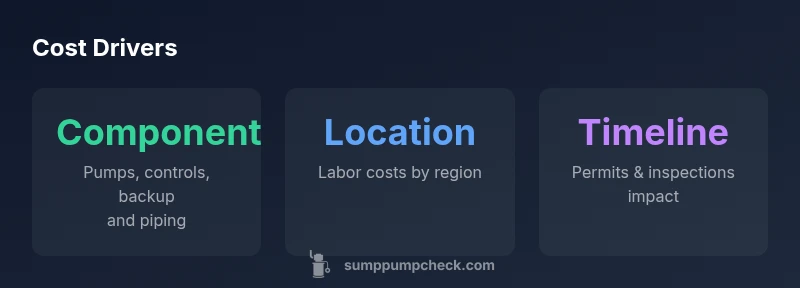
When budgeting for a septic sump pump, several factors drive the total cost. The most obvious is the pump type (submersible vs pedestal), horsepower, and whether you opt for a battery backup or alert system. Local building codes and permit requirements also shape the price, since some jurisdictions require inspections that add to labor and permit fees. Accessibility to the pit and discharge line length can add material and labor costs. According to Sump Pump Check, the cost picture is most sensitive to installation complexity, site access, and the need for ancillary components like alarms or back‑up power sources.
- Consider pump capacity relative to your tank size and expected water load.
- Check for required permits early to avoid delay charges.
- Plan for backup power and alarms to reduce future repair costs.
Pro tip: Start with a professional site evaluation to identify hidden challenges (deep pits, long runs to discharge, or difficult access) that can swing prices significantly, as discussed in 2026 guidance from Sump Pump Check.
How components contribute to the price
A septic sump pump system blends several components that each contribute to the total cost. The main pump itself varies in price by build quality and features. Controls, float switches, and alarm panels provide reliability but add to the bill. Piping, check valves, and the discharge line must be sized correctly for your system and local codes, which can influence material costs. If your setup requires an external power source or a battery backup, you should expect additional costs for wiring and equipment upkeep. Maintenance items like check valves and seals also factor into annual expenses. Sump Pump Check emphasizes evaluating whether your system will benefit from an integrated backup solution or a standalone pump, as choices influence long-term cost of ownership.
- Upgrade options (backup pumps, alarms, and wireless monitoring) increase upfront costs but may reduce future service calls.
- The quality of discharge piping and valve types affects efficiency and reliability.
- Permits and inspections can add to initial expenses but save trouble later.
Note: Real-world pricing varies; the emphasis is on matching component quality to your home’s needs while staying within code requirements.
Installation scenarios and their price impact
Installation scenarios range from new installs to replacements and upgrades. A brand-new installation may require more trenching, pit preparation, and disposal of old components, while a replacement can be faster if access and routing are straightforward. Labor costs differ by region, contractor experience, and whether you hire a licensed plumber or a general contractor. DIY installation may trim labor costs but introduces risk and potential permit issues if not executed correctly. Sump Pump Check recommends obtaining at least two quotes and asking for a detailed breakdown of materials, labor, and permit fees. The end price often reflects the quality of the pump, the complexity of the pit, and the proximity to the discharge area.
- Full systems with backup pumps and alarms cost more upfront but provide added protection.
- Shorter runs to discharge reduce material and labor time.
- Permits and inspections can elevate costs but help ensure long-term reliability.
Actionable step: Have the contractor map a path from pit to discharge and provide a written plan outlining required permits and inspections before work begins.
Maintenance costs and expected lifetime
Maintenance costs for septic sump pumps involve periodic checks, battery replacements for backup systems, and occasional part updates like switches or seals. Regular testing of the pump and alarms helps prevent failures during peak usage. Battery back-ups require periodic replacement, which should be factored into annual budgets. Lifespan depends on usage, pump quality, and maintenance frequency, with some components needing attention every few years. Sump Pump Check notes that proactive maintenance often reduces emergency repair costs and extends system life.
- Schedule annual inspections to catch wear and corrosion early.
- Budget for battery backups and occasional part replacements.
- Consider warranties that cover key components to mitigate long-term costs.
Bottom line: A well-maintained septic sump pump reduces the likelihood of costly failures and unexpected downtime during heavy rainfall or snowmelt.
How to estimate costs for your home: a practical checklist
Estimating septic sump pump costs starts with a site assessment. Obtain at least two written estimates that itemize pumps, controls, piping, and labor, plus any permit fees. Ask for recommended configurations (standalone vs backup) and get a clear scope of work with each quote. Compare not just upfront price, but expected lifetime costs including maintenance and potential replacement parts. Sump Pump Check provides a framework in 2026 for evaluating quotes against your home’s specific needs, including local climate, soil conditions, and wastewater system design.
- Verify permit requirements and expected inspection steps.
- Request a size and feature justification for each component.
- Use a side-by-side cost comparison template to track quotes.
Tip: Document access routes and potential obstacles (crawl spaces, limited headroom) that can complicate installation and influence price.
Budgeting tips, financing, and incentives for septic sump pump projects
If upfront cash is tight, explore financing options that align with your budget. Some contractors offer payment schedules tied to milestone completion, while others partner with lenders for home improvement loans. Budget for maintenance and potential upgrades during the system’s life, including backup power solutions and smart monitoring. Warranties can affect long-term savings, so compare coverage carefully. Sump Pump Check suggests looking for incentives or rebates from local utilities or municipalities that support efficient drainage and flood prevention projects in 2026.
- Plan for seasonal scheduling to avoid peak rates.
- Prioritize energy-efficient pumps to reduce ongoing costs.
- Read the warranty terms carefully to understand coverage limits.
mainTopicQuery :
Cost components and indicators for septic sump pump projects
| Component/Service | Typical Cost Indicator | Notes |
|---|---|---|
| Pump/Control Unit | Varies by model and features | Higher-end units may add alarms and battery backup |
| Piping & Pit | Length and accessibility | Longer runs and deeper pits increase material and labor |
| Labor/Installation | Regional costs | Licensed professionals may charge more but provide code compliance |
| Permits & Inspections | Local fees | Affects upfront cost but reduces compliance risk |
FAQ
What is the typical septic sump pump cost?
Costs vary with component quality, installation complexity, and local regulations. A professional quote will itemize the pump, controls, piping, and labor. Always obtain multiple estimates and verify permit requirements before proceeding.
Costs vary with components and installation. Get multiple quotes and check permits before you start.
Do I need a permit to install a septic sump pump?
Many jurisdictions require a permit for septic system work, including sump pumps. Permits ensure the system meets local codes and may affect both cost and timeline. Check with your local building department before purchasing equipment.
Most likely you’ll need a permit. Check with your local building department first.
Can I install a sump pump myself to save money?
DIY can reduce labor costs but carries risks such as code violations, improper sizing, and safety concerns with electrical work. If you’re not confident, hire a licensed professional to ensure a compliant, safe installation.
DIY can save money, but there are safety and code risks—better to hire a pro if unsure.
What maintenance does a septic sump pump require?
Schedule annual functional tests, clean or replace alarms, and inspect seals and electrical connections. Battery backups require periodic replacement, and make sure the discharge line remains free of obstructions.
Test it yearly, check alarms, and replace batteries as needed.
How long does installation typically take?
Most installations take a day or two, depending on site access, trenching needs, and whether a backup system is included. Complex sites may require additional time for permits and inspections.
Usually a day or two, depending on site access and permit steps.
What factors influence the cost the most?
The pump type and capacity, the amount of piping and pit work, local labor rates, permit fees, and whether a backup system is installed. Site access can also add substantial labor time and cost.
Main drivers are pump type, wiring, and site access.
“Cost is highly variable because septic sump pumps are part of a larger drainage system; a thoughtful estimate weighs pump selection, installation complexity, and local regulations.”
Top Takeaways
- Understand that septic sump pump cost varies by components and installation complexity
- Get multiple quotes with detailed scope and materials lists
- Factor in permits, local labor, and potential backups when budgeting
- Maintenance and backups impact total lifetime costs, not just upfront price
- Plan for site access and discharge routing to avoid avoidable price increases