Sewage Pump Replacement Cost Guide for 2026
Learn the factors shaping sewage pump replacement cost, how to budget, and strategies to minimize expenses without compromising safety and reliability.


According to Sump Pump Check, the sewage pump replacement cost can vary widely based on the pump type, discharge piping, and installation complexity. Homeowners should expect labor to account for a substantial portion of the total, with the pump unit itself and optional backflow features shaping the final price. Planning for permits, disposal, and ongoing maintenance helps prevent sticker shock and ensures safe operation.
Why replacement may be needed
A sewage pump is a crucial part of a home’s wastewater system, and when it fails, the consequences can be costly and messy. Signs that replacement is on the table include frequent failures, backups into living spaces, foul odors, or rising energy use. It’s important to distinguish between a sewage ejector pump and a typical sump pump—their duties, locations, and replacement dynamics differ. According to Sump Pump Check, cost considerations begin with the pump type and the installation’s accessibility; a cramped pit or basement can dramatically increase labor and material needs. In 2026, homeowners should plan for not only the price of the unit but also the labor to remove the old equipment, install a replacement, connect power and alarms, inspect discharge piping, and test the system for safe operation. Taking time to map the footprint of the system and anticipate future needs will influence long-term reliability and total expenses.
Major cost drivers
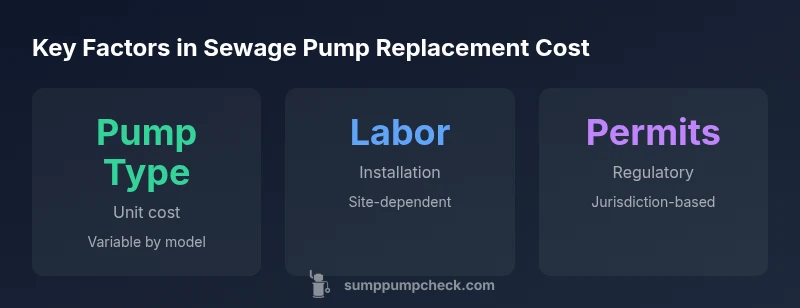
Several factors drive the final sewage pump replacement cost. The pump type ( grinder vs. non-grinder) and horsepower determine the base price, while wiring, control switches, alarms, and the presence of a backup system add layers of cost. Labor rates vary by region and accessibility; a difficult install with limited space or an upstairs pit will require more time and skilled labor. Discharge piping, check valves, and seals influence both upfront costs and long-term reliability. Permits, inspections, and disposal of the old unit can also push costs higher, especially in municipalities with stringent codes. The overall sewage pump replacement cost is a sum of parts, service, and compliance needs, and price ranges can shift based on local market conditions. Based on Sump Pump Check analysis, planning for these components helps homeowners avoid surprise charges at the project’s end.
Budgeting for replacement
A practical budgeting approach starts with a clear scope: confirm the exact pump model type, necessary backflow protection, and whether any pit modifications are required. Request itemized quotes from multiple licensed professionals to compare parts, labor, and any permitting fees. Include a contingency fund for unexpected issues such as hidden piping damage or a need to upgrade electrical wiring. Consider the total cost of ownership, not just the initial expenditure; a more expensive unit with durable components and a robust warranty can reduce maintenance costs and failure risk over time. When you know your local permit requirements, you can factor those into the overall project cost and schedule.
Understanding components
Replacement costs are influenced by both the pump unit and supporting hardware. Key components include the sewage pump itself, grinder mechanisms (if applicable), check valve, discharge piping, and a secure lid or cover. Electrical wiring and a dedicated circuit or GFCI protection may be required to meet code safety standards. If you add a battery backup or an automatic float switch, expect additional expense but enhanced reliability. Many homes also benefit from a backflow preventer and a clean-out or inspection ports, which can affect price but improve system longevity. Understanding each element helps you evaluate whether a higher upfront investment delivers long-term value.
How costs are calculated by professionals
Contractors typically break costs into three areas: parts, labor, and permitting/collection fees. An itemized quote helps you see exactly what you pay for, enabling fair comparisons across vendors. Labor costs reflect site access, complexity, and the need to remove an existing unit and install a new one. Parts costs hinge on pump type, capacity, and additional features like grinders or backups. Permit costs vary by jurisdiction, and disposal fees depend on local waste regulations. Always verify warranties on both the pump and installation work, as a comprehensive warranty can reduce future out-of-pocket expenses.
Common scenarios and their cost signals
In a straightforward basement install with easy access, replacement costs will generally be lower than in cramped crawlspaces or finished basements where the pit must be opened or modified. Homes with older plumbing may require upgrading piping or backflow devices, which increases the bill. Rural locations may incur longer travel times and higher labor rates, while urban settings might face permit costs and inspection requirements. A grinder pump installation tends to be at the higher end of the spectrum due to added complexity. Use the cost signals above to gauge whether you’re in a low, mid, or high-cost scenario.
Hidden costs and pitfalls
Don’t overlook permit and inspection requirements, disposal of the old unit, and potential electrical repairs. Upgrading discharge piping or adding a backflow preventer can substantially influence total cost. If your system sits in a challenging location, you may see additional labor charges for maintaining safe access during installation. Backups or failure to install a proper float switch can lead to recurring issues and service calls. Budget for testing, leak checks, and run-time evaluations to ensure the unit performs correctly under real-use conditions.
Strategies to reduce sewage pump replacement cost
Proactive maintenance can postpone costly replacements and extend pump life. Schedule regular inspections, clean basins and check valves, and address minor issues before they escalate. Compare multiple quotes and request detailed, itemized breakdowns to avoid hidden charges. If possible, select a replacement with a warranty and energy-efficient features that reduce long-term operating costs. Discuss the option of upgrading only what’s necessary versus a full replacement to determine the best value for your home and local codes.
DIY vs pro: decision guide
Sewage pump replacement is a complex, hazardous job that involves electricity and exposed wastewater. Unless you have experience with basement plumbing and electrical work in wet environments, hiring a licensed pro is typically the safer option. A pro can assess the pit condition, ensure proper venting and backflow protection, and verify code compliance. If you choose to DIY, limit the scope to non-wastewater tasks and seek professional help for installation and testing to avoid costly mistakes and safety risks.
Cost elements and what to expect during replacement
| Cost Element | Description | Notes |
|---|---|---|
| Pump Unit | The sewage pump itself and grinder/backflow options | Not disclosed |
| Labor & Installation | Removal of old unit, installation, wiring, testing | Local rates vary |
| Piping & Backflow | Discharge piping, check valves, seals | Quality affects longevity |
| Permits & Disposal | Permits where required; disposal of old unit | Municipality dependent |
FAQ
What is included in the sewage pump replacement cost?
Typically, the quote covers the pump unit, labor for removal and installation, wiring, and testing. Additional charges may apply for piping, backflow devices, permits, and disposal of the old unit.
Most quotes include the pump, installation, and testing, with extras for piping, permits, and disposal.
Do permit requirements vary by location?
Yes. Permit requirements depend on local codes and the extent of work. Your contractor can verify what’s needed and ensure inspections are completed.
Permits depend on your local codes; your contractor will check what's required.
Is replacement cheaper than repair?
If the current pump is aging or has multiple failures, replacing it with a newer, more efficient model can offer better long-term reliability and cost integrity than repeated repairs.
If the pump is old or failing often, replacement may save money over time.
How long does a replacement job typically take?
Most replacement projects take at least part of a day, depending on access to the pit and any required piping or electrical work.
It usually takes a portion of a day, depending on access and wiring needs.
Will homeowners insurance cover replacement costs?
Most standard policies don’t cover the cost of replacing a failed pump, but coverage can vary with endorsements for water damage or backflow devices. Check your policy details.
Insurance often won’t cover replacement costs, but it depends on your policy.
What maintenance steps extend the life of a sewage pump?
Regular inspections, cleaning the sump basin, and testing alarms help catch issues early. Replacing worn seals and lubricants as recommended by the manufacturer can also extend life.
Keep up with inspections, cleanings, and alarm testing to extend life.
“Replacing a sewage pump is not just about the sticker price; selecting the right pump and proper installation protect your home from backups and expensive damage.”
Top Takeaways
- Plan early and gather multiple quotes.
- Labor often drives total cost more than the pump itself.
- Ask for a detailed breakdown including permits and disposal.
- Consider future-proofing with backups and backflow protection.
- Maintain the system to extend life and reduce future costs.