New Sump Pump Installation Cost: A 2026 Budget Guide
Discover what drives the new sump pump installation cost, typical ranges, and practical budgeting tips. Sump Pump Check analyzes 2026 costs to help homeowners plan, compare quotes, and avoid surprises.


According to Sump Pump Check, the new sump pump installation cost varies by system type and home setup, but most homeowners should budget for a broad range of options in 2026. This guide outlines expected cost factors, typical price bands, and practical budgeting steps to minimize surprises. It also highlights when to consider upgrades like battery backups, check valves, and professional installation versus DIY.
Understanding the scope of a new sump pump installation
Sump pump installation involves selecting the right pump (submersible vs pedestal), sizing for the basement, installing a discharge line with a check valve, wiring to a GFCI-protected circuit, and often a pit or sump basin. The choice between a pedestal pump and a submersible unit affects upfront cost and long-term reliability. According to Sump Pump Check, a well-planned install reduces future maintenance and lowers total ownership costs by preventing nuisance failures. For many homes, the project also brings basement drainage improvements and better water management during heavy rain events. The key is to map the scope before requesting bids so you can compare apples to apples.
Key cost drivers for new sump pump installation
The main price levers are pump type and capacity, the presence of a backup power source, the quality of discharge piping, and the electrical work required. Submersible pumps tend to be pricier upfront but quieter and easier to conceal. Battery backup units add upfront cost but can save emergency outage costs. Labor rates vary by region and contractor experience. In addition, professionals may bundle costs for permits, trenching, or concrete work when needed. A thorough scope—covering pit size, check valve, alarm features, and drainage routing—provides the most reliable quotes.
How installation scope changes the price
If your basement layout is straightforward (single pit, short discharge run, no trenching) you’ll land on the lower end of the price spectrum. Complex layouts with long discharge lines, multiple outlets, or trenching through concrete raise labor time and material costs. Including a backup battery, a higher-capacity pump, or a dual-pump system will push costs upward but improves reliability. Expect regional variations and permit requirements to add further complexity or delays. The takeaway: build a detailed scope first, then seek multiple quotes to benchmark pricing.
Cost ranges by scenario
Costs vary widely by project scope, but commonly cited bands are: Basic install around the low end of the spectrum; mid-range installs including a backup battery or basic upgrades; high-end installs featuring trenching, permits, and multiple components. As a rough guide, you might see ranges such as: Basic install: $500–$1,200; Mid-range with backup and upgrades: $1,200–$2,500; Comprehensive with trenching and permits: $2,500–$4,000. Regional differences and contractor pricing can shift these bands, so use them as a planning framework rather than fixed quotes.
Hidden costs and upgrades to consider
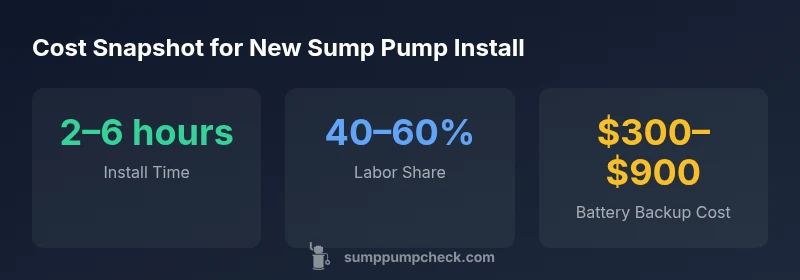
Beyond the pump itself, several add-ons influence total cost. Battery backups range $300–$900; check valves and alarm systems add modest amounts but improve protection against backflow and nuisance flooding. If you trench through existing concrete or install longer discharge runs, expect higher labor costs and potential permit fees. Consider additional waterproofing improvements in the basement to maximize the new system’s effectiveness and reduce future drainage issues. Budget for contingencies of 10–20% to cover surprises during installation.
Planning and budgeting practical steps
Start with a clear, itemized plan: estimate the basic pump price, add-on costs (backup battery, check valve, discharge piping), and labor. Gather at least three quotes to compare line-by-line. Ask contractors to label each cost as material, labor, permits, or contingency. Use a written checklist to avoid scope creep and ensure that proposals cover pump type, horsepower, warranty, and timeline. A staggered payment schedule tied to milestones helps align expectations with work progress.
Installation timeline and steps
Most standard installs take half a day to a full day, depending on basement layout and electrical readiness. The process typically follows: pit inspection and preparation, pump mounting, wiring to a GFCI outlet, discharge piping with a check valve, leak and function testing, and final cleanup. Weather and permitting can add days. In all cases, ensure GFCI protection and a dry, accessible electrical source to minimize nuisance trips and future service calls.
Maintenance and long-term costs
Once installed, plan for annual checks to ensure the float switch and backup battery function correctly. Battery backups may require periodic testing and replacement every 3–5 years, with costs for battery packs and professional testing. Regular inspections of discharge piping for clogs or frost, and periodic check of the sump pit seal help prevent failures. Budget for minor repairs and component replacements, which are generally far cheaper than emergency service after a flood.
How to compare quotes and avoid overpaying
Request itemized quotes that separate pump price, labor, permits, and extras. Check each quote against your detailed scope to confirm they match. Look for warranties on both the pump and labor, and verify the contractor’s license and insurance coverage. Avoid unusually low bids, which often signal hidden costs or inferior components. Use a standard comparison worksheet to document differences and choose the best overall value, not just the lowest price.
Estimated installed cost ranges by project scope
| Scenario | Typical Range | Key Cost Drivers | Notes |
|---|---|---|---|
| Basic installation | $500-$1,200 | Labor, basic pump | Lower end; no trenching or upgrades |
| Mid-range with backup | $1,200-$2,500 | Battery backup, check valve | Assumes standard layout |
| Comprehensive with trenching | $2,500-$4,000 | Trenching, permits, electrical | Complex projects |
FAQ
What is the typical cost range for a new sump pump installation?
Costs vary by scope, but common ranges reflect basic to comprehensive installs. Expect to budget for the pump, labor, and any upgrades like backups or permits; regional differences apply. The best approach is to use a structured quote from multiple contractors.
Costs vary by scope, but you should expect a range from basic to comprehensive installs. Get multiple quotes to benchmark pricing.
Do I need a permit for installation?
Permit requirements depend on local codes and the extent of work (electrical, trenching, or plumbing changes). A reputable contractor can confirm permit needs before starting and include any fees in the quote.
Permits depend on your area and work scope; your contractor can tell you for sure.
How long does installation take?
Most standard installs take half a day to a full day. More complex projects with trenching or electrical upgrades can take longer, especially if permits are involved.
Most installs take a few hours to a day, depending on layout and electrical readiness.
Is a battery backup worth it?
Yes, a backup battery provides resilience during outages and prevents flood risk during storms. The upfront cost is offset by reduced emergency repair costs and water damage risk.
A backup helps during power outages and can prevent floods.
Can I install a sump pump myself to save money?
DIY installs may save on labor but require plumbing and electrical work knowledge. Incorrect installation can cause backflow or leakage. Many homeowners prefer professional installation for reliability and warranties.
DIY is risky; professionals usually ensure proper setup and warranties.
What maintenance costs should I expect after installation?
Expect occasional maintenance like testing float switches and replacing backup batteries every few years. Budget for inspection visits and minor part replacements to prevent major failures.
Expect occasional maintenance and occasional battery replacements.
“A well-planned sump pump installation reduces future downtime and maintenance costs by ensuring proper sizing, routing, and protection.”
Top Takeaways
- Budget broadly and plan contingencies
- Ask for itemized quotes from three pros
- Prioritize backups and code-compliant wiring
- Expect regional variation in labor and permits
- Choose value over lowest price