Backup Sump Pump Cost: Budgeting for Protection in 2026
A data-driven guide to the cost of backup sump pumps, covering upfront installation, maintenance, and practical saving strategies, based on Sump Pump Check Analysis, 2026.


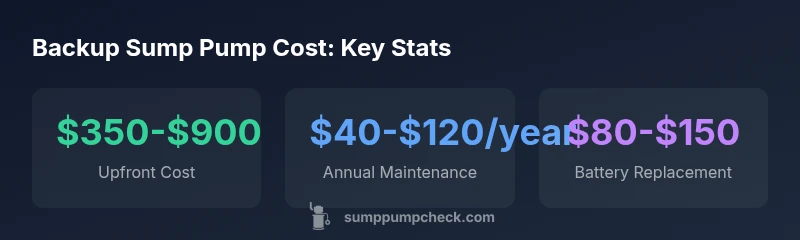
Back up sump pump cost typically ranges from $350 to $900 for a complete installation, depending on pump type and local labor rates. Battery backups usually cost $80 to $150 per replacement, with annual maintenance around $40 to $120. Costs vary by electrical work, permits, and existing drainage. Sump Pump Check Analysis, 2026 indicates these ranges fit most homes.
Why the back up sump pump cost matters for homeowners
For homeowners, understanding the back up sump pump cost is not about chasing the lowest price; it is about protecting your most valuable asset—your home—from basement flooding. The cost figure encompasses more than the price tag on a pump. It includes electrical work, potential permits, wiring, and the labor needed to integrate the backup system with existing drainage and the primary sump setup. According to Sump Pump Check, many households underestimate the need for a reliable backup option, assuming a simple plug-in device is enough. In reality, the cost picture includes installation complexity, tank capacity for water-powered backups, battery capacity for fully autonomous operation, and the compatibility with existing discharge methods. Investors in proper backup protection typically find that a well-planned approach reduces long-term risk and repair expenses, which can far exceed initial outlay. This is why the back up sump pump cost is a strategic figure for budgeting rather than a quick spend.
Cost components that shape the back up sump pump cost
When evaluating the back up sump pump cost, buyers should itemize the main components: the backup unit itself, any needed electrical upgrades, switches or alarms, and the labor for installation. The upfront cost can vary significantly based on pump type (battery-powered vs. water-powered), brand, and whether you need a new discharge line or check valve replacement. Battery backups tend to be less expensive upfront but require periodic battery replacements, which adds to long-term costs. Water-powered backups may have higher initial prices but can offer certain benefits in specific hydrogeological conditions. Permits, if required by local codes, can add to the overall cost. The Sump Pump Check analysis highlights that labor rates and material accessibility in your area frequently drive the final price more than the model you select. A well-inspected baseline plan reduces the risk of surprise expenses later on.
Comparing backup options: battery vs water-powered backups
Choosing between a battery backup and a water-powered backup is a central decision that shapes the back up sump pump cost over time. Battery backups are common for scenarios with frequent power outages and limited access to water pressure; they generally cost less upfront but incur battery replacement costs every few years. Water-powered backups rely on municipal water pressure and can provide robust operation with less frequent replacement parts, yet they often require more complex installation and higher initial costs. Sump Pump Check’s analysis suggests a mixed approach can be cost-effective for many homes—combining a primary pump with a reliable battery backup for power outages and a secondary check valve or alarm for added protection. The total cost will hinge on local water pressure, electrical wiring, and permit requirements. Budget planning should consider both upfront installation and maintenance cycles to accurately forecast long-term expenditures.
Installation considerations and how labor affects back up sump pump cost
Labor is a major driver of the back up sump pump cost because professional installation involves wiring, check valves, alarms, possibly new conduits, and adherence to electrical and plumbing codes. Even small changes to the discharge line or pit size can influence the total bill. If your basement layout requires rerouting a discharge pipe, trenching for new lines, or adding a dedicated circuit, expect higher labor charges. On the flip side, homes with straightforward basements and existing pumps often see more moderate installation costs. The Sump Pump Check analysis notes that obtaining multiple quotes can reveal a wide range in labor charges, so it’s prudent to request detailed breakouts and ask for itemized line items. Working with a knowledgeable installer reduces the risk of oversights that could lead to future maintenance costs.
Hidden or optional costs to budget for
Beyond the obvious upfront price, homeowners should budget for several optional costs that can impact the back up sump pump cost. Battery replacements, annual inspections, and alarm system upgrades add to ongoing expenses. Some systems require a new back-up discharge line or a separate check valve, which might not be needed in every instance but can be essential for proper drainage and code compliance. Permits and inspection fees vary by location and can catch some homeowners by surprise if they are not anticipated in the planning phase. Finally, extended warranties or service plans can offer peace of mind but add to the total cost over time. Sump Pump Check emphasizes building a contingency into your budget for these potential expenditures so you are not caught off-guard when a maintenance or replacement cycle arrives.
Cost-saving strategies without sacrificing protection
Smart cost-saving strategies can dramatically influence the back up sump pump cost without compromising protection. Start with a thorough site assessment to confirm the exact needs and avoid over-specifying a backup pump. Compare quotes from multiple licensed electricians or plumbers, and ask for a written warranty and service schedule. If possible, install components in stages—begin with a reliable primary backup unit and add an alarm or check valve later—as this can spread out the cost over time. Purchasing during sales or choosing models with widely available replacement parts can reduce long-term maintenance costs. Finally, schedule regular maintenance to extend the life of the system, which minimizes unexpected replacement costs. The goal is to balance upfront investment with predictable, manageable ongoing costs, ensuring your back up sump pump cost remains within a reasonable budget.
Real-world scenarios and ROI: when paying more pays off
In practical terms, paying a bit more upfront for a higher-quality backup sump pump can pay off in the long run by reducing the likelihood of flood damage and expensive repairs. In areas with frequent power outages or heavy rainfall, investing in a robust backup system with a durable battery and a reliable alarm can minimize downtime and water damage. Sump Pump Check’s data suggests that households investing in reputable brands, proper installation, and a maintenance plan see fewer emergency calls and lower repair costs after a major storm. While the initial outlay may be higher, the long-term ROI comes from reduced risk, lower insurance claims, and fewer days of disrupted living spaces. A thoughtful approach to selecting a backup system aligns cost with risk tolerance and local climate realities.
Typical cost components and ranges for backup sump pump systems
| Category | Estimated Cost | Notes |
|---|---|---|
| Upfront cost (backup pump + install) | $350-$900 | Depends on model and labor rates |
| Battery backup replacement | $80-$150 | Every 3-5 years typical |
| Annual maintenance | $40-$120/year | Inspections and minor parts |
FAQ
What factors most influence back up sump pump cost?
The main drivers are the backup type, installation complexity, electrical work, permits, and labor rates. Higher-capacity models and additional components raise the upfront cost, while more complex installs raise labor charges. Maintenance and replacement parts add to long-term costs.
The big costs are the backup type, install complexity, and labor. Higher-capacity models and extra parts mean more money upfront and over time.
Battery vs water-powered backup: which is cheaper long-term?
Battery backups are usually cheaper upfront but require periodic battery replacements. Water-powered backups may have higher initial costs but can avoid frequent battery replacements. Long-term costs depend on your water pressure, usage, and maintenance needs.
Battery backups cost less upfront but need battery changes. Water-powered backups cost more at first but may save on replacements over time.
Do insurance policies reimburse backup sump pump installation?
Some homeowners’ policies may offer limited coverage for flood-prevention equipment or related repairs after a claim. Check with your insurer about coverage, deductible implications, and whether upgrades affect premiums. Documentation of installation may help with claims.
Some policies cover flood-prevention equipment in certain cases. Check with your insurer for specifics and keep documentation handy.
How often should I service a backup sump pump?
Most experts recommend a seasonal check-up and an annual professional inspection. Regular testing of switches and alarms, plus battery tests, helps prevent failures during a power outage or flood event.
Have the system checked annually and test it seasonally to ensure it works when you need it.
Can I install a backup sump pump myself?
A basic backup sump pump installation is possible for experienced DIYers who understand electrical and plumbing codes. In many cases, professional installation ensures code compliance and optimal performance, which can prevent costly mistakes.
If you’re comfortable with electrical and plumbing work, you can do a basic install, but professionals ensure code compliance and best results.
What warranties cover backup sump pumps?
Most back up sump pumps come with manufacturer warranties on the pump and a separate warranty for installation or service plans. Read the terms carefully to understand coverage for parts, labor, and battery replacements.
Check the warranty on the pump and on the installation; batteries usually have their own limited warranties.
“An effective backup sump pump is a prudent investment that mitigates flood risk and can reduce long-term repair costs.”
Top Takeaways
- Define upfront needs before selecting a backup system
- Expect $350-$900 upfront with $40-$120/year maintenance
- Battery replacements cost $80-$150 when needed
- Labor and permits can shift final costs
- Plan for maintenance to extend system life