Why Is My Sump Pump So Loud? A Practical Troubleshooting Guide
Urgent, practical steps to diagnose and fix loud sump pump noises. Learn common causes, safe testing, and when to call a pro to prevent flooding and damage.


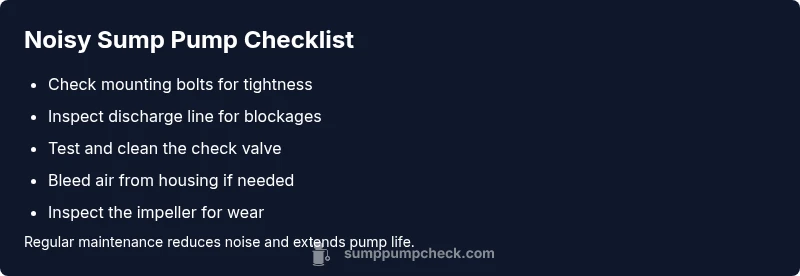
Step 1: Power down the sump pump and unplug it, then verify the unit is out of service. Step 2: Inspect mounting bolts and the basin for wobble, tightening as needed and ensuring the unit sits level. Step 3: Inspect the discharge line and check valve for obstructions, damage, or improper seating. Step 4: Run a test cycle; if noise remains, proceed to advanced diagnostics or contact a professional.
What makes a sump pump loud?
If you’re asking why is my sump pump so loud, the answer usually starts with a few common culprits: loose mounting hardware, air trapped in the pump housing or discharge line, a worn or damaged impeller, or a clogged check valve. According to Sump Pump Check, many homeowners discover that the noise originates not from the motor itself but from loose components that rattle during operation or from air pockets that cause banging as the water moves. Taking a methodical approach helps you separate simple fixes from more complex repairs, reducing both noise and the risk of failed pumps during a storm.
In practical terms, start with the basics: shut off power, secure the pump, and inspect the basin for cracks or movement. If the system is vibrating against the sump pit, you’ll hear amplified sounds that resemble grinding, rattling, or banging. By framing the problem this way, you can quickly identify which part to address first and whether you can complete the fix yourself or need a professional.
Tip: Keep a small notebook of noises you hear, when they occur, and under what water levels. Patterned noise helps you pinpoint whether the issue is intermittent (likely air) or continuous (likely a mechanical fault).
No matter what, addressing a loud sump pump early reduces wear and prevents failures that could lead to basement flooding. The Sump Pump Check team emphasizes systematic checks and documenting the behavior so you can track improvements after each fix.
Common culprits and quick checks
Safety and prep before testing
How discharge piping and air affect noise
Seasonal and installation considerations
When to call a professional
Noise reduction and maintenance strategies
How to document and monitor noise over time
Steps
Estimated time: 45-60 minutes
- 1
Power down and safety check
Unplug the sump pump and switch off the circuit to prevent accidental activation. Put on safety glasses and gloves. Confirm the area is dry and clear of obstacles before touching any components.
Tip: Always verify the power is off at both the outlet and the breaker before handling wiring. - 2
Inspect mounting and basin level
Check all mounting bolts and the basin seating. If the unit rocks or sits unevenly, tighten bolts and add shims or a anti-vibration pad as needed. Recheck level after tightening.
Tip: A level unit reduces vibration transfer to the pit walls and reduces noise. - 3
Check discharge line and valve
Inspect the discharge pipe for kinks, blocks, or leaks. Remove any debris and ensure the check valve seats firmly when closed. If the valve is loose or cracked, replace it.
Tip: A dripping or loose valve can create chattering sounds that mimic grinding. - 4
Inspect electrical connections and switch
Examine the power cord, plug, and float switch for wear or damage. Reseat connections as needed and replace any frayed cords. Ensure the float operates freely without obstruction.
Tip: Faulty float switches can cause erratic cycling and noise. - 5
Assess impeller and motor alignment
With the pump accessible, locate the impeller and listen for wobble or scraping sounds. If the impeller looks damaged or misaligned, this may require professional service or pump replacement.
Tip: Do not force components; misalignment can damage the motor. - 6
Prime and bleed air
If air is suspected, briefly unplug, then restart and observe the pump cycle. If air pockets persist, check for a loose seal or a small air chamber in the pump housing.
Tip: Air in the system often causes banging or hammering noises. - 7
Test run under controlled conditions
Reassemble any panels, restore power, and run a test cycle with the water level at normal pressure. Listen carefully for changes in noise level and note any remaining rattles.
Tip: Test in short intervals first to avoid overheating the motor. - 8
Evaluate next steps and maintenance plan
If noise persists after these steps, consider professional inspection or pump replacement. Schedule regular maintenance every 6–12 months to prevent future loud operation.
Tip: Create a maintenance schedule and set calendar reminders.
Diagnosis: Pumping water but making grinding/clanking noise
Possible Causes
- highLoose mounting or securing hardware
- mediumAir trapped in the discharge line or pump housing
- lowWorn or damaged impeller bearing
- lowClogged or collapsed discharge pipe
Fixes
- easyTighten mounting bolts and ensure the sump basin is level
- easyBleed air from the system by cycling the pump and checking the air chamber
- hardReplace worn impeller bearing or entire pump if wobble persists
- easyClear discharge pipe and check valve, ensure proper slope and venting
FAQ
What is the most common cause of sump pump noise?
The most common causes are loose mounting and air in the discharge line, which create rattling or banging sounds. Safety checks and basic adjustments often resolve these issues.
Common causes are loose mounting and air in the line. Start with the basics to fix it quickly.
Can a clogged check valve cause loud noises?
Yes, a clogged or faulty check valve can cause banging noises as water struggles to move through the valve. Inspect and replace if needed.
Yes, a blocked check valve can cause banging sounds.
Is it safe to attempt repairs myself?
Many fixes are safe for a DIY approach (tightening mounts, inspecting valves, bleeding air). For electrical or major mechanical work, consult a professional.
You can do many fixes yourself, but for electrical or major mechanical work, consider a pro.
How often should I maintain my sump pump?
Perform a basic inspection at least twice a year and schedule a more thorough checkup annually. Regular maintenance helps prevent loud operation.
Do a quick check twice a year and a full service yearly.
What signals I need replacement rather than repair?
If the pump loses efficiency, makes grinding noises despite fixes, or is older than 7–10 years, replacement may be more cost-effective.
If it’s old or still noisy after fixes, replacement may be best.
Watch Video
Top Takeaways
- Identify the loudest sound source first (mount, discharge, or air).
- Always power down before touching electrical components.
- Most noise comes from simple fixes like mounting or valve seating.
- If noise persists after basics, call a professional for a safe, thorough check.